
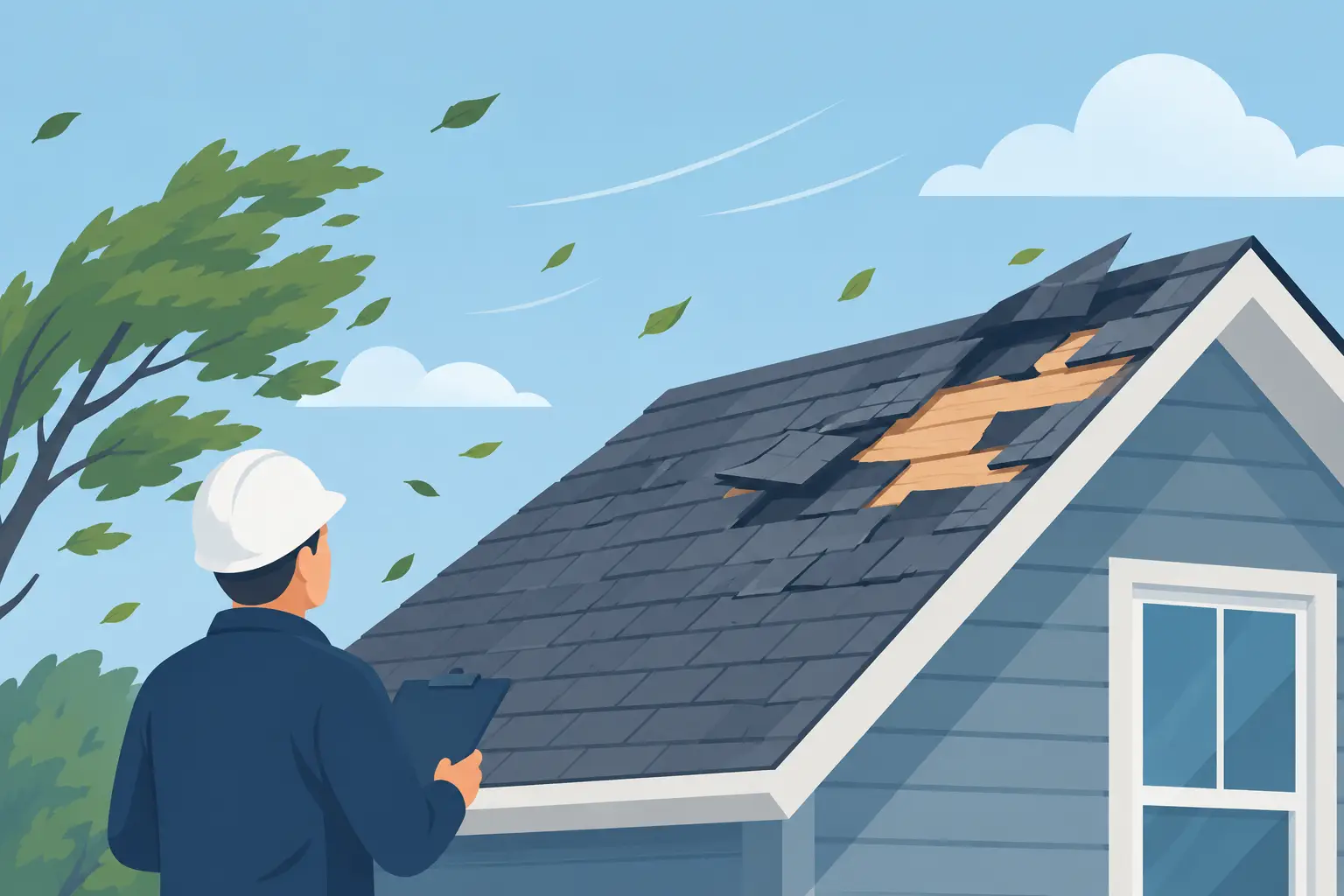
A hard Coastal Georgia storm can leave a roof looking normal from the driveway while wind has already lifted shingles, loosened flashing, or opened a path for water. Wind damage roof repair is most effective when it starts early, before the next rain turns a small opening into a stained ceiling, wet insulation, or damaged decking.
The first priority is safety. Do not climb onto a storm-damaged roof, especially if shingles are loose, the surface is wet, or power lines and tree limbs are nearby. A careful ground-level check, followed by a professional inspection, gives you a clearer picture without putting anyone at risk.
What Wind Does to a Roof
Wind damage is not always dramatic. High gusts can pull at the edges of shingles and create what roofers call a lifted tab or broken seal. Once a shingle loses its seal, later winds can catch it more easily. That small change may allow rain to work underneath the roofing material.
The most vulnerable areas are often roof edges, ridge caps, valleys, vents, chimneys, skylights, and flashing around penetrations. These areas handle changing directions of wind and water, so a problem there can become a leak faster than a damaged shingle in the middle of a broad roof slope.
A storm may also blow debris across the roof. Branches can crack shingles, dent metal components, clog gutters, or scrape protective granules from asphalt shingles. On older roofs, wind can expose weaknesses that were already developing from age, sun, and moisture.
That is why a roof does not need to be missing large sections of shingles to need attention. The goal is to find the damage while a targeted repair is still possible.
Signs You May Need Wind Damage Roof Repair
Start by walking around the property from the ground in good daylight. Look for shingles in the yard, on the driveway, or near downspouts. Check whether any roof areas appear uneven, bare, curled, lifted, or darker than the surrounding shingles. A ridge cap that looks shifted or a vent that appears crooked deserves a closer look.
Inside, inspect the attic and upper-level ceilings when it is safe to do so. Fresh water spots, damp insulation, a musty odor, peeling paint, or a brown ring around a ceiling fixture can all point to moisture intrusion. Keep in mind that water may travel along framing before it shows up indoors, so the stain is not always directly below the roof opening.
Gutters can offer clues as well. After a storm, look for heavy shingle granules in the gutter run or at the bottom of downspouts. Some granule loss is normal as shingles age, but a sudden concentration after high winds may indicate surface damage.
Commercial property owners and managers should also check rooftop equipment areas, parapet walls, drains, and flashing transitions. Wind-driven rain often finds weaknesses at seams and penetrations that are easy to miss during a routine walk around the building.
What to Do Right After a Windstorm
If you see obvious damage or water is entering the home, protect people and belongings first. Move furniture, electronics, and valuables away from the affected area. Place containers under active drips if you can do so safely, and avoid touching wet electrical fixtures or outlets. If water is near electrical equipment, contact a qualified professional promptly.
Take clear photos from the ground and inside the home. Photograph missing materials, fallen branches, ceiling stains, wet areas, and any visible damage around gutters or siding. Note the date of the storm and when you first noticed the issue. This record can be useful when you speak with your own insurance company or plan repairs.
Then schedule a professional roof inspection. A trained inspector can check areas that are not visible from the ground, assess whether shingles have lost their seals, and look for damage around flashing and vents. At Real Good Roofing, inspections can include dated photos, measurements, and a written estimate so property owners have straightforward documentation of the roof’s condition.
If the roof is actively leaking, temporary protection may be needed before permanent repairs can be completed. The right solution depends on the roof type, the size of the opening, weather conditions, and whether the underlying deck has been affected. A tarp may limit additional water intrusion in some situations, but it must be installed correctly. An improperly secured tarp can create more damage or become a hazard in the next round of wind.
Repair or Replacement? It Depends on the Damage
Many wind-related problems can be repaired without replacing the entire roof. Replacing a limited number of shingles, resealing a lifted section, repairing flashing, resetting a vent, or addressing a small deck repair may restore protection when the rest of the system is in sound condition.
A larger project may make more sense when damage is widespread, the roof is near the end of its expected service life, or matching materials are no longer available. Multiple repairs across an aging roof can add up, and patchwork may not provide the long-term reliability a homeowner needs. The condition of the decking, ventilation, drainage, and prior repairs also affects the recommendation.
This is where a clear inspection matters. A trustworthy contractor should explain what was found, show you the affected areas when possible, and distinguish between work that is urgent and work that can be planned. You should understand whether the recommendation is a focused repair, maintenance work, or a replacement – and why.
Why Waiting Can Cost More
A lifted shingle is not always an emergency, but it should not be ignored. Rain driven by wind can get beneath damaged shingles and wet the underlayment or roof deck. Over time, trapped moisture can lead to wood deterioration, mold concerns, insulation damage, and interior repairs that go far beyond the original roofing issue.
Waiting also makes it harder to identify the original source of a leak. By the time water reaches the ceiling, it may have moved through several layers of the roof system. Addressing the problem promptly gives the roofer a better chance to make a precise repair and limit the area that needs to be opened or replaced.
For rental properties, offices, and retail spaces, quick action also helps reduce disruption. A minor roof opening can threaten inventory, equipment, tenant spaces, and daily operations during the next rain event.
Choosing a Roofer After Storm Damage
After severe weather, homeowners may hear from contractors they have never seen in the community. Before agreeing to work, take time to verify that the company is established, communicates clearly, and can explain its inspection findings in plain language.
Ask whether the contractor will document the damage with photos and provide a written estimate. Find out who will perform the work, what materials are being proposed, and how the property will be protected during the repair. For difficult-to-see areas, drone inspection technology can provide useful visual documentation without unnecessary foot traffic on a damaged roof.
Local experience matters because roofing in Savannah, Pooler, and the Lowcountry has to handle intense sun, humidity, heavy rain, and sudden coastal windstorms. A repair should address more than the visible shingle. It should restore the roof’s ability to shed water and stand up to the conditions the area regularly delivers.
Preventing the Next Wind-Related Problem
No roof can be made completely storm-proof, but regular maintenance can reduce the chance that a small weakness becomes major damage. Keep gutters and downspouts clear so water can drain away from the roofline. Trim back limbs that hang over the roof, particularly dead or weakened branches that may fall during a storm.
It also helps to schedule periodic inspections, especially for an older roof or after a season of heavy weather. An inspection can identify loose flashing, worn sealant, exposed fasteners, deteriorating pipe boots, and early shingle wear before high winds take advantage of them.
When repairs are needed, choose quality workmanship over the fastest-looking fix. Properly installed shingles, flashing, ventilation components, and gutter systems work together. Skipping one detail may leave the same area vulnerable when the next storm arrives.
If a recent storm has you questioning your roof, trust what you can see from the ground, but do not stop there. A prompt, professional inspection can replace uncertainty with a clear plan to protect your home before the weather has another chance to get in.