
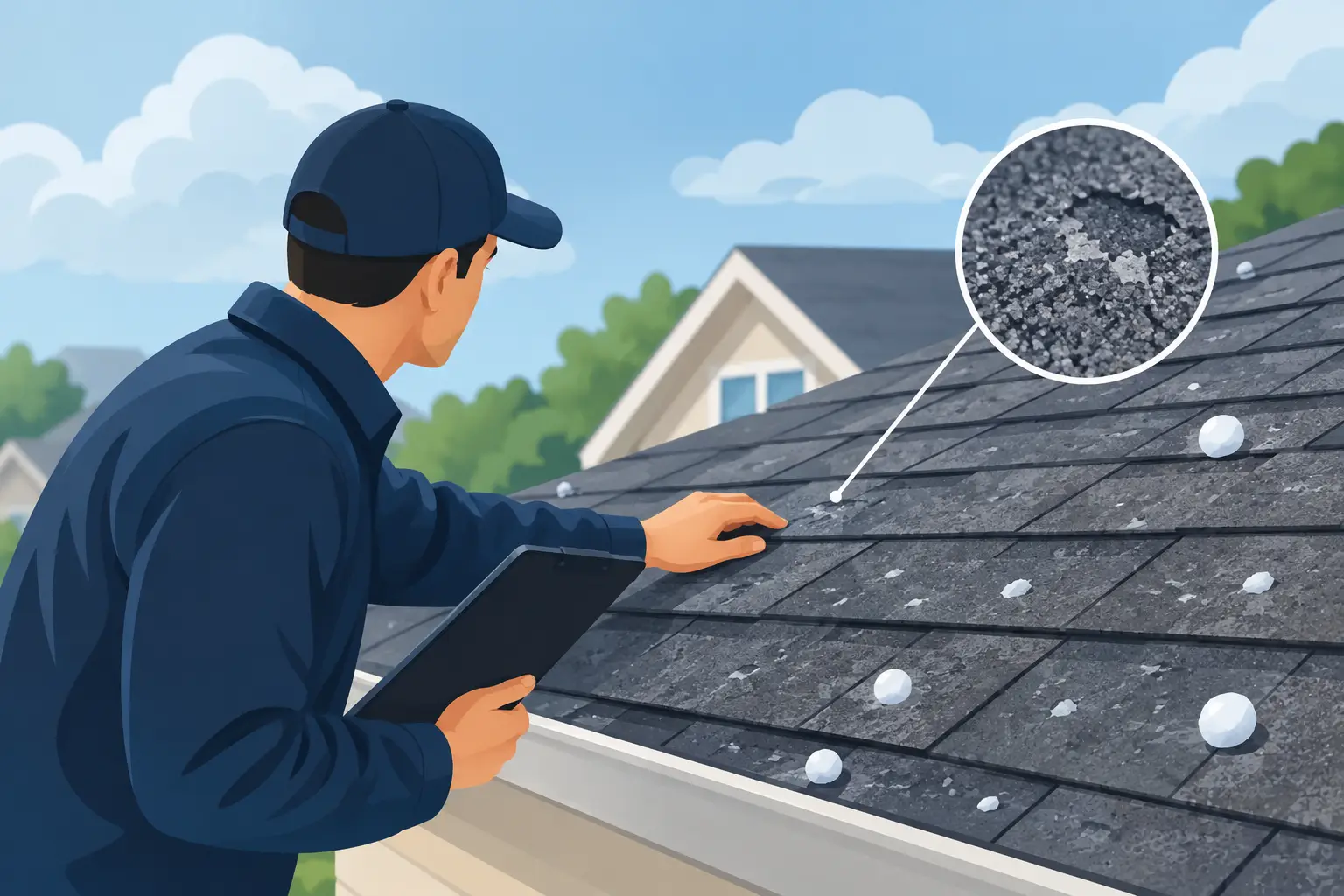
A hailstorm can leave your yard covered in ice and your roof looking perfectly normal from the driveway. That is what makes hail damage roof repair easy to put off and risky to ignore. Even small impact marks can weaken shingles, crack protective granules loose, or damage flashing around the areas where roofs commonly leak.
For homeowners in Coastal Georgia and the South Carolina Lowcountry, a timely inspection is the sensible first move after a storm. It gives you a clear picture of your roof’s condition before a hidden problem turns into a ceiling stain, wet insulation, wood rot, or a more extensive repair.
Why Hail Damage Is Not Always Easy to See
Hail does not damage every roof the same way. Its effect depends on the hail’s size and density, wind speed and direction, the age and condition of the roofing materials, and the slope of the roof. A newer architectural shingle may show subtle bruising where the shingle mat has been compromised beneath the surface. An older roof may shed granules more readily or crack at the impact point.
From the ground, homeowners may notice dark spots, bare patches, or scattered granules near downspouts. Those are worth checking, but they do not tell the whole story. Hail can also dent metal vents, ridge caps, gutters, flashing, and other roof components without creating an immediate water leak.
The concern is not simply appearance. Shingle granules shield the asphalt layer from sun exposure. When hail knocks them loose or bruises the shingle beneath them, weathering can accelerate. A roof may keep water out for now, then develop leaks after repeated rain, heat, and wind put stress on the weakened areas.
What to Do After a Hailstorm
Start safely. Do not climb onto a wet roof, walk across damaged shingles, or use a ladder unless you have the right equipment and experience. Roof damage can be slippery and hard to recognize underfoot.
A practical post-storm check starts at ground level. Walk around the home and look at roof edges, gutters, metal vents, siding, window screens, outdoor equipment, and vehicles. Damage to these surfaces can be a sign that the roof received impacts too, though it is not proof of a roofing problem by itself.
If conditions are safe, document what you can see. Take wide photos of the property and closer photos of visible dents, debris, or displaced materials. Then look indoors for fresh water marks on ceilings, damp attic insulation, dripping, or daylight around roof penetrations. If water is actively entering the home, place containers below the leak, move valuables out of the area, and arrange emergency roofing help promptly.
Avoid quick fixes that create bigger problems. Do not nail tarps through shingles unless it is necessary to limit active water entry and you know how to secure one correctly. Do not pressure wash the roof or attempt to brush off loose granules. Those actions can cause additional damage and make a proper assessment harder.
When Hail Damage Roof Repair Is Needed
A professional inspection separates cosmetic scuffs from damage that affects the roof’s service life. A qualified roofer should examine the shingle field, ridge caps, valleys, pipe boots, vents, flashing, gutters, and roof edges. Attic conditions matter, too, because moisture or ventilation issues can reveal problems that are not visible outside.
Repair is often the right answer when damage is limited to a specific area or component. For example, a roofer may replace affected shingles, repair damaged flashing, reseal a penetration, replace a cracked pipe boot, or correct a loosened vent. The goal is to restore the roof’s weather protection while matching existing materials as closely as practical.
A repair should not be a guess. Good work begins with identifying how water moves across the roof and where the system has been compromised. Simply covering a spot with sealant may slow a leak for a short time, but it is not always a durable solution for hail-bruised shingles or damaged flashing.
Real Good Roofing uses thorough roof evaluations, including FAA-certified drone inspections when appropriate, to document hard-to-see areas without putting people or your roof at unnecessary risk. Homeowners can receive dated photos, measurements, and a written estimate so they have a straightforward record of the roof’s observed condition and recommended work.
Repair or Replacement: How to Make the Call
Not every hail-damaged roof needs to be replaced. If the roof is relatively young, the damage is contained, and compatible replacement materials are available, a focused repair can be the more cost-effective choice. It addresses the immediate vulnerability while preserving the sound portions of the roof.
Replacement becomes more reasonable when hail damage is widespread, shingles are brittle or nearing the end of their expected life, multiple slopes have compromised materials, or repairs would leave the roof with too many mismatched sections. Existing issues also matter. A roof with recurring leaks, deteriorated decking, failed ventilation details, or previous patchwork may not be a good candidate for another isolated repair.
There is a trade-off in either direction. Repairing a roof that has broad damage can mean additional work later. Replacing a roof with limited damage can be more work than the situation requires. An honest inspection and clear estimate help you weigh durability, appearance, timing, and budget without pressure.
What a Quality Repair Should Address
A dependable hail repair is more than replacing whatever is visibly dented. The contractor should check the surrounding system because connected components often fail together. A shingle repair, for example, may require attention to underlayment, starter strips, nails, flashing, and the seal between shingles.
Ask practical questions before work begins: What materials are damaged? Is the issue confined to one roof plane? Will nearby shingles need to be lifted, and are they flexible enough to be handled safely? How will flashing and penetrations be protected? What will the finished repair look like from the ground?
Color matching can be an important consideration. Roofing materials fade with age, and an exact match is not always available. A professional should explain that possibility upfront rather than treating it as an afterthought. Even when a repair is structurally sound, homeowners deserve to understand how it may look once complete.
Do Not Wait for a Leak to Act
The best time to inspect a roof after hail is before water finds a path inside. A roof can appear stable through one storm and fail during the next hard rain because the protective surface was weakened weeks or months earlier. Prompt attention also helps prevent moisture from reaching insulation, decking, framing, and interior finishes.
Once repairs are complete, keep an eye on your roof through the next few rains. Check the attic periodically, clear gutters of leaves and shingle debris, and schedule routine inspections as the roof ages. Preventive maintenance is usually simpler than responding to a leak after it has spread.
A hailstorm does not have to leave you guessing about your roof. A careful inspection, clear documentation, and properly scoped repair can give you a sound path forward and help keep your home protected when the next storm rolls through.