
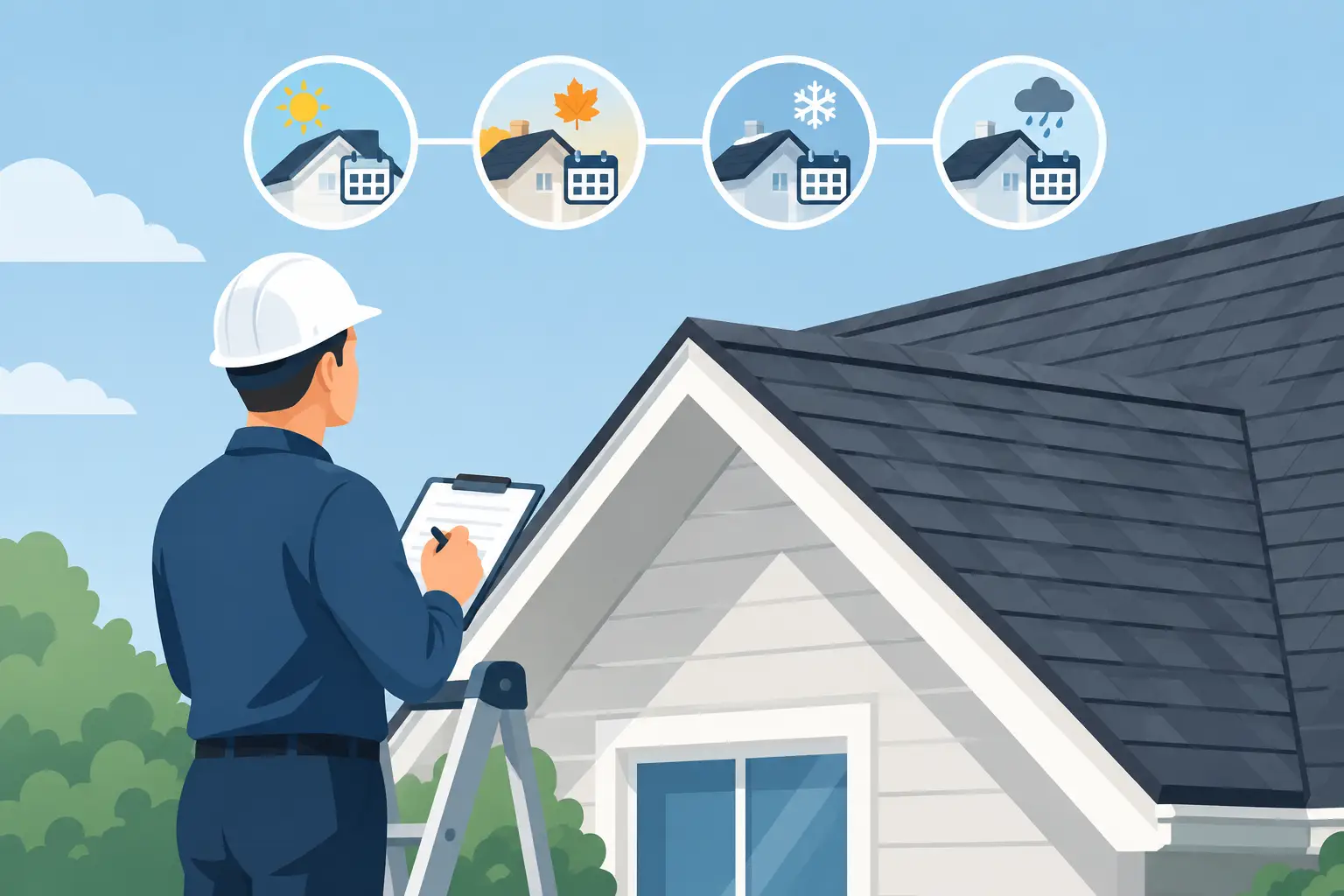
A roof can look fine from the driveway and still have trouble starting beneath the shingles. A lifted tab, cracked pipe boot, loose flashing, or small area of storm damage may not leak right away, but Coastal Georgia’s heat, humidity, wind, and heavy rain can turn a minor weakness into a costly repair. The right roof inspection frequency helps homeowners find those issues while the fix is still manageable.
For most homes, a professional roof inspection once a year is a practical baseline. That schedule should change when your roof is older, a major storm has passed through, or you notice signs of water intrusion. The goal is not to inspect for the sake of checking a box. It is to protect the home before moisture reaches the decking, attic, insulation, walls, or ceilings.
How Often Should You Schedule a Roof Inspection?
Annual inspections work well for many homeowners because roofing problems often develop gradually. Seasonal temperature changes cause materials to expand and contract. Sun exposure dries out sealants. Wind can loosen shingles and flashing. Debris can collect in valleys and gutters, holding moisture where it does not belong.
For a newer roof in good condition, an annual inspection is usually enough, provided there has been no severe weather event. For an aging roof, or one with a history of repairs, twice-yearly checks may be wiser. A spring inspection can reveal winter wear and prepare the roof for storm season. A fall inspection can catch damage after the summer’s heat and thunderstorms.
Commercial property owners and managers may need a more structured maintenance schedule. Flat and low-slope roofs can hold standing water, collect debris around drains, and develop seam or flashing problems that are not visible from ground level. Regular inspections help reduce disruption to tenants, customers, and daily operations.
After a Storm, Do Not Wait for a Leak
A roof should be inspected after a significant storm, especially one involving high winds, hail, fallen limbs, or wind-driven rain. Not every storm requires an emergency visit, but visible damage, debris on the roof, missing shingles, or a new ceiling stain are all good reasons to schedule a prompt inspection.
Storm damage is not always obvious. Wind can break shingle seals or crease shingles without removing them completely. Hail can leave bruising that affects the shingle’s protective surface. Heavy rain may expose weak flashing around chimneys, vents, skylights, and roof-to-wall transitions.
A professional inspection provides a clear picture of the roof’s condition. At Real Good Roofing, inspections can include detailed photos, measurements, and a written estimate when work is recommended, giving property owners useful documentation for their own records and next steps.
Roof Inspection Frequency by Roof Age
Roof age is one of the clearest factors in deciding how closely to monitor it. Materials do not fail on the same timeline, and installation quality, ventilation, weather exposure, and maintenance all affect service life.
Newer roofs: every 12 months
A newer roof still benefits from annual inspections. Early checks confirm that flashing, ventilation components, sealants, and drainage are performing as intended. They also establish a condition record that can be useful later if a storm passes through the area.
Midlife roofs: every 6 to 12 months
Once a roof reaches the middle of its expected lifespan, inspections become more valuable. Shingles may begin to lose protective granules, sealants can shrink, and minor repairs may be needed before a larger section is affected. If the roof receives heavy shade, is surrounded by pine trees, or has a complex design with valleys and penetrations, lean toward twice-yearly service.
Older roofs: every 6 months and after severe weather
An older roof deserves closer attention, even if it has not started leaking. Materials can become brittle, and one hard storm may reveal weaknesses that were not apparent before. An inspection does not automatically mean replacement is necessary. Sometimes a targeted repair, gutter correction, or maintenance work can extend the roof’s useful life. Other times, the inspection makes it clear that repeated repairs are no longer the sound long-term choice.
Signs You Should Schedule an Inspection Sooner
Time on the calendar is helpful, but your home may tell you it needs an inspection before the next annual appointment. Watch for changes around the roofline, in the attic, and on interior ceilings.
Call for a professional look if you notice four or more warning signs, including:
- Shingles that are missing, cracked, curling, creased, or collecting excessive granules in the gutters
- Water stains, peeling paint, damp insulation, musty odors, or visible daylight in the attic
- Loose metal flashing, damaged vent boots, sagging gutters, or debris piled in roof valleys
- Tree limbs rubbing the roof, fallen branches, or a sudden increase in energy bills that may point to ventilation issues
A ceiling stain does not always sit directly below the source of the leak. Water can travel along decking, framing, wiring, or insulation before it becomes visible indoors. That is one reason an experienced inspection matters. The visible symptom is only the starting point.
What a Professional Roof Inspection Looks For
A thorough inspection is more than a quick glance at shingles. It should consider the complete roof system: the covering material, decking condition, flashing, penetrations, drainage, attic ventilation, and areas where water is most likely to enter.
For many homes, a drone inspection is a useful part of the process. FAA-certified drone technology can document hard-to-see areas and provide detailed images without unnecessary foot traffic on steep or fragile sections. It does not replace a hands-on assessment when one is needed, but it can improve visibility and give homeowners a clearer view of what is happening overhead.
An inspector should explain findings in plain language. You deserve to know whether the roof needs a small repair now, preventive maintenance, closer monitoring, or planning for replacement. Honest recommendations matter because not every worn roof needs to be replaced immediately, and not every leak can wait.
Homeowner Checks Between Professional Inspections
You do not need to climb onto the roof to keep an eye on it. In fact, walking a roof without the right training and safety equipment can cause injury or damage the materials. A safer approach is to inspect from the ground after storms, look through the attic periodically, and keep gutters and downspouts clear.
Trim back limbs that touch or hang directly over the roof. Keep leaves, pine straw, and branches from building up in valleys or behind chimneys. Make sure downspouts direct water away from the foundation. These basic habits support roof performance, but they do not replace a professional inspection of flashing, shingle seals, and other vulnerable components.
If you are unsure whether a change is serious, it is better to ask early. Small repairs are typically easier to plan than the damage caused by water that has had time to spread.
A Sensible Schedule for Coastal Georgia Homes
In Pooler, Savannah, and surrounding coastal communities, the best roof inspection frequency is usually annual at minimum, plus an inspection after significant weather. Homes with older roofing, frequent tree debris, prior repairs, or complex rooflines often benefit from checks every six months.
Put your next inspection on the calendar before storm season rather than waiting for a drip to appear. A careful look today can give you confidence through the next hard rain – and a clear path forward if your roof needs attention.