
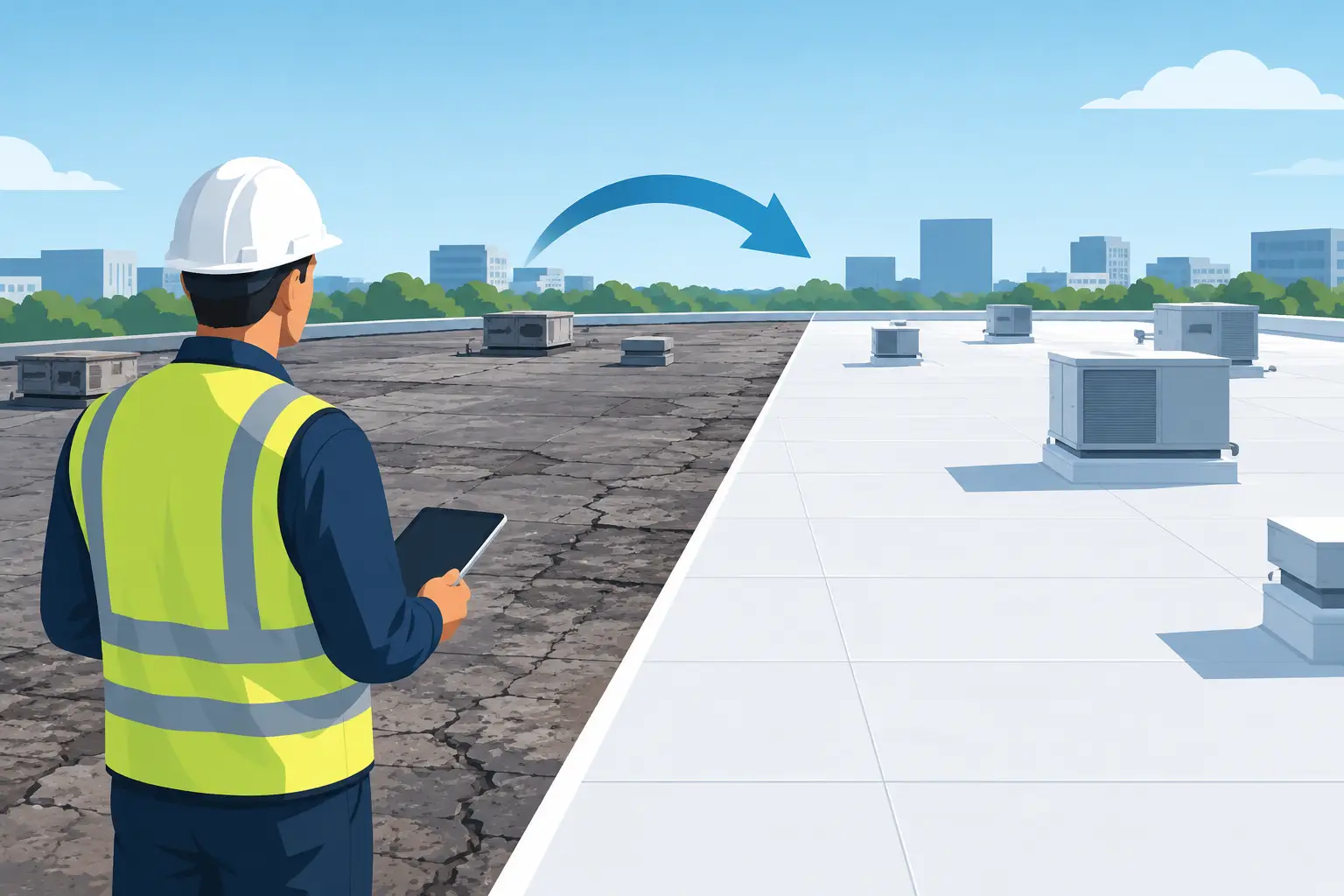
A stain spreading across an office ceiling, recurring leaks after hard rain, or ponding water that never seems to dry can turn a manageable roofing concern into a building-wide problem. A commercial roof replacement is a major decision, but waiting until interior damage, mold concerns, or business interruptions force the issue usually limits your options and raises the cost of the work around it.
For business owners and property managers, the right question is not simply, “Is the roof old?” It is whether the roof can continue protecting the building reliably, safely, and without a growing cycle of repair bills. A careful inspection gives you the facts needed to make that call.
Signs a Commercial Roof Replacement May Be Needed
Commercial roofs often show warning signs long before they fail completely. The challenge is that many problems begin out of sight. On a low-slope roof, moisture can move beneath the membrane or insulation before it appears inside the building. By the time a ceiling tile is wet, the affected area may be larger than expected.
Repeated leaks are one of the clearest signs that replacement should be considered. A single leak near a vent, flashing detail, or drain may be repairable. But leaks that return in different places, especially after repairs, can point to widespread membrane wear, deteriorated seams, saturated insulation, or drainage issues.
Pay attention to bubbling, cracking, open seams, loose flashing, punctures, soft spots, and standing water. On metal roofing, rust, failed fasteners, open panel seams, and worn sealants deserve prompt attention. Inside the building, water stains, musty odors, peeling finishes, or unexplained humidity can also indicate a roof problem.
Age matters, but it is not the only factor. A roof near the later part of its expected service life may still be a candidate for repair if the system is otherwise sound. On the other hand, a younger roof can need replacement after storm damage, poor installation, neglected maintenance, or repeated foot traffic from equipment service.
Repair or Commercial Roof Replacement?
The most responsible recommendation is not always replacement. If damage is isolated and the roof system remains dry and stable, targeted repair can extend its useful life. Repairs are often a sensible choice after a minor penetration, a damaged flashing area, or a localized storm event.
Replacement becomes the better long-term value when repairs are frequent, water has compromised insulation or deck components, or the roof is approaching the point where every repair becomes temporary. It may also make sense when the existing roof no longer handles drainage well or cannot support the building’s changing needs.
A thorough inspection should look beyond the visible surface. The contractor needs to assess the roof covering, seams, flashing, drains, edges, penetrations, insulation, and accessible structural components. Drone photography can be especially useful for documenting broad roof areas, difficult edges, and visible storm impacts without unnecessary foot traffic on the roof.
The goal is a clear recommendation backed by what the roof is actually doing. Property owners should receive straightforward findings, photos where useful, measurements, and a written scope that explains whether repair, restoration, or replacement is being recommended and why.
What Happens During a Replacement Project
A well-planned roof replacement begins before crews arrive. The contractor should evaluate access points, delivery routes, rooftop equipment, safety needs, drainage, and how the work may affect employees, tenants, customers, or residents. This planning is particularly important for occupied buildings such as retail spaces, offices, churches, multifamily properties, warehouses, and medical facilities.
The existing roofing may be removed down to the deck, depending on the condition of the system and the planned scope. Once exposed, the deck can be checked for deterioration or areas that need repair. New insulation, cover boards, membrane or metal components, flashing, and edge details are installed according to the selected roofing system.
The details matter as much as the field of the roof. Roof penetrations, transitions, drains, curbs, walls, and perimeter edges are common points of failure when they are not installed carefully. A good replacement project addresses these areas directly instead of treating the roof as a simple layer of material.
Work schedules should be discussed early. Some buildings can accommodate daytime roofing with controlled access and clear communication. Others may benefit from phased work, weekend scheduling, or planning around inventory, customers, classes, or tenant operations. Weather can affect the schedule as well, particularly in Coastal Georgia, where heavy rain, heat, and hurricane-season conditions require close attention.
Choosing the Right Roofing System
There is no single best commercial roof for every building. The right system depends on roof slope, building use, drainage, exposure, rooftop equipment, maintenance expectations, and budget over the life of the roof.
Low-slope buildings commonly use single-ply membrane systems, modified bitumen, or other commercial roofing assemblies designed to manage water across a broad, relatively flat surface. The best choice depends on the building and the installation details, not just the material name.
Metal roofing can be a strong option for certain commercial properties, especially where durability, appearance, and long-term performance are priorities. It still requires properly designed panels, fasteners, flashing, and sealants. A metal roof is not maintenance-free, and small details can make a large difference in how it performs through wind-driven rain.
Drainage deserves special attention with every system. Water should move to drains, scuppers, gutters, or designed runoff paths rather than remaining on the roof after normal drying time. Correcting drainage during replacement can help protect the new roof and reduce the risk of premature wear.
Keep Disruption Under Control
Roof replacement is active construction, but it should not feel disorganized. Before the project starts, building leadership should know where crews will park, how material deliveries will be handled, what areas need to be kept clear, and how daily cleanup will work. If the property has tenants or customers, clear notice helps prevent frustration and safety issues.
Roofing noise may be unavoidable at certain stages, especially during tear-off or deck repairs. Good planning helps limit the impact. Sensitive interior operations, customer entrances, loading areas, and outdoor gathering spaces should be identified before work begins rather than after a problem arises.
After storms or severe weather, roof conditions can change quickly. If you notice new leaks or visible damage, an inspection can provide dated photos, measurements, and a written estimate so you have a clear record of the roof’s condition and the work recommended.
Protect the Investment After Installation
A new roof needs regular attention to reach its intended service life. Semiannual inspections and additional checks after major storms can catch loose flashing, clogged drains, damaged sealants, or debris before they become expensive problems. Buildings with frequent rooftop equipment service may need closer monitoring because foot traffic can damage vulnerable areas.
Property managers should also keep a record of roof repairs, inspections, and maintenance. That history makes it easier to spot recurring issues and plan work before a leak becomes an emergency. It also gives future decision-makers a clearer picture of how the roof has performed.
For commercial property owners in Pooler, Savannah, and the surrounding coastal region, Real Good Roofing brings a practical, local approach to inspection, replacement planning, and workmanship. The best time to start the conversation is while you still have choices: before the next hard rain turns a roofing concern into a business interruption.