
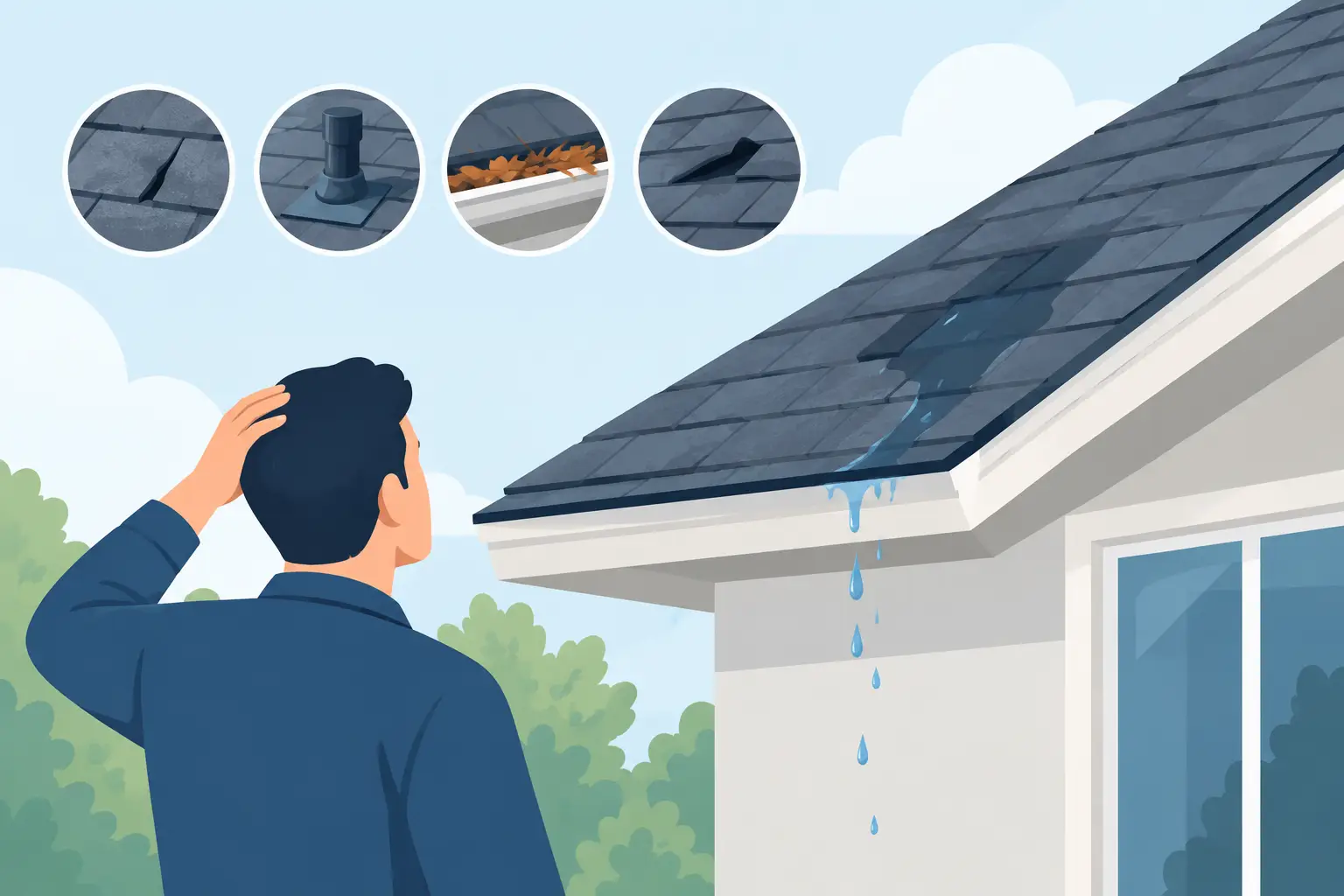
A brown spot on the ceiling may show up days after a hard Coastal Georgia rain, but the water that caused it may have entered the roof somewhere else entirely. That is one reason why roof leaks can be frustrating for homeowners: the visible stain is often a symptom, not the source. Finding the cause early matters because a small opening can allow moisture to damage insulation, framing, ceilings, and interior finishes long before it becomes a major drip.
Why Roof Leaks Are Not Always Easy to Trace
Water does not always travel straight down. Once it gets beneath shingles, metal panels, flashing, or underlayment, it can follow roof decking, rafters, pipes, wiring, or insulation before appearing inside your home. The ceiling stain over the guest room may be several feet away from the actual roof problem.
Wind-driven rain adds another layer of difficulty. In Savannah, Pooler, and throughout the Lowcountry, storms can push rain sideways and upward under roofing components that normally shed water without trouble. A roof may look fine after a light shower but leak during a strong storm from one particular direction.
That is why a careful inspection should look beyond the wet spot. The goal is to identify how water entered, what materials were affected, and whether the condition is isolated or part of a larger aging or storm-related issue.
The Most Common Reasons a Roof Starts Leaking
Damaged or missing shingles
Shingles are your roof’s first line of defense, but they take the full force of sun, rain, wind, and debris. High winds can lift a shingle edge, break the seal that holds it down, or remove shingles altogether. Even if a shingle remains in place, a crease or torn corner can create a path for water.
Older shingles can also become brittle, curl at the edges, or lose protective granules. Granule loss alone does not always mean a roof is leaking, but it can signal that the roof is nearing a point where repairs and maintenance deserve closer attention.
Failed flashing around vulnerable areas
Flashing is the metal material installed where the roof meets a wall, chimney, vent, skylight, or valley. These transitions are naturally more vulnerable because water is being directed around an interruption in the roof surface.
A flashing leak may come from loose fasteners, cracked sealant, rust, improper installation, or storm damage. It is common for homeowners to suspect the entire roof when the problem is actually one damaged flashing detail. It is also possible for a small flashing failure to cause substantial interior damage if it goes unnoticed.
Worn pipe boots and roof penetrations
Plumbing vent pipes pass through the roof, and the rubber or metal boots around them are designed to keep water out. Over time, sunlight can dry and crack rubber collars. A boot can split, pull away from the pipe, or fail around its fasteners.
These leaks are often relatively contained when found early, but they should not be ignored. Water entering near a vent pipe can soak surrounding decking and insulation before it reaches the ceiling below.
Clogged or damaged gutters
Gutters are not part of the roof covering, but they play an important role in protecting the roof edge, fascia, and foundation. When leaves, pine straw, or roof granules clog a gutter, water can back up beneath shingles at the eaves. Overflow can also rot trim and create staining along exterior walls.
A gutter issue is especially likely when leaks or water stains appear near the roofline after heavy rain. Keeping gutters clear and securely attached is a practical part of roof maintenance, particularly on homes surrounded by trees.
Valley problems and debris buildup
A roof valley is where two roof slopes meet. It carries a large volume of water, so it needs to be installed correctly and kept clear. Leaves and branches can collect in valleys, slowing drainage and holding moisture against roofing materials.
Valley leaks can result from debris, cracked shingles, exposed fasteners, damaged underlayment, or improperly sealed transitions. Because water naturally concentrates there, a small defect can become noticeable quickly during a downpour.
Storm damage that is easy to miss from the ground
Not all storm damage is obvious. You may not see a missing shingle from the driveway, yet wind may have lifted shingles enough to break their seals. Hail can bruise or fracture roofing materials. Fallen limbs can puncture shingles, dent metal, or damage flashing.
After a severe storm, a professional inspection can help separate ordinary wear from active damage. Dated photos, measurements, and a written estimate give property owners a clear record of what was found and what repairs may be needed.
Aging materials and past repair issues
Every roof has a service life, and repairs made years ago may not perform forever. Sealants dry out, fasteners loosen, and materials expand and contract through changing temperatures. In some cases, the roof itself is sound but an old repair around a vent, wall, or skylight has reached the end of its useful life.
Age does not automatically mean replacement. A targeted repair may be the right answer when the damage is limited and the overall roof remains in good condition. If leaks are occurring in several areas or the roofing system is broadly worn, replacement may offer better long-term protection than repeated spot repairs.
What to Do When You Notice a Leak
Start by protecting the inside of your home. Move furniture, electronics, and valuables away from the affected area. If water is actively dripping, place a container underneath it and check the surrounding ceiling for bulging drywall. A sagging, water-filled ceiling can become a safety concern, so keep people out of the area and seek professional help promptly.
If it is safe to do so, take photos of the interior stain, dripping water, or damaged belongings. Note when the leak occurs: only during wind-driven rain, after prolonged rainfall, or even when the weather is dry. Those details can help narrow down the cause.
Avoid climbing onto a wet roof or attempting a quick patch during a storm. Wet shingles, steep slopes, loose debris, and hidden damage make roof work dangerous. A tarp may be appropriate in an emergency when installed safely by a qualified professional, but a tarp is temporary protection, not a repair.
Why Fast Attention Matters
A roof leak rarely improves on its own. Water can dampen insulation, encourage mold growth, stain ceilings, weaken wood decking, and damage electrical systems. The longer moisture remains trapped in the roof assembly, the more extensive the repair can become.
Prompt attention does not always mean the roof needs to be replaced immediately. It means getting a clear answer before a manageable problem spreads. An experienced inspector can evaluate shingles, flashing, vents, valleys, gutters, attic conditions, and storm-related concerns to recommend the appropriate next step.
For hard-to-reach areas, drone inspections can provide a closer view without unnecessary foot traffic on the roof. That can be useful after storms or when a roof’s slope makes visual inspection from the ground unreliable. A hands-on evaluation may still be needed, but quality photos help homeowners understand what is happening above their heads.
Preventing the Next Roof Leak
The best prevention is regular attention before water reaches the ceiling. Keep gutters and valleys clear, trim limbs that rub against the roof, and look for shingles in the yard after high winds. From the ground, watch for lifted shingles, sagging rooflines, damaged flashing, or stains beneath roof edges.
An annual roof inspection is a sensible habit for many homes, especially those with mature trees, older roofing materials, or recent storm exposure. It is also wise to schedule an inspection after a major weather event, even when there is no immediate leak. Catching a loose shingle or cracked pipe boot early is far easier than repairing wet decking and drywall later.
At Real Good Roofing, we believe homeowners deserve straightforward answers about what their roof needs and what can wait. Whether the solution is a focused repair, preventive maintenance, or a replacement plan, the right first step is identifying the true source of the water. A dry ceiling is reassuring, but a properly protected roof is what helps keep it that way.