
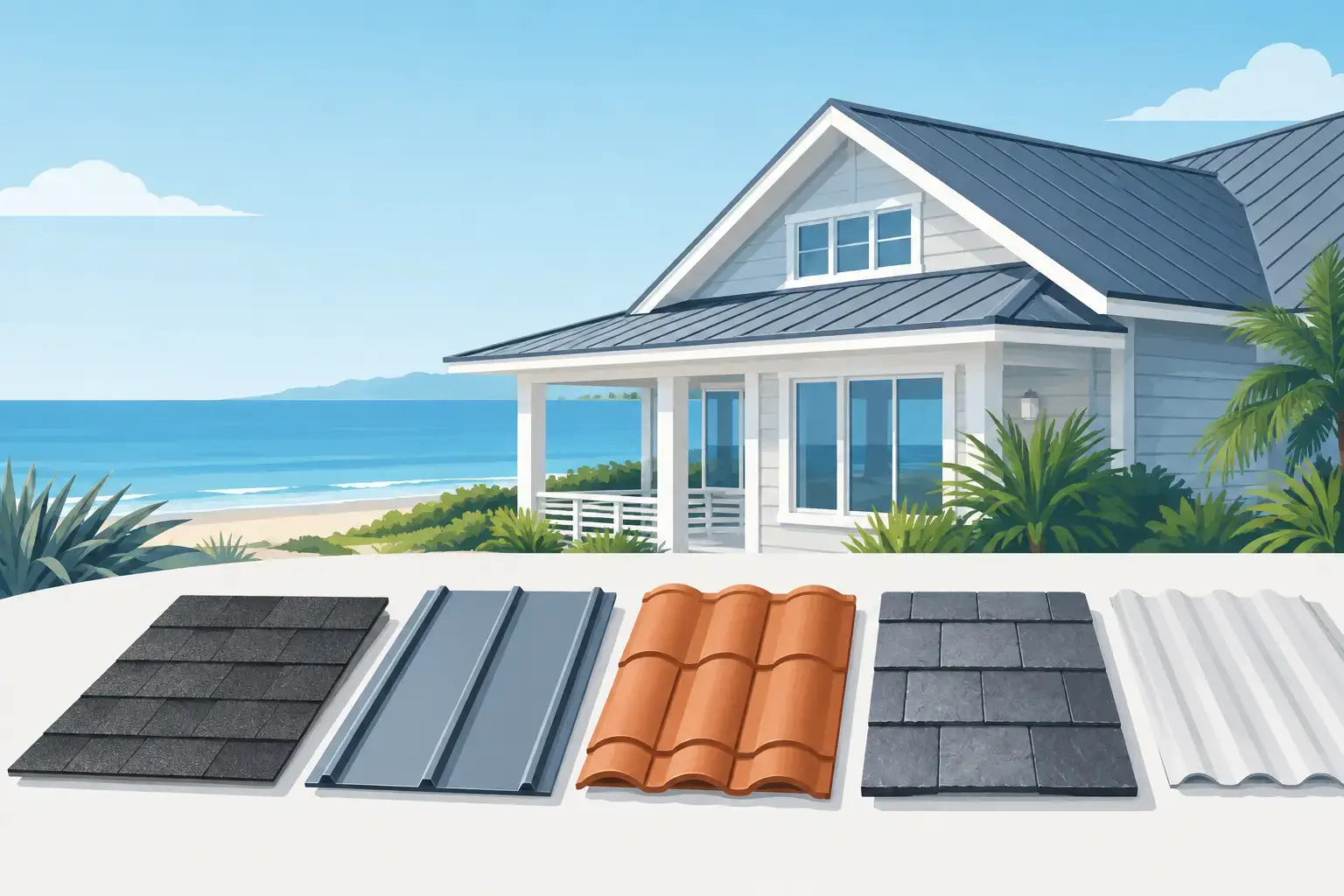
A roof can look perfectly fine from the driveway and still be a poor fit for life near the coast. Salt-heavy air, humid summers, wind-driven rain, intense sun, and tropical storm conditions put every layer of a roofing system to work. Coastal roofing material selection is not simply about choosing a color or picking the longest-looking warranty. It is about matching the roof to your home’s location, shape, exposure, and budget before the next hard storm tests it.
For homeowners in Coastal Georgia and the South Carolina Lowcountry, the best answer is rarely a one-size-fits-all product. A shaded home near marshland has different concerns than an open, elevated home exposed to strong winds. The material matters, but so do the fasteners, flashing, underlayment, ventilation, and workmanship that hold the system together.
What Coastal Weather Demands From a Roof
Coastal roofs face several pressures at once. Wind can lift shingles, loosen ridge caps, and force rain beneath areas that would stay dry during a normal shower. Salt in the air can speed up corrosion on exposed metal components. High humidity encourages algae and moisture problems, while strong UV exposure can gradually wear down roofing surfaces.
That is why the visible roofing material should not be judged on appearance alone. A roof that performs well inland may need upgraded wind ratings, more corrosion-resistant components, or a different installation method closer to the coast. Local building requirements and the property’s wind exposure should guide the final decision.
The roof design also changes the conversation. A simple gable roof, a low-slope section over a porch, and a complex roof with valleys and dormers do not shed water or handle wind in the same way. More roof transitions mean more places where flashing and installation details matter.
Coastal Roofing Material Selection Starts With the Whole System
A roofing material is only one part of the protection package. Even premium shingles or metal panels can underperform if the deck has damage, the flashing is poorly installed, or the fasteners are not suited to the environment.
A strong coastal roofing system typically considers wind-rated installation methods, water-resistant underlayment, carefully detailed valleys, properly installed drip edge, ventilation, and compatible flashing and fasteners. On a home with vulnerable roof-to-wall connections, the broader structure may also deserve evaluation. The goal is to reduce the chances of wind and water finding a path inside.
This is where a professional inspection adds real value. It identifies conditions that are hard to see from the ground, such as lifted tabs, aging sealant, rusting penetrations, soft decking, or flashing gaps around chimneys and walls. Drone photography can be useful for safely documenting roof conditions, especially on steep or complex homes.
Asphalt Shingles: A Practical Choice When Properly Specified
Architectural asphalt shingles remain a common choice because they offer dependable protection, a wide range of colors, and a familiar look at a manageable initial investment. For many homes in the Savannah area, a quality architectural shingle installed as a complete system is a sensible choice.
The key is avoiding a basic, lowest-bid approach. Coastal homeowners should ask about the shingle’s wind rating, the manufacturer’s approved installation requirements, starter strips, ridge caps, and the underlayment beneath it. A shingle roof may need additional fastening or specific application methods to meet local wind conditions.
Algae resistance is also worth considering in humid areas, particularly on roofs surrounded by trees or subject to long periods of shade. It will not eliminate maintenance, but it can help preserve the roof’s appearance. Homeowners should still keep branches trimmed back and clear accumulated debris from valleys and gutters.
Asphalt shingles are not automatically the best fit for every property. They can be more vulnerable to wind damage than certain metal systems when materials or installation details are inadequate. But a well-designed shingle roof remains a reliable, repairable option for many coastal homes.
Metal Roofing: Strong Performance With Important Details
Metal roofing is often an excellent coastal option, especially for property owners focused on long-term durability, wind performance, and efficient water shedding. Standing-seam metal roofs have concealed fasteners, which reduces the number of exposed fastening points in the roof surface. Metal can also reflect a portion of solar heat, depending on the finish and color.
Still, metal is not one category. Panel type, metal type, coating quality, gauge, fasteners, and trim details all affect performance. In salt-air environments, corrosion resistance deserves serious attention. Aluminum can be particularly well suited to locations with frequent salt exposure, while other metals may require the right protective finishes and compatible components.
Compatibility matters more than many homeowners realize. Dissimilar metals can react when moisture is present, creating corrosion issues over time. Flashing, fasteners, gutters, and roof accessories should be selected to work together rather than fight each other.
Metal roofing generally costs more upfront than shingles, and repairs require a contractor familiar with the specific panel system. It may be a worthwhile investment for a long-term home, but it should be installed by a crew that understands coastal detailing, not simply by someone who can put panels on a roof.
Tile and Synthetic Roofing: Appearance Meets Structural Planning
Tile roofs offer a distinct coastal look and can provide long service life when properly installed. Concrete and clay tile are durable materials, but they are heavy. Before a tile roof is selected, the home’s structure must be evaluated to confirm it can support the load. Wind attachment details are also critical, because individual tiles must remain secure in high-wind conditions.
Synthetic slate and shake products can provide the look of traditional materials with less weight than natural stone or wood. Quality varies by product, so homeowners should look beyond appearance and ask how the material is rated for wind, impact, heat, and local installation conditions.
These premium options can make sense for the right property, particularly where architectural style and long-term appearance are priorities. They are not automatically better than a properly installed shingle or metal roof. The best material is the one that fits the structure, the exposure, and the owner’s plans for the property.
Do Not Overlook Low-Slope Areas and Roof Transitions
Many homes have roof sections that need a different material than the main pitched roof. Porches, additions, bays, balconies, and rear transitions may have low slopes where conventional shingles are not appropriate. These areas may require a specialized membrane roofing system designed to manage standing water and slow drainage.
Transitions are equally important. Valleys, skylights, vent pipes, chimneys, sidewalls, and roof-to-wall intersections are common leak locations because they interrupt the main roof surface. A coastal roof replacement should include a close look at these details, not just a discussion about the field material.
Choose Materials Based on Your Property, Not a Sales Pitch
Before choosing a roof, consider how long you expect to own the home, how close it is to saltwater, how much shade it receives, its exposure to wind, and whether it has complex roof lines. A simple, inland-adjacent home may be well served by a high-quality architectural shingle system. A home with open exposure, a long ownership horizon, or frequent salt air may justify a metal roof with corrosion-conscious components.
It also helps to separate immediate needs from long-term upgrades. If a roof has a localized issue, a targeted repair may be appropriate. If shingles are aging across the entire roof, storm wear is widespread, or the decking and flashing reveal broader concerns, replacement may be the more responsible path.
A clear inspection should give you plain answers about the roof’s condition, the materials that suit it, and the work required to install them correctly. Real Good Roofing provides homeowners with straightforward evaluations, dated photos, measurements, and written estimates so they can make an informed decision about protecting their property.
The right roof should give you confidence when the forecast turns rough. Choose a material that fits your home, then make sure the installation details are treated with the same care as the surface everyone sees.