
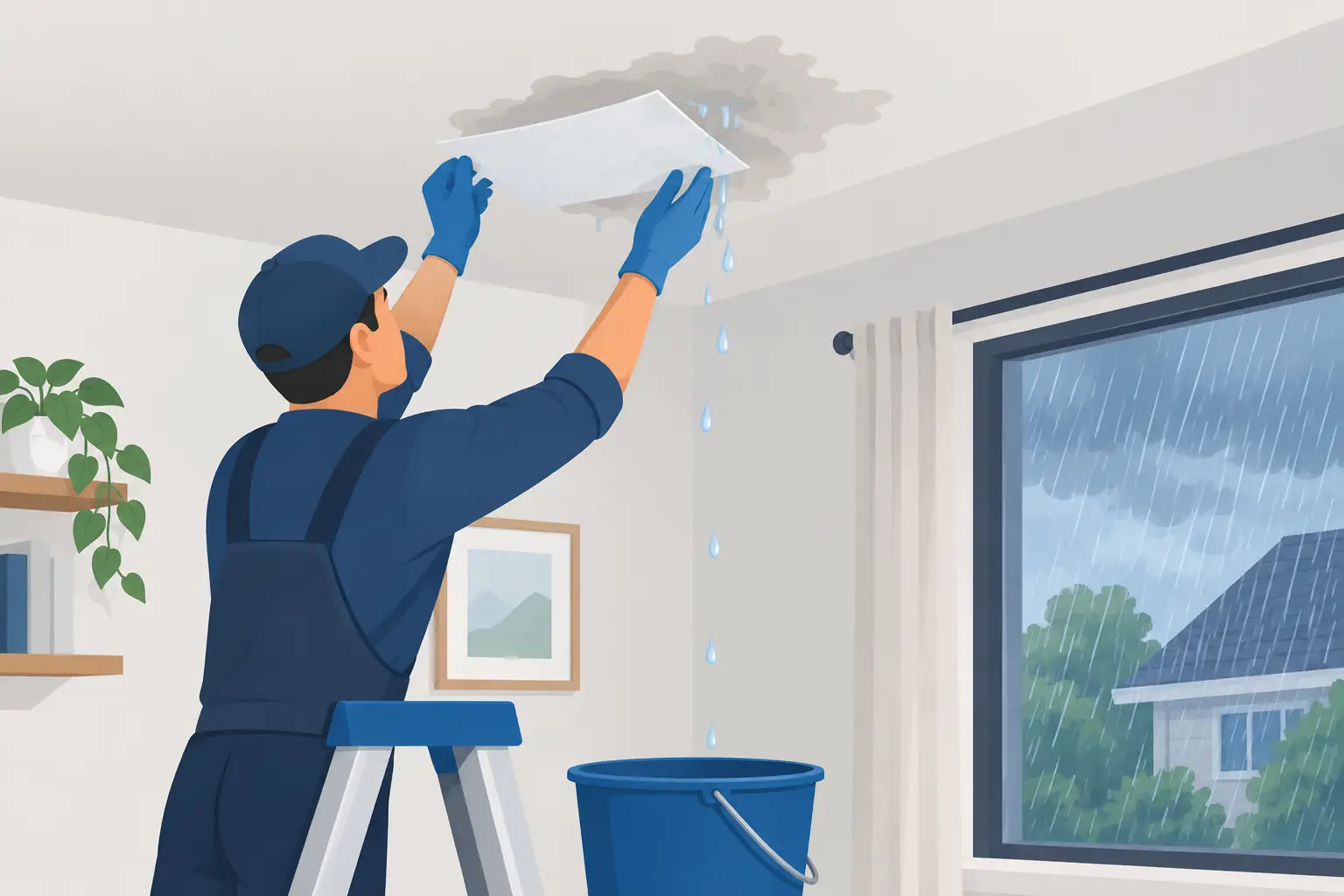
A brown spot that suddenly turns into a drip during a Coastal Georgia downpour can make any homeowner feel helpless. The good news is that you can take sensible steps to stop ceiling leaks during rain from causing more damage inside your home, even though the permanent fix usually has to wait until conditions are safe and the roof can be inspected properly.
The priority is not climbing onto a wet roof or guessing at the source. It is protecting people, containing the water, relieving pressure in a sagging ceiling, and getting a qualified roofer involved as soon as possible.
What to Do the Moment Water Starts Dripping
Move people, pets, furniture, and electronics away from the affected area. Water can travel along roof decking, framing, insulation, and electrical wiring before it reaches the ceiling, so the visible drip may not be directly below the roof opening.
Place a sturdy bucket, trash can, or other waterproof container under the leak. Add towels around the container to catch splashing, and check it regularly. If the leak is steady, use a larger container rather than risking an overflow that damages flooring or baseboards.
If water is near a light fixture, ceiling fan, outlet, or electrical panel, stay clear of it. Turn off power to that area at the breaker only if you can do so safely without standing in water. Do not touch a wet fixture, operate a ceiling fan, or remove a light cover while water is present. Call an electrician if you suspect water has entered electrical components.
Take clear photos and short videos of the ceiling stain, the active drip, and any damaged belongings before moving items. These records help show how the problem developed and give your roofing professional a clearer picture of what happened during the storm.
Relieve a Bulging Ceiling Before It Falls
A ceiling that is swollen, soft, or visibly sagging may be holding gallons of water above the drywall. That weight can cause a sudden collapse, which is dangerous and creates a much bigger cleanup job.
First, clear the room below the bulge and protect the floor with plastic sheeting, towels, or a tarp. Place a large bucket beneath the lowest point of the sag. Wearing eye protection and gloves, carefully make a very small hole at that low point with a screwdriver or similar pointed tool. Stand to the side, not directly beneath it, and let the water drain into the bucket.
This is a damage-control step, not a repair. Once water has drained, the drywall may still need replacement, and wet insulation above it can hold moisture long after the rain stops. If the ceiling is severely bowed, cracking, or threatening to collapse, leave the area and call for professional help.
Do Not Try to Repair the Roof in the Rain
It is understandable to want to get on the roof and cover the suspected leak immediately. In reality, rain-soaked shingles, metal panels, algae, wet leaves, and ladder rungs create serious fall hazards. Strong wind and lightning make the situation even more dangerous.
Temporary coverings can also do more harm than good when installed incorrectly. A tarp nailed through shingles may create additional openings, trap water, or tear loose in high wind. Caulk and roof cement often fail on wet surfaces, and a rushed patch can hide the actual issue until more water enters.
If you can safely see a loose gutter, blocked downspout, or debris-filled valley from the ground, make a note of it for the inspection. Do not attempt to clear it during the storm. The safest move is to contain the interior water and arrange for an emergency roof assessment once weather allows.
Why a Ceiling Leak May Not Be a Simple Missing Shingle
Rain exposes weak points in a roofing system, but the roof surface is only one possible source. A leak that appears around a chimney, vent pipe, skylight, wall intersection, or attic access may involve damaged flashing, failed sealant, worn pipe boots, or improperly directed water.
Wind-driven rain is especially revealing. A roof may look fine during a light shower but leak when gusts push water under lifted shingles or into vulnerable flashing details. On low-slope roofs, ponding water and drainage problems can also send moisture beneath seams that appeared intact in dry weather.
Condensation can sometimes be mistaken for a roof leak. Bathroom exhaust vents that terminate in the attic, poorly insulated ductwork, and inadequate attic ventilation can create moisture around ceilings during humid or cold conditions. The timing matters: if the problem only appears during rain, the roof and exterior penetrations deserve close attention. If it appears without rain, an attic moisture issue may be involved.
How to Stop Ceiling Leaks During Rain With Temporary Controls
There is no safe interior trick that permanently stops a roof leak while rain is still falling. What you can do is control the path of the water and limit the damage until a repair can be completed.
For a small, steady drip, a bucket and towels may be enough. For water running down a wall, use towels to direct it away from trim, outlets, and finished flooring. Remove wet rugs quickly, and use fans or a dehumidifier after the storm if it is safe to restore power. Prompt drying helps reduce staining, odors, warped materials, and mold growth.
If you have attic access and it is safe, dry, and well lit, you can look from the attic floor for active dripping, wet insulation, or darkened roof decking. Do not step between ceiling joists, touch wet wiring, or disturb soaked insulation. A few photos from a safe position can be useful, but finding the exact entry point often requires a trained inspection from both inside and outside.
When to Call for Emergency Roofing Help
Call for a professional inspection promptly when water is actively entering the home, the ceiling is sagging, multiple rooms are affected, or you see roof materials on the ground after a storm. The same applies if a leak returns every time it rains, even if it seems minor. Small leaks can saturate decking and insulation over time before they become obvious from inside.
A thorough inspection should look beyond the visible stain. A roofing professional may examine shingles or metal panels, flashing, roof penetrations, valleys, ridge areas, gutters, attic ventilation, and the underside of the roof deck. Drone inspection can be useful for documenting storm-related conditions or evaluating areas that are unsafe to access immediately, though close-up examination may still be needed to confirm the repair.
For homeowners in Pooler, Savannah, and surrounding coastal communities, storm exposure is part of owning a home. Real Good Roofing provides responsive inspections, clear photo documentation, measurements, and written repair recommendations so property owners can understand what is happening on their roof and what needs attention.
After the Rain Stops, Watch for Hidden Moisture
Do not assume the issue is over just because the drip stops. Check the ceiling over the next several days for spreading stains, peeling paint, soft drywall, musty odors, or new bubbling around seams. In the attic, wet insulation can remain damp and reduce its effectiveness, while damp roof decking may begin to deteriorate if the source is not corrected.
Keep a simple record of when the leak occurred, how hard it rained, the direction of the wind, and where water appeared. That information can help identify whether the problem is tied to wind-driven rain, a drainage backup, or a particular roof detail.
A dry ceiling is the goal, but a sound repair means more than making the stain disappear. Contain the water safely, let the storm pass, and have the roof system inspected before the next round of rain turns a manageable leak into a larger repair.