
A new roof installation is one of the biggest protection decisions you can make for your home. It is not just about replacing worn shingles. The work affects how your house handles wind-driven rain, summer heat, humidity, and the storms that can move through Coastal Georgia with little warning.
For most homeowners, the concern is simple: you want to know what needs to be done, why it needs to be done, and whether the finished roof will protect your property for years to come. A dependable roofing contractor should make those answers clear before materials arrive in the driveway.
When a New Roof Installation Is the Right Call
A leak does not automatically mean you need a complete replacement. Damaged flashing, a small area of missing shingles, or a localized puncture can often be repaired when the rest of the roof remains in good condition. A professional inspection helps separate a repairable issue from a roof that has reached the end of its useful life.
Replacement becomes the more practical choice when damage is widespread, shingles are aging across multiple slopes, granules are washing into gutters, or repeated repairs are no longer solving the underlying problem. Soft decking, persistent moisture intrusion, sagging areas, and storm damage over a large section of the roof also deserve close attention.
Age matters, but it is not the only factor. A roof exposed to intense sun, coastal moisture, tree debris, or frequent wind events may wear differently than one on a nearby home. That is why a visual estimate from the ground is not enough. A thorough inspection should look at the roof covering, flashing, ventilation, penetrations, drainage, and the condition of the structure beneath the visible surface when possible.
Start With a Clear Scope of Work
Before scheduling a new roof, ask for a written estimate that explains what is included. The proposal should identify the roofing material, the areas being replaced, the underlayment and flashing approach, ventilation work if needed, cleanup expectations, and how unexpected decking damage will be handled if it is found after tear-off.
This is where clear communication matters most. Some roofing problems cannot be fully seen until old materials are removed. A contractor cannot responsibly promise that no concealed damage exists. What they can do is explain how they will document any issue, discuss the available repair before proceeding, and keep the project moving without surprises being brushed aside.
For homes with recent storm damage, dated photos, measurements, and a written estimate can give the homeowner a clear record of the roof’s condition. Keep those materials with your property records and review them carefully so you understand the recommended work.
Choosing Materials for Your Home and Climate
Asphalt shingles remain a common choice because they offer broad color options, dependable performance, and a range of styles. The right shingle is not always the most expensive option. It should fit the roof design, your long-term plans for the home, and the weather conditions your property faces.
Metal roofing is another strong option for homeowners who want a long-lasting system with a distinct appearance. It can perform well in heavy rain and wind when properly installed, but the upfront investment and installation details differ from shingle roofing. Roof shape, existing structure, neighborhood preferences, and budget all play a part in the decision.
The material is only one piece of the system. Underlayment creates a secondary layer of protection beneath the outer roofing material. Flashing directs water away from vulnerable transitions around chimneys, walls, vents, and valleys. Ridge vents, intake ventilation, and properly sized exhaust help manage attic heat and moisture. A good-looking roof can still have problems if these details are overlooked.
Color deserves practical thought as well. Darker and lighter shades can change the look of a home dramatically, but the best choice should also work with your siding, trim, brick, gutters, and surrounding landscape. If you plan to update exterior features later, choose a roof color that gives you flexibility.
Preparing for Installation Day
Roof replacement is active work. There will be noise, foot traffic, deliveries, and debris removal throughout the day. Most homes can remain occupied during installation, but it helps to prepare family members, pets, and vehicles in advance.
Move vehicles out of the driveway and away from the work zone so the crew can access the roof and protect your cars from falling debris. Clear patio furniture, grills, potted plants, and fragile items near the exterior walls. If you have valuables or breakable decorations on interior walls, take them down. The vibration from roofing work can occasionally shift items, especially in older homes.
Let the contractor know about gates, pool areas, irrigation heads, outdoor outlets, attic access, and any landscaping you are especially concerned about. A professional crew will take reasonable steps to protect the property, but an early conversation is the best way to avoid preventable issues.
Weather may affect the schedule. Rain, lightning, high winds, or unsafe conditions can delay part of the work. That can be frustrating when you are ready to finish the project, but a crew that pauses for unsafe weather is protecting both the installation quality and the people doing the work.
What Happens During a New Roof Installation
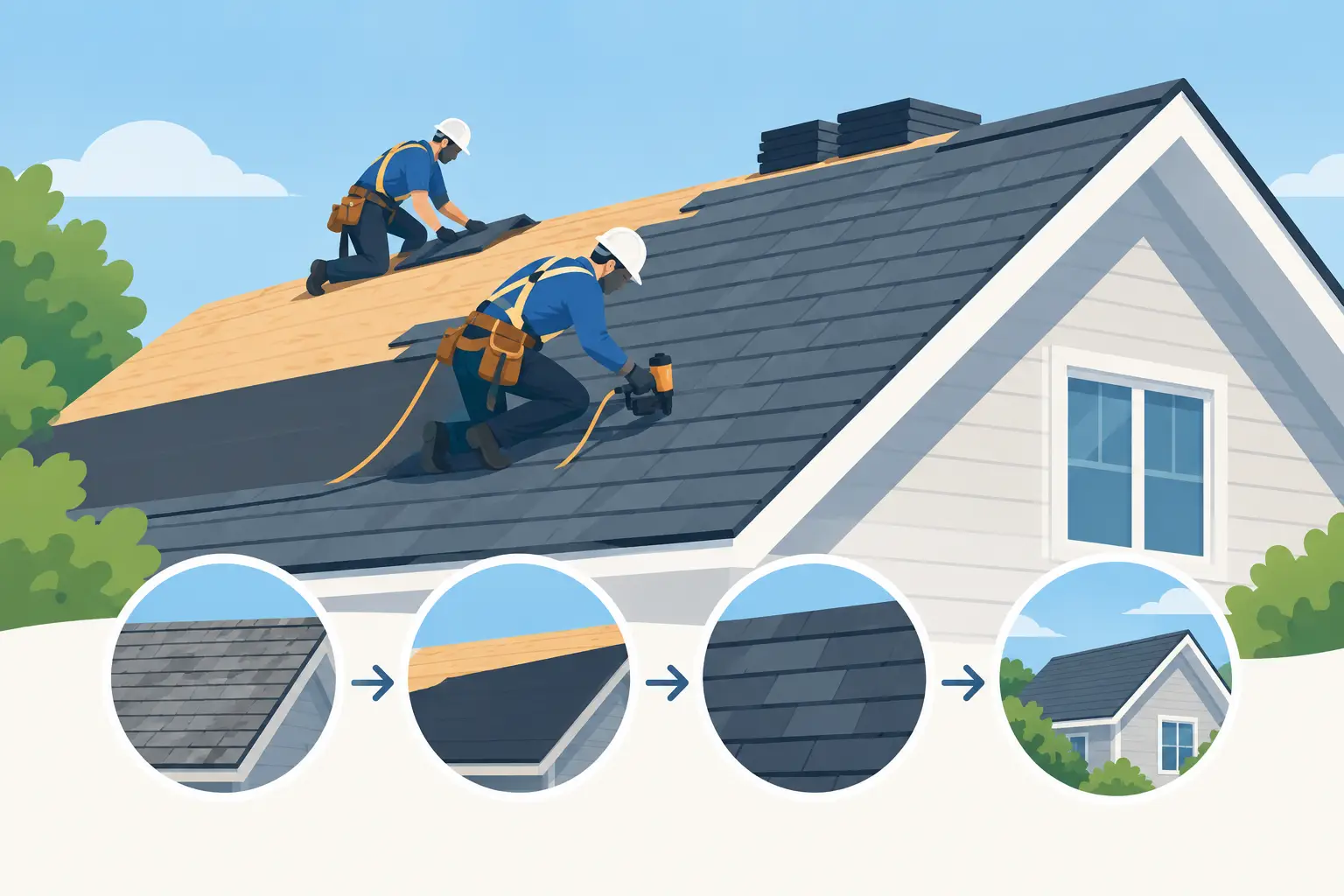
The job typically begins with material delivery and site preparation. Crews protect landscaping and work areas, then remove the old roofing materials when a full tear-off is part of the project. Removing the existing roof allows the contractor to inspect the decking and identify damaged or weakened wood that should be addressed before the new system goes on.
Next comes the water-management work: underlayment, flashing, edge details, and protection around penetrations. These components are not the most visible part of the finished roof, but they are central to preventing water from getting where it does not belong.
The primary roofing material is then installed according to the system requirements and the roof layout. Valleys, hips, ridges, skylights, vents, and wall intersections receive special attention because they are common locations for future leaks when workmanship is rushed.
A final cleanup should include collecting debris and using magnetic tools to pick up loose nails around the property. Before the crew leaves, ask for a walkthrough or final discussion. You should know what was completed, whether any decking repairs were made, and what to watch for after the installation.
The Questions Worth Asking Before You Hire
You do not need roofing experience to ask good questions. Start by confirming whether the contractor is properly licensed and insured for the work being performed. Ask who will supervise the job, whether the crew will remove the old roof or install over it when allowed, and how the property will be protected during construction.
It is also reasonable to ask how the contractor documents hidden damage, handles cleanup, and communicates schedule changes. Request a written scope instead of relying on verbal assurances. If a proposal is vague about materials, flashing, ventilation, or disposal, ask for clarification before signing anything.
Local experience has real value in Pooler, Savannah, and the surrounding coastal communities. Roofs here must stand up to heat, humidity, heavy rain, and storm-season conditions. Real Good Roofing brings a third-generation trade background, drone-enabled inspection capability, and a service-first approach to helping property owners make informed roofing decisions.
Protecting the Investment After the Work Is Done
A new roof still benefits from attention. Keep gutters clear so water can drain away as intended. Trim back limbs that scrape the roof or drop heavy debris. After strong storms, look from the ground for displaced shingles, lifted flashing, or fallen branches, and arrange an inspection if something does not look right.
Avoid climbing onto the roof yourself unless you have the training and safety equipment to do so. A professional inspection is safer and can catch small concerns before they become interior water damage.
The best time to plan a roof replacement is before a small issue becomes an emergency. If your roof is showing its age, a straightforward inspection and a clear written plan can give you the confidence to move forward on your terms.