
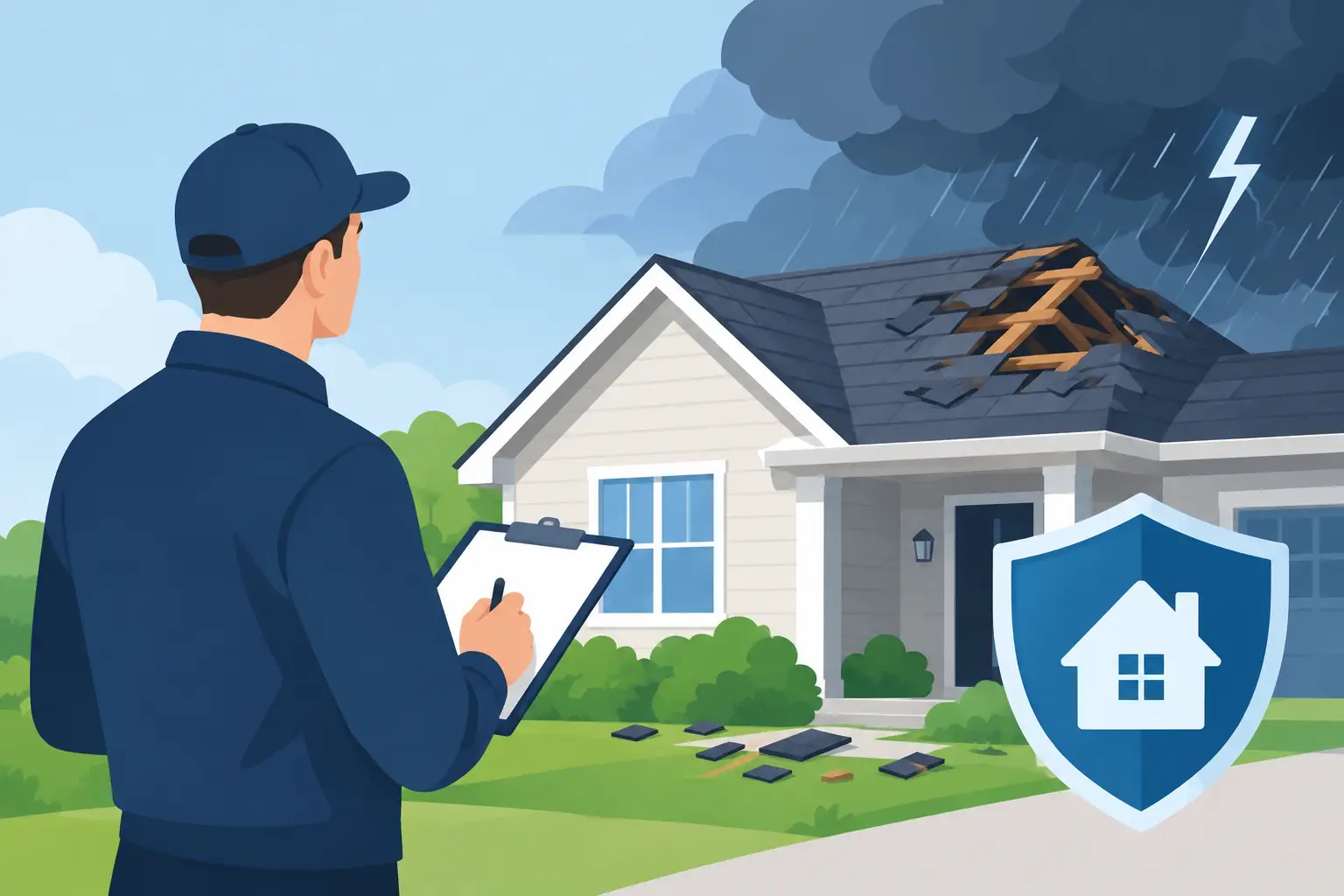
A hard Coastal Georgia storm can leave a roof looking mostly normal from the ground while wind-lifted shingles, punctures, and damaged flashing create a path for water. This insurance roofing claim guide gives homeowners a practical way to respond: protect the property, document what happened, understand the condition of the roof, and communicate directly with their insurer using clear information.
The goal is not to assume a claim will be approved. Every policy, loss, and property condition is different. The goal is to make decisions based on facts before a small roof problem becomes stained ceilings, wet insulation, wood rot, or a more extensive repair.
What to Do First After Roof Storm Damage
Safety comes before documentation. Stay off the roof, avoid downed power lines, and do not climb a ladder in wet or windy conditions. If water is entering the home, move furniture and valuables away from the affected area, place containers beneath active drips, and take reasonable steps to limit additional interior damage.
Start a simple record while the details are fresh. Note the date and approximate time of the storm, what you observed, and when you first noticed any leak or damage. Take wide photos of the home from the ground, then closer photos of visible debris, fallen limbs, bent gutters, damaged siding, or water marks indoors. Video can also help show active dripping or the scope of debris around the property.
Keep receipts for reasonable temporary protection measures and retain damaged materials if it is safe and practical to do so. Avoid throwing away a broken shingle, vent cap, or piece of flashing before it has been photographed. At the same time, do not delay necessary emergency action just to preserve a damaged item.
Watch for Damage That Is Easy to Miss
Storm damage is not always a missing-shingle problem. Wind can loosen tabs without tearing them completely away. Hail can bruise shingles or damage metal components. Wind-driven rain may enter at flashing around chimneys, walls, skylights, vents, or pipe boots. A leak can also travel along framing before it appears on a ceiling, so the visible water spot may not sit directly below the roof opening.
Inside the home, look for new ceiling discoloration, bubbling paint, damp drywall, musty odors, or drips in the attic. Outside, look for granules collecting near downspouts, new exposed areas on the roof, lifted edges, cracked seals, and damage to gutters or fascia. These signs do not determine coverage, but they are useful details to record and investigate.
Insurance Roofing Claim Guide: Get Clear Documentation
A professional roof inspection can help separate visible storm-related concerns from ordinary aging, installation issues, and maintenance needs. That distinction matters because a roof can have more than one condition at the same time. A storm may cause a new opening, for example, while an older pipe boot or worn seal also needs attention.
Ask for documentation you can review and keep with your property records. Useful materials often include dated photographs, roof measurements, notes identifying observed conditions, and a written estimate for recommended repair or replacement work. Read the estimate carefully so you understand what work is proposed, what materials are involved, and whether the recommendation is a localized repair or a full replacement.
Real Good Roofing provides inspections, dated photos, measurements, and written estimates that homeowners can submit with their own insurance claims. A qualified local inspection is especially valuable when the damage is difficult to see from the ground or when a recent storm has left you unsure whether the roof needs immediate work.
Drone photography can provide a safer, broader view of roof slopes, ridge lines, valleys, and hard-to-reach areas. It is helpful documentation, but it does not replace a close professional evaluation where one is appropriate. The best assessment matches the inspection method to the roof’s height, pitch, material, access, and visible condition.
Contact Your Insurer With the Facts
When you are ready, contact your insurance company or agent yourself and report the loss according to your policy instructions. Have your policy information, storm date, photos, notes, and inspection materials available. Describe what you observed plainly: when the storm occurred, what changed afterward, where water entered if there is an active leak, and what temporary steps you took to protect the home.
Ask questions and write down the answers. It is reasonable to ask what information is needed, what the next steps are, whether there are deadlines, and how to provide documents. Keep a file with emails, claim-related letters, photos, estimates, inspection notes, and a log of calls that includes the date, time, and name of the person you spoke with.
Do not guess about the cause of damage if you do not know. Share the facts you have, along with the documentation. Your insurer makes its own coverage determination under the terms of your policy. A roofing contractor can evaluate roof conditions and provide repair recommendations, but cannot make that coverage decision or negotiate a claim for you.
Be Careful With Broad Promises
After a major storm, homeowners may receive unsolicited offers that sound quick and reassuring. Be cautious of anyone who promises a certain insurance outcome, pressures you to sign immediately, or discourages you from reading paperwork. A roof is one of the home’s most important protective systems. The contractor you choose should be willing to explain the observed damage, scope of work, materials, schedule, and warranty in straightforward terms.
Local experience also matters. Coastal roofs face intense sun, heavy rain, humidity, high winds, and salt air in some areas. Repair details that protect flashing, penetrations, ventilation, and drainage deserve as much attention as the shingles or metal panels you see from the street.
Repair or Replacement: How to Think Through the Decision
An insurance-related inspection does not automatically mean the roof needs to be replaced. A targeted repair may be the sensible answer when damage is isolated and the surrounding roof remains in good condition. Replacing damaged flashing, repairing a small puncture, or correcting a limited area of wind damage can restore protection without unnecessary work.
A replacement may be worth considering when damage is widespread, when multiple roof areas have failed, when matching materials are not reasonably available, or when the roof has reached the end of its serviceable life. The right recommendation depends on the full roof system, not one photograph or one loose shingle.
For commercial properties and multifamily buildings, the decision can involve additional concerns such as tenant disruption, drainage, rooftop equipment, and long-term maintenance planning. Property managers should document tenant reports promptly and inspect interior spaces as well as the roof surface. A minor leak above a ceiling grid can still affect insulation, wiring, finishes, and daily operations.
Common Mistakes That Make a Roof Problem Worse
The first mistake is waiting for visible interior damage. Water can move beneath roofing materials and through attic spaces before it reaches a living area. Calling for an inspection after a significant storm, especially when neighbors have visible damage or debris is widespread, can catch problems earlier.
The second is treating all roof damage as obvious. A roof may have subtle wind creasing, compromised seals, or flashing movement that needs trained eyes to identify. The third is approving work without a clear written scope. You should know what will be repaired or replaced, how the work area will be protected, and what cleanup to expect when the job is complete.
Finally, do not let an insurance question postpone needed emergency protection. If the roof is actively leaking, prompt temporary measures and professional repair planning can help prevent the damage from spreading. Documentation is valuable, but protecting the home is the immediate priority.
A storm is stressful enough without wondering what is happening above your ceiling. Take clear photos, get a thorough inspection, keep your records organized, and make roof decisions based on the actual condition of your property. That steady approach gives you a stronger foundation for protecting your home long after the weather clears.