
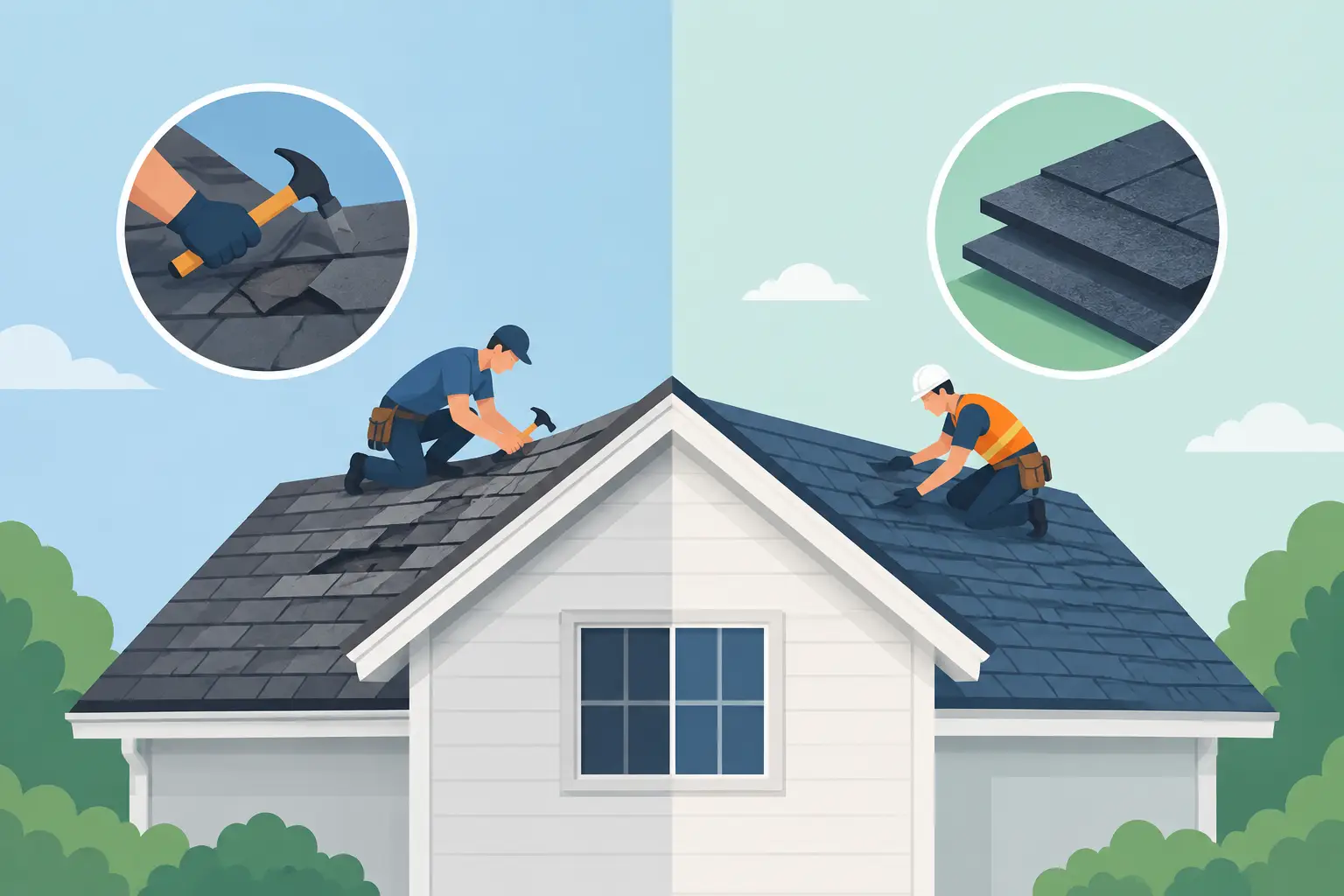
A stain spreading across the ceiling after a Coastal Georgia downpour can make any homeowner fear the worst. But roof repair versus replacement is rarely a decision that should be made from inside the house, or from a quick look at a few missing shingles. The right answer depends on what happened beneath the surface, how much of the roof is affected, how old the system is, and whether a repair will truly protect your home for years to come.
A good roofing decision is not about choosing the smallest immediate bill or automatically assuming a full replacement is necessary. It is about stopping water intrusion, protecting the structure of the home, and putting your money toward the solution that makes sense for the roof you have.
Roof Repair Versus Replacement Starts With the Facts
A roof is a system, not just a layer of shingles. Shingles, flashing, underlayment, vents, roof decking, valleys, and penetrations around pipes or chimneys all have a role in keeping water out. A leak may begin at one small failure point, while the water it releases travels several feet before showing up as a ceiling stain.
That is why an inspection matters before any recommendation. A trained roofer should look for the visible problem and investigate the surrounding areas for lifted shingles, cracked seals, damaged flashing, soft decking, granule loss, and signs of older repairs. Drone imagery can be useful for safely documenting steep or hard-to-see areas, while an on-roof inspection provides the close view needed to evaluate the condition of the materials.
Storm damage deserves the same careful approach. Wind can break adhesive seals without tearing off a shingle. Hail can leave bruising that is difficult to identify from the ground. Branch impact may create a localized opening, but moisture can continue moving below the roof covering after the storm has passed. Clear photos, measurements, and a written assessment give a property owner a better foundation for deciding what comes next.
When a Roof Repair Is the Better Call
Repair is often the right choice when the damage is limited and the rest of the roofing system remains in good condition. A few missing shingles after high winds, a leaking pipe boot, loose flashing near a wall, or a small puncture from a fallen limb may be resolved without replacing the entire roof.
The age of the roof matters here. If the existing shingles still have sound granules, lie flat, and are not broadly brittle or cracked, a targeted repair can extend the service life of the system. A properly completed repair should address the cause of the leak, replace compromised materials, and restore the water-shedding details around the affected area.
Repair can also be a sensible choice when a homeowner is addressing a maintenance issue early. Small gaps around flashings, debris-packed valleys, exposed fasteners, and damaged sealant are easier and less disruptive to correct before repeated water exposure causes decking or interior damage.
There are limits. Matching a repair to older, weathered shingles is not always possible, especially when the original color is discontinued or the roof has faded unevenly. A professional should explain whether a repair will be visually noticeable and whether the surrounding materials are likely to need attention soon. Honest advice includes acknowledging when a repair is a practical short-term fix rather than a long-term answer.
When Replacement Is the Safer Investment
A roof replacement becomes the stronger choice when damage is widespread, the existing materials are near the end of their useful life, or repairs would only keep chasing problems from one area to another. Multiple leaks, large sections of wind damage, extensive granule loss, curling shingles, repeated patchwork, or soft roof decking can all point toward replacement.
Replacement is also worth serious consideration when the roof has been repaired several times in recent years. One repair may be appropriate. A pattern of repairs can signal that the roof is no longer providing dependable protection. Continuing to patch an aging system may cost more over time while leaving the home exposed to sudden leaks during the next severe weather event.
For homeowners planning to stay in the house, a new roof can provide a clean starting point. It allows damaged materials beneath the shingles to be addressed, improves the appearance of the property, and gives the owner a clearer understanding of the roof’s condition and expected maintenance needs. For property owners preparing to sell or managing a commercial building, replacement may also reduce the uncertainty that comes with an aging roof.
Replacement is not automatically required simply because a roof is older. Some roofs age better than others based on material quality, installation, ventilation, tree coverage, storm exposure, and maintenance history. The condition of the roof should lead the recommendation, not the calendar alone.
Four Factors That Should Guide the Decision
The scope of the damage comes first. Localized damage on an otherwise sound roof usually favors repair. Damage spread across multiple slopes, valleys, or roof components may make replacement more practical and reliable.
The condition of the underlying structure is equally important. If water has damaged decking, framing, insulation, or interior finishes, the project may need to go beyond replacing surface shingles. The goal is to correct the source of moisture and identify materials that can no longer perform safely.
Next, consider the remaining life of the roof. A repair on a relatively new roof may preserve years of useful service. The same repair on a roof nearing the end of its lifespan may only delay a replacement that is already approaching. This is where a straightforward conversation about near-term and long-term costs matters most.
Finally, think about your plans for the property. If you need reliable protection for the next decade or more, the best option may be different from the right option for a home you expect to sell soon. Neither priority is wrong. The key is making the decision with clear information instead of reacting only to the immediate leak.
Watch for Problems That Need Prompt Attention
Some warning signs should not wait for a convenient time on the calendar. Call for a professional inspection promptly if you notice active dripping, a ceiling bulge, shingles on the ground after a storm, daylight in the attic, sagging roof areas, or a tree limb that has struck the roof. Fast action can limit the spread of water damage and help protect the interior of the property.
If it is safe to do so, move belongings away from the leak and place a container beneath dripping water. Do not climb onto a wet, steep, or storm-damaged roof. What looks like a simple missing shingle may involve slippery surfaces, hidden structural weakness, or electrical hazards.
For properties in Pooler, Savannah, and surrounding coastal communities, storm readiness is part of roof ownership. Wind-driven rain can expose weaknesses that were not obvious during normal weather. A post-storm inspection can identify damage early, even when there is no immediate leak inside.
What a Straightforward Recommendation Should Include
A roofing contractor should be able to explain what was found, where it was found, and why repair or replacement is being recommended. Ask to see photos of the affected areas and request a written scope of work that identifies the materials and work involved. You should understand whether the recommendation addresses a localized failure, a broader roofing issue, or both.
At Real Good Roofing, that practical approach is central to the job. A clear inspection, responsive communication, and transparent written estimate help homeowners make decisions without pressure or guesswork. With third-generation roofing experience and detailed inspection tools, the focus stays on the condition of the property and the repair that genuinely fits it.
The best next step is simple: have the roof evaluated before a small concern becomes an expensive interior problem. Whether the answer is a focused repair or a full replacement, a clear assessment gives you the confidence to protect your home on solid information.