
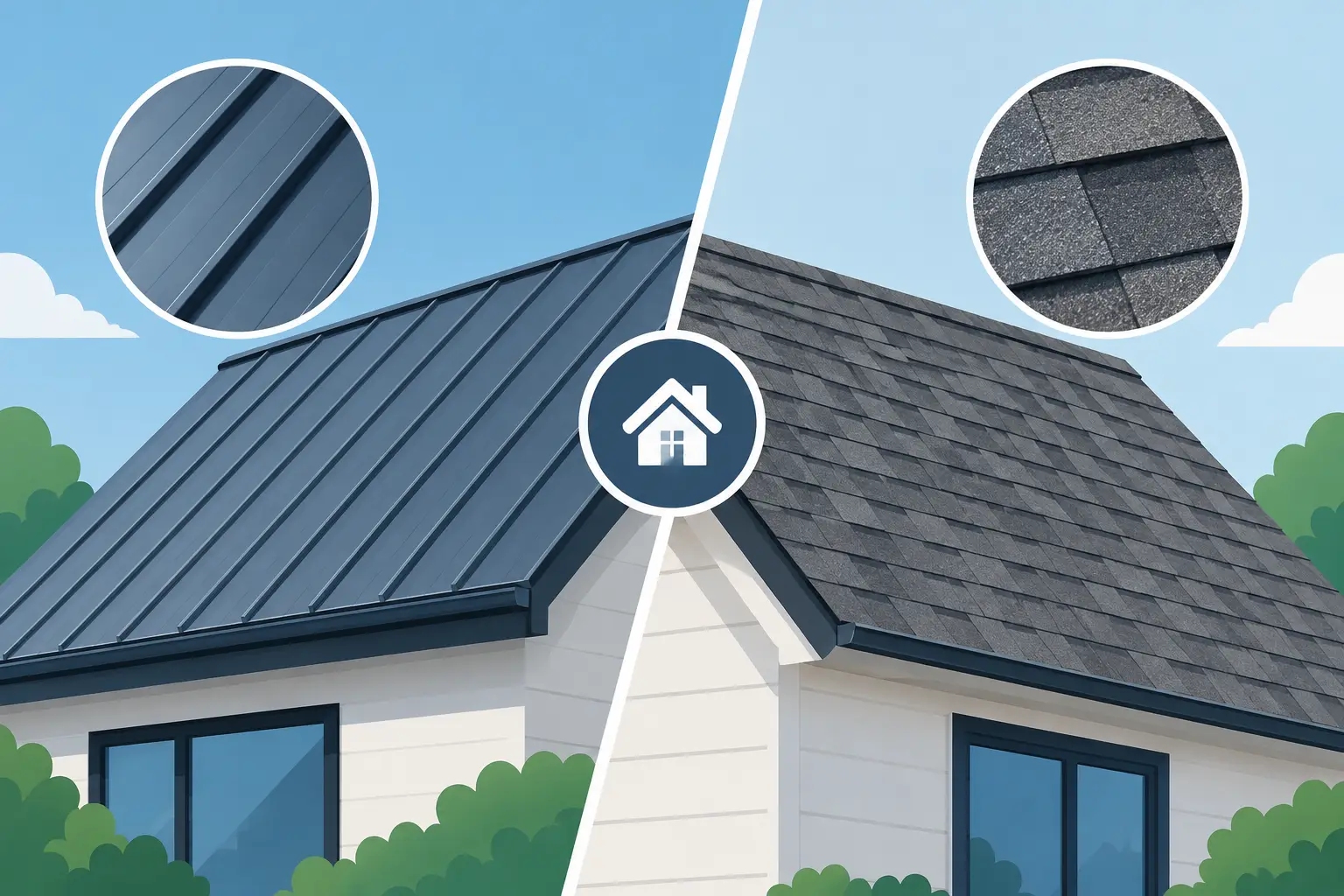
A roof choice can feel straightforward until Coastal Georgia weather gets involved. Humidity, wind-driven rain, intense sun, and the occasional named storm put every roofing material to work. When homeowners compare a metal roof versus shingles, the better option is rarely about what looks best on a sample board. It is about the home’s condition, budget, roof design, long-term plans, and the level of protection the property needs.
Both materials can be excellent when they are properly selected and professionally installed. The key is understanding where each one performs well – and where its trade-offs deserve a closer look.
Metal Roof Versus Shingles: The Big Differences
Asphalt shingles remain the most common roofing material for good reason. They provide dependable protection, fit a wide range of home styles, and offer flexibility when repairs are needed. Modern architectural shingles also have more depth and visual appeal than older three-tab roofs, with colors and profiles that can complement traditional, coastal, and contemporary homes.
Metal roofing is a different kind of investment. A standing seam metal roof or quality metal panel system can offer long service life, strong wind performance, and a clean appearance that works especially well on Lowcountry cottages, farmhouses, and newer homes. Metal is also lightweight compared with many other roofing materials, which can be beneficial for the structure beneath it.
The choice is not as simple as “metal lasts longer” or “shingles cost less.” Those statements are generally true, but they do not account for the roof’s slope, complexity, existing condition, ventilation, nearby trees, exposure to salt air, or whether the homeowner expects to stay in the house for years to come.
Upfront Cost and Long-Term Value
Shingles usually require a lower initial investment than metal roofing. For many homeowners replacing a roof after age, storm wear, or recurring leaks, that lower entry point makes a shingle roof a practical and responsible choice.
Metal roofing typically costs more at installation because the materials, trim details, fabrication, and installation process are more specialized. Roofs with valleys, dormers, chimneys, skylights, and multiple transitions require careful flashing and finishing regardless of material, but these details can add more labor to a metal project.
Over the long run, metal may provide value through its expected lifespan and lower need for full replacement. That does not mean it is maintenance-free. Fasteners, sealants, penetrations, flashing, and areas around vents or chimneys still need periodic attention. A metal roof is durable, but it is not immune to installation mistakes, fallen limbs, or storm damage.
For homeowners who expect to move in the near future, a high-quality architectural shingle roof may make more financial sense. For owners who plan to remain in the home for decades, metal can be worth a closer look. A roofing professional should evaluate the whole property rather than recommending one material based on lifespan alone.
How Each Roof Holds Up to Coastal Weather
Coastal weather is a major part of this decision. Wind, rain, heat, moisture, and airborne salt can all affect a roof over time.
Wind and Heavy Rain
Both metal and shingles can perform well in high winds when the roofing system is designed and installed correctly. The word “system” matters here. Underlayment, flashing, fasteners, deck condition, ventilation, and edge details all influence how a roof responds during a storm.
Metal panels can offer excellent wind resistance because large sections are securely fastened to the roof deck or framing system. However, a panel that is improperly attached or flashed can create major problems in a strong storm. The quality of installation matters as much as the material.
Architectural shingles are also available in wind-rated options. Properly installed shingles create overlapping layers that shed water effectively. After severe weather, shingles may be easier to inspect for missing tabs, lifted edges, or impact damage, while metal inspections often focus on seams, fasteners, flashing, and dents.
Sun, Humidity, and Heat
The Georgia sun is hard on every roof. Shingles absorb heat and can gradually lose granules as they age. Good attic ventilation helps manage heat and moisture below the roof, supporting the life of the shingles and helping keep the home more comfortable.
Metal roofing reflects more sunlight than many darker shingle options, which may help reduce heat gain in some homes. The actual impact depends on the panel color, insulation, attic ventilation, home design, and local conditions. It should be viewed as one potential benefit, not a promise of a certain utility result.
Humidity is another reason ventilation and moisture control cannot be overlooked. A new roof installed over hidden deck damage or poor attic airflow will not perform the way it should, whether it is metal or shingles.
Salt Air and Coastal Exposure
Homes closer to the coast need added attention to corrosion resistance. Metal roofing should be selected with an appropriate protective finish and compatible fasteners. Not all metal products are the same, and mixing incompatible metals can contribute to corrosion over time.
Shingles do not rust, but coastal moisture and shade can encourage algae staining. Many shingle products include algae-resistant features, though no roof should be expected to stay perfectly clean forever in a warm, humid climate.
Appearance, Roof Design, and Curb Appeal
A roof is a large part of a home’s exterior appearance. Shingles offer a broad range of colors, textures, and architectural styles. They often blend naturally with brick, siding, stucco, and traditional Southern home designs. For homeowners trying to match an existing neighborhood look, shingles can be the easier path.
Metal roofing has moved well beyond the plain corrugated panels some people picture. Standing seam roofs create crisp vertical lines, while other metal profiles can resemble shingles, slate, or tile. Metal can give a home a distinctive finished appearance, but it should suit the roof design rather than compete with it.
Roof pitch also matters. Metal is often a strong candidate for lower-slope applications when designed for that purpose. Shingles require adequate slope to shed water properly. A qualified inspection can identify whether the existing roof geometry affects the material options.
Repairs and Day-to-Day Maintenance
When a few shingles are damaged by wind or a falling branch, targeted repair is often possible. Color matching can become harder as a roof ages and fades, but isolated shingle repairs are usually familiar and straightforward for an experienced roofing crew.
Metal repairs can be more involved. A damaged panel may need to be carefully removed and replaced without disturbing surrounding panels or seams. Matching the existing panel color and profile can also be a consideration, especially if the roof has weathered for several years.
Neither roof should be ignored between major events. Homeowners should watch for loose gutters, debris buildup, stains on ceilings, visible flashing issues, and branches rubbing against the roof. After a major storm, a professional inspection is safer than climbing onto the roof yourself. Drone images and documented observations can also provide a clear picture of the roof’s condition from the ground.
When Shingles Are the Better Choice
Shingles are often the right fit when a homeowner wants dependable protection with a more manageable upfront investment. They are a practical option for many roof replacements, particularly on homes with conventional pitches and designs. They also work well for owners who may sell within a shorter time frame or who want an established material with many color options.
A well-installed architectural shingle roof is not a compromise. It is a proven roofing solution that can protect a home effectively when paired with sound decking, proper ventilation, and careful flashing work.
When Metal Is Worth the Investment
Metal deserves serious consideration for homeowners focused on long-term ownership, strong weather performance, and a distinctive exterior style. It can be especially appealing for properties with recurring exposure to sun, wind, and heavy rain, provided the selected system is suited to the home and installed with precision.
It may also be a smart fit when roof replacement is likely to be a once-in-a-generation project for the owner. The right metal roof can provide confidence over a long service life, but only when the deck, details, and installation quality support it.
Start With the Roof You Have
Before choosing metal or shingles, start with a thorough inspection. The condition of the decking, flashing, attic ventilation, gutters, roof slope, and existing damage can change the recommendation. A roof that looks like it needs replacement from the driveway may only need a focused repair, while a small ceiling stain may point to a larger issue beneath the surface.
For homeowners in Pooler, Savannah, and surrounding Coastal Georgia communities, Real Good Roofing can provide a clear inspection, dated photos, measurements, and a written estimate so you can make the next decision with good information. The best roofing material is the one that fits your home, your plans, and the weather it has to face year after year.