
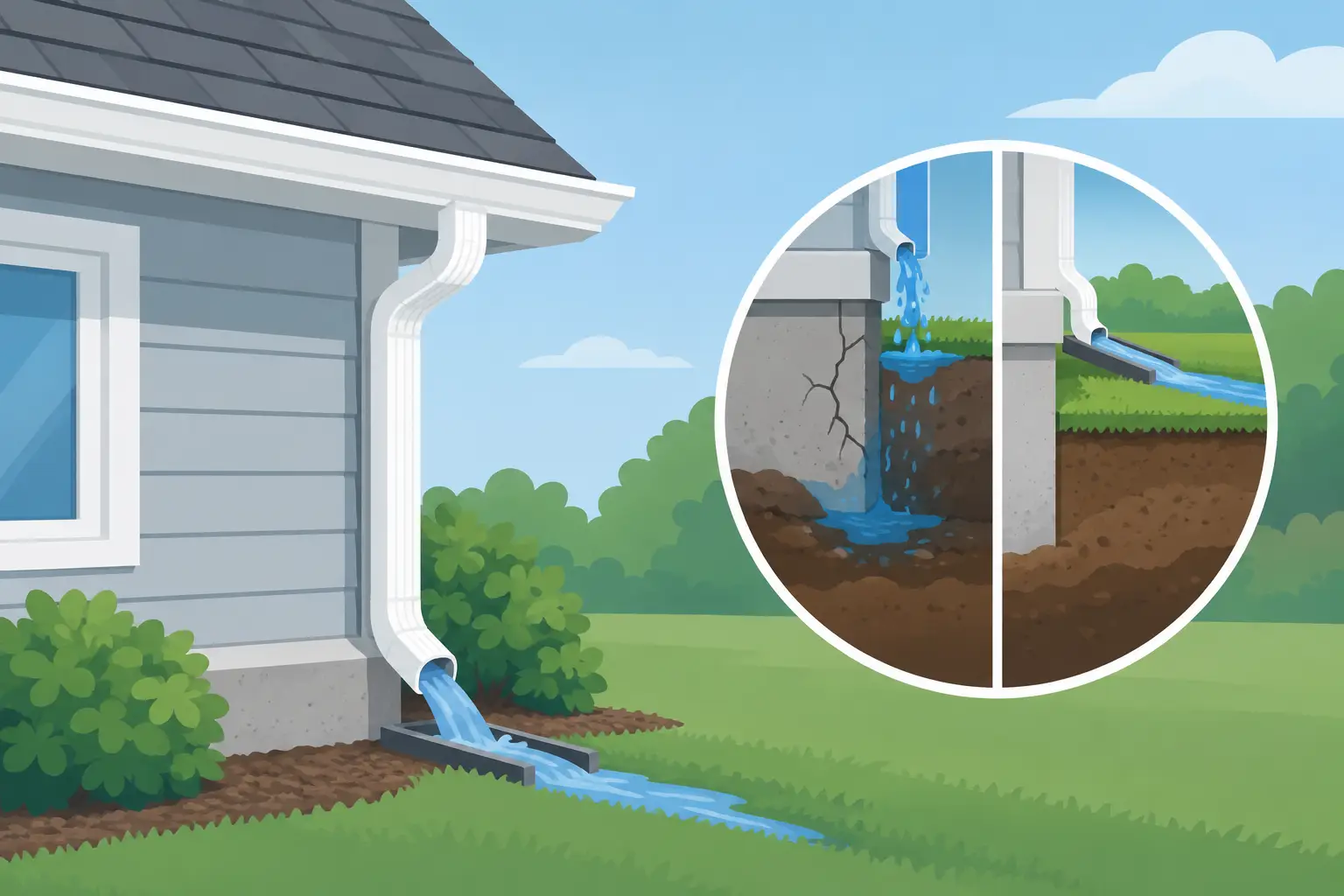
A hard Coastal Georgia rain can send a surprising amount of water off a roof in minutes. When that water pours from the eaves and lands beside the house, it does more than make a muddy splash zone. Proper gutter installation can prevent foundation damage by collecting roof runoff and moving it to a controlled discharge point away from the home.
That protection matters in Pooler, Savannah, and throughout the Lowcountry, where heavy rain, high humidity, sandy soils, and sudden storms put drainage systems to the test. Gutters are not a cure for every foundation problem, but a well-designed system is one of the most practical defenses a homeowner can add.
How Gutter Installation Prevents Foundation Damage
Your roof is a large collection surface. Even a modest rainfall can shed hundreds of gallons of water from it. Without gutters, runoff falls directly along the roofline, repeatedly soaking the soil around the foundation.
Wet soil expands, shifts, and loses some of its ability to support consistent loads. During dry spells, that same soil can contract. Over time, this repeated cycle can contribute to uneven settling, cracks in masonry or slab edges, sticking doors, uneven floors, and water entering a crawl space or basement. The exact risk depends on the home’s foundation type, soil conditions, grading, and drainage layout, but uncontrolled roof runoff never helps.
A complete gutter system manages that water in three stages. Gutters catch runoff along the roof edge, downspouts carry it down safely, and extensions or underground drainage direct it away from the foundation. Every stage matters. A gutter that holds water but empties it at the base of the wall is only doing part of the job.
The goal is controlled drainage, not simply adding gutters
The best gutter layout follows the roof’s shape and directs water toward downspouts placed where discharge can move away from the house without creating a new problem. Water should not be sent toward a neighbor’s property, a driveway that becomes slick, a low spot that stays muddy, or a landscape bed that traps it against the foundation.
The ground should also slope away from the home. Gutters manage water coming off the roof, while grading manages water already on the ground. If the soil near the foundation slopes toward the house, even excellent gutters may not solve standing-water concerns by themselves.
Signs Your Current Gutters Are Putting the Foundation at Risk
Foundation damage rarely starts with a dramatic crack overnight. More often, homeowners notice clues around the exterior long before they connect them to roof runoff.
Watch for soil washed away beneath the roofline, mulch displaced after storms, or trenches forming where water repeatedly hits the ground. Persistent puddles near the foundation, mossy areas that never dry, peeling paint on lower siding, and damp crawl-space conditions also deserve attention.
Look up during the next steady rain. Water spilling over the front of a gutter usually points to a clog, a gutter that is undersized for the roof area, or an installation issue with pitch. Water running behind the gutter can indicate a gap at the fascia or a missing drip edge. A downspout that releases water directly beside the wall may be functioning, but it is not directing water far enough away.
Inside the home, new cracks, musty odors, or doors that suddenly rub can have many causes. Do not assume gutters are the sole explanation. Still, correcting obvious drainage failures is a sensible first step before a minor moisture issue becomes more involved.
What a Foundation-Protecting Gutter System Needs
A dependable system is more than a length of aluminum attached to the roof edge. It needs the right capacity, secure fastening, correct slope, sufficient downspouts, and a plan for runoff at ground level.
Proper size and capacity
Many homes use 5-inch gutters, while larger roof planes, steep roofs, metal roofs, or areas exposed to fast, heavy rainfall may benefit from 6-inch gutters. Larger gutters and downspouts can move more water before it overtops the edge. The right choice depends on roof area, roof pitch, the number of valleys that concentrate water, and where the downspouts can be placed.
Roof valleys deserve special attention. They collect water from two roof planes and send it to one concentrated point. If a valley dumps directly into a short gutter run, that section may need additional capacity or a revised downspout layout.
Correct pitch and strong attachment
Gutters must be installed with a slight slope toward each downspout. Too little pitch allows standing water, debris buildup, and premature corrosion. Too much pitch can make the gutter look uneven and reduce how effectively it catches runoff at the higher end.
Fasteners matter, too. Loose gutters can pull away from the fascia under the weight of water and wet debris. That can allow water behind the system, where it may damage trim, fascia boards, soffits, and siding before it ever reaches the ground.
Downspouts and discharge extensions
Downspouts are where a drainage plan either succeeds or fails. A long gutter run may need more than one downspout, especially when a large roof area drains into it. The water leaving each downspout should be carried several feet away from the foundation through a properly placed extension, splash block, or underground drain line.
The best discharge distance varies by lot slope, soil, and drainage conditions. The practical test is straightforward: after a hard rain, water should not pond near the house or run back toward it. If it does, the extension, grading, or drainage route needs adjustment.
A clean path for water
Clogged gutters turn a well-designed system into an overflow problem. Leaves, pine needles, roof grit, nests, and shingle granules can block the gutter channel or downspout outlet. Gutter guards can reduce debris accumulation, particularly beneath trees, but they are not maintenance-free. Some guard styles handle certain debris better than others, and every system should still be checked after severe weather.
Installation Details That Should Not Be Overlooked
Gutter installation is often treated as a minor exterior upgrade. In reality, it works at the intersection of the roof, trim, siding, landscape, and drainage system. Small installation details can make a major difference over time.
Before new gutters are installed, the roof edge and fascia should be inspected for rot, soft wood, or storm damage. Attaching a new system to compromised wood can hide a repair need instead of resolving it. The installer should also check that roof runoff will enter the gutter cleanly rather than slip behind it.
Seamless aluminum gutters are a common choice because they have fewer joints along long runs, reducing potential leak points. However, material is only one part of the decision. Proper sizing, hanger spacing, outlet placement, and drainage routing have a larger impact on performance than color or profile alone.
For homes with multiple roof elevations, screened porches, additions, or complex valleys, a custom layout is especially valuable. Water may be landing in places that are not obvious from the ground. A professional exterior inspection can identify those concentrated runoff areas before they erode soil or saturate the foundation perimeter.
Maintain Gutters Before the Next Heavy Storm
Most gutter problems are easier and less expensive to address when caught early. Homeowners should visually inspect gutters at least twice a year and after major storms. Pay close attention to sections near trees, valleys, and downspouts.
During an inspection, check for sagging sections, loose fasteners, separated seams, rust or pinholes, debris, and standing water. Run water through the system with a hose when conditions allow. It should move steadily toward the downspout and discharge away from the home without backing up.
Do not ignore a single overflowing corner because the rest of the system looks fine. One clogged downspout or poorly pitched run can keep a concentrated area of soil saturated, and that is enough to create trouble near a foundation wall, crawl-space vent, or entryway.
When Gutters Alone Are Not Enough
If water remains near the home after gutters and extensions are corrected, the issue may involve grading, compacted soil, damaged underground drains, or an existing foundation concern. Homes on low lots and properties with drainage shared between neighboring yards may need a broader plan.
This is where a careful assessment matters. The right solution may include regrading a small area, extending discharge farther from the home, correcting a buried drain line, or repairing damaged fascia before installing a new gutter system. Adding more gutter without addressing the path of the water can simply move the problem a few feet away.
A good gutter system quietly does its job during every storm: it keeps roof runoff off your siding, away from your foundation, and moving where it belongs. If you see overflow, washouts, or persistent wet areas around your home, addressing them now can protect far more than the edge of your roof.