
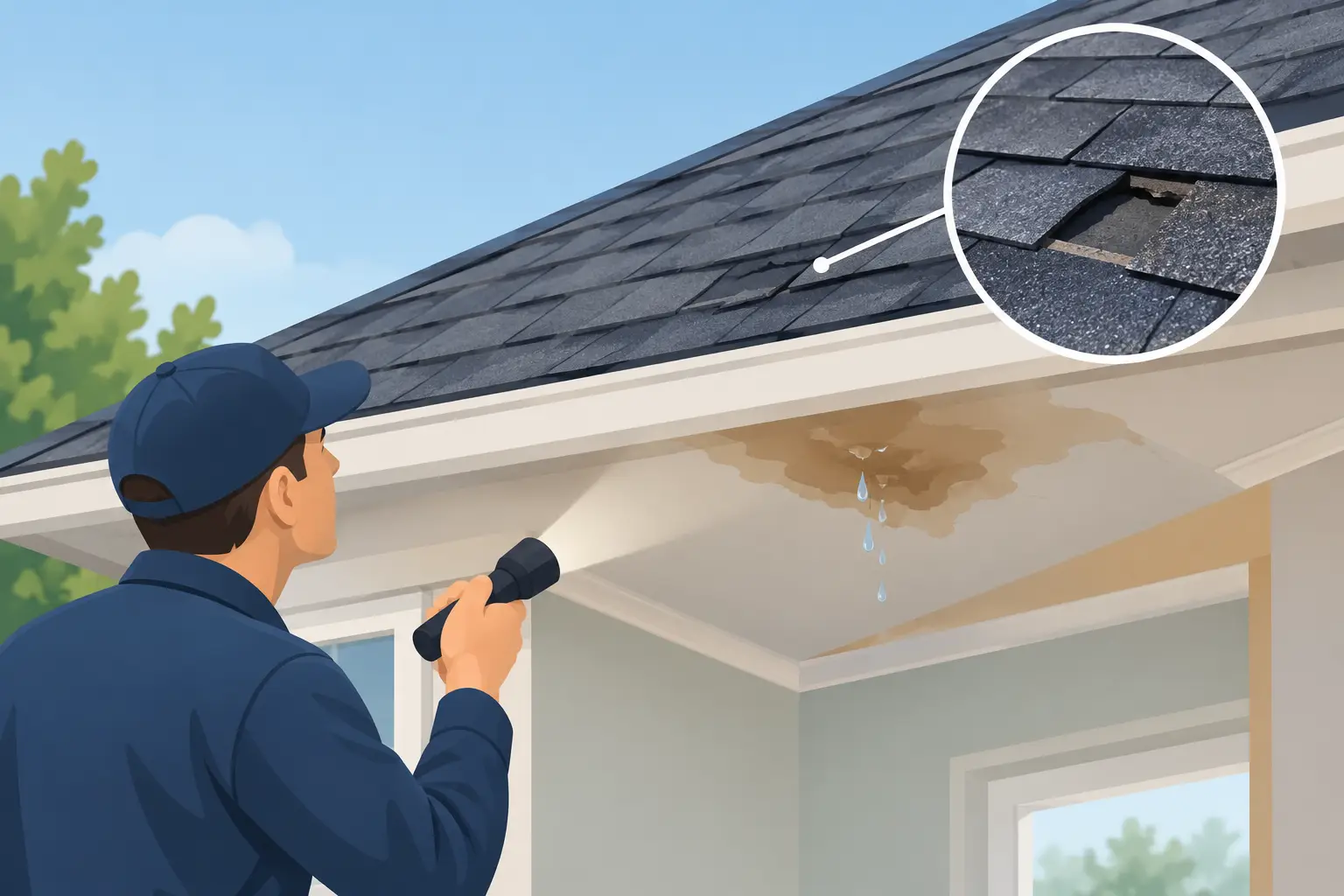
A brown ceiling spot after a hard Georgia rain can feel like a small problem, but water rarely stays where it first appears. It can travel along roof decking, rafters, insulation, wiring, or wall framing before it reaches your ceiling. Knowing how to find a roof leak helps you act quickly, protect your home, and give a roofing professional a useful head start when repairs are needed.
The goal is not to climb onto a wet roof or pull apart your ceiling. It is to narrow down the source safely, document what you see, and prevent more water from getting inside until the roof can be properly evaluated.
Start Inside: Find the First Signs of Water
Begin in the attic or the highest level of the home. If the leak is active, place a bucket under dripping water and move furniture, electronics, and valuables out of the area. If the ceiling is bulging, do not puncture it unless you understand the risk and can do so safely. A water-filled ceiling can collapse, and there may be electrical wiring nearby.
Look for more than the obvious drip. Water stains, peeling paint, bubbling drywall, damp insulation, mildew odor, and warped trim can all point to moisture intrusion. Take photos of every affected area, especially after a storm. Those pictures can help a roofer compare interior symptoms with exterior conditions and can be useful if storm damage leads to an insurance claim.
In the attic, use a bright flashlight and look for darkened wood, wet insulation, rusted nail tips, mold growth, or shiny areas on the underside of the roof decking. Follow those clues upward and outward, but remember that the wettest spot is not always the entry point. Water may run several feet along a rafter before it drips.
Check for Daylight and Condensation Clues
On a dry day, turn off attic lights and look for pinholes of daylight around penetrations, vents, chimneys, and roof edges. Daylight does not always mean a leak, but it deserves attention. Also check whether moisture is widespread rather than concentrated in one place. Broad moisture or frost-like dampness can point to poor attic ventilation or condensation instead of a single roof opening.
That distinction matters. A roof repair fixes a damaged roof component. Ventilation problems may require changes to intake vents, exhaust vents, insulation, or bathroom fan ducting. A thorough inspection should identify the real cause before anyone recommends a repair.
Match the Leak to the Weather
The timing of a leak provides valuable clues. If water appears only during heavy, wind-driven rain, the issue may be flashing, siding, a wall transition, or a roof penetration rather than missing shingles alone. A leak that starts after a long, steady rain may be related to worn shingles, exposed fasteners, deteriorated sealant, or a low-slope section holding water.
If the problem shows up after rain has stopped, water may be trapped in insulation or moving slowly through the framing. A leak near a chimney, skylight, plumbing vent, attic vent, or valley often points to the materials that seal and redirect water around those features.
Write down when you first noticed the leak, what the weather was like, and whether the wind was coming from a certain direction. That simple record can make a professional inspection faster and more accurate.
Inspect the Exterior From the Ground
A ground-level inspection is often enough to spot conditions that need prompt attention. Walk around the property after the roof has dried and look at each roof slope from different angles. Binoculars can help, but do not climb a ladder onto the roof if you are not trained and equipped to do so.
Watch for missing, lifted, cracked, or curled shingles. Look for shingle granules collecting in gutters or at downspouts, which can signal aging or storm wear. Pay close attention to areas where the roof changes direction, meets a wall, or surrounds an opening. Valleys, chimneys, skylights, dormers, plumbing vents, exhaust vents, and satellite mounts are common leak locations because they rely on flashing and sealants as well as shingles.
Also inspect gutters and downspouts. A clogged gutter can force water under the roof edge, soak fascia boards, and create staining that looks like a roof leak. Loose gutters, damaged drip edge, and overflowing water may be part of the problem even when the main roof covering is still in fair condition.
How to Find a Roof Leak Around Flashing and Penetrations
Flashing is the metal or membrane material that directs water away from vulnerable roof intersections. When flashing is bent, corroded, improperly installed, or separated from surrounding materials, water can find its way underneath.
From the ground, look for gaps around chimneys and skylights, loose flashing near sidewalls, cracked sealant around pipe boots, and damaged vent covers. A plumbing vent boot is one of the most common repair items on an older roof. The rubber or neoprene collar around the pipe can split from sun exposure, allowing water through even if nearby shingles look intact.
Do not assume that adding caulk is a lasting fix. Sealant has a place in roofing repairs, but it cannot replace missing flashing, a failed pipe boot, or damaged shingles. A quick patch may slow the leak, yet it can also hide a problem until the next major storm causes more expensive damage.
Use a Controlled Water Test Only When It Is Safe
When interior clues and a visual inspection do not reveal the source, a controlled water test can sometimes help. This is best done with two people on a dry day: one person remains in the attic while the other uses a garden hose from a ladder or safe ground position. Never perform this test during lightning, high winds, or when surfaces are slippery.
Start low on the suspected area and apply water gradually for several minutes. Then move higher in small sections. Starting at the ridge and soaking everything at once will not tell you where water entered. The person inside should watch closely for moisture and communicate immediately when it appears.
This method has limits. Some leaks require wind pressure, long periods of rain, or particular drainage conditions to show themselves. If you cannot safely access the area or the test does not produce a clear answer, stop there. Roof diagnosis should not create a fall risk or additional damage.
Know When a Leak Needs Immediate Professional Help
Some roofing issues should not wait for the next convenient appointment. Call for emergency service if water is actively entering the home, a large area of ceiling is sagging, shingles or roof materials have blown off, tree limbs have damaged the roof, or a leak is near electrical fixtures.
A professional inspection is also the right call when the source is unclear, the roof is steep, you suspect storm damage, or the home has multiple roof levels and transitions. Roof leaks can come from places that are easy to miss from the ground, including failed underlayment, hidden flashing defects, nail pops, ridge vent issues, and damage beneath shingles that appear normal from below.
For homes and commercial properties in Georgia, Real Good Roofing can use detailed roof evaluations, including FAA-certified drone inspections when appropriate, to inspect hard-to-reach areas without unnecessary risk. A clear assessment should explain what was found, whether a targeted repair is practical, and when replacement may be the more dependable long-term choice.
Protect the Area While You Wait for Repairs
Temporary protection can reduce damage, but it is not a substitute for correcting the source. Keep buckets under active drips, remove wet rugs and belongings, and use fans to dry the affected room once it is safe. If insulation is saturated, it may need professional evaluation because wet insulation can lose effectiveness and support mold growth.
Avoid covering an active leak from the inside with tape, paint, or patching compound. Those materials may improve the appearance for a short time, but they trap moisture and make the true condition harder to see. If a roofer recommends emergency tarping after storm damage, that can provide needed short-term protection until permanent repairs are completed.
A roof leak is easier and less costly to address when it is caught early. Trust the clues you can see, avoid risky DIY work, and have the roof inspected before one rainy afternoon turns into damaged ceilings, insulation, and framing.