
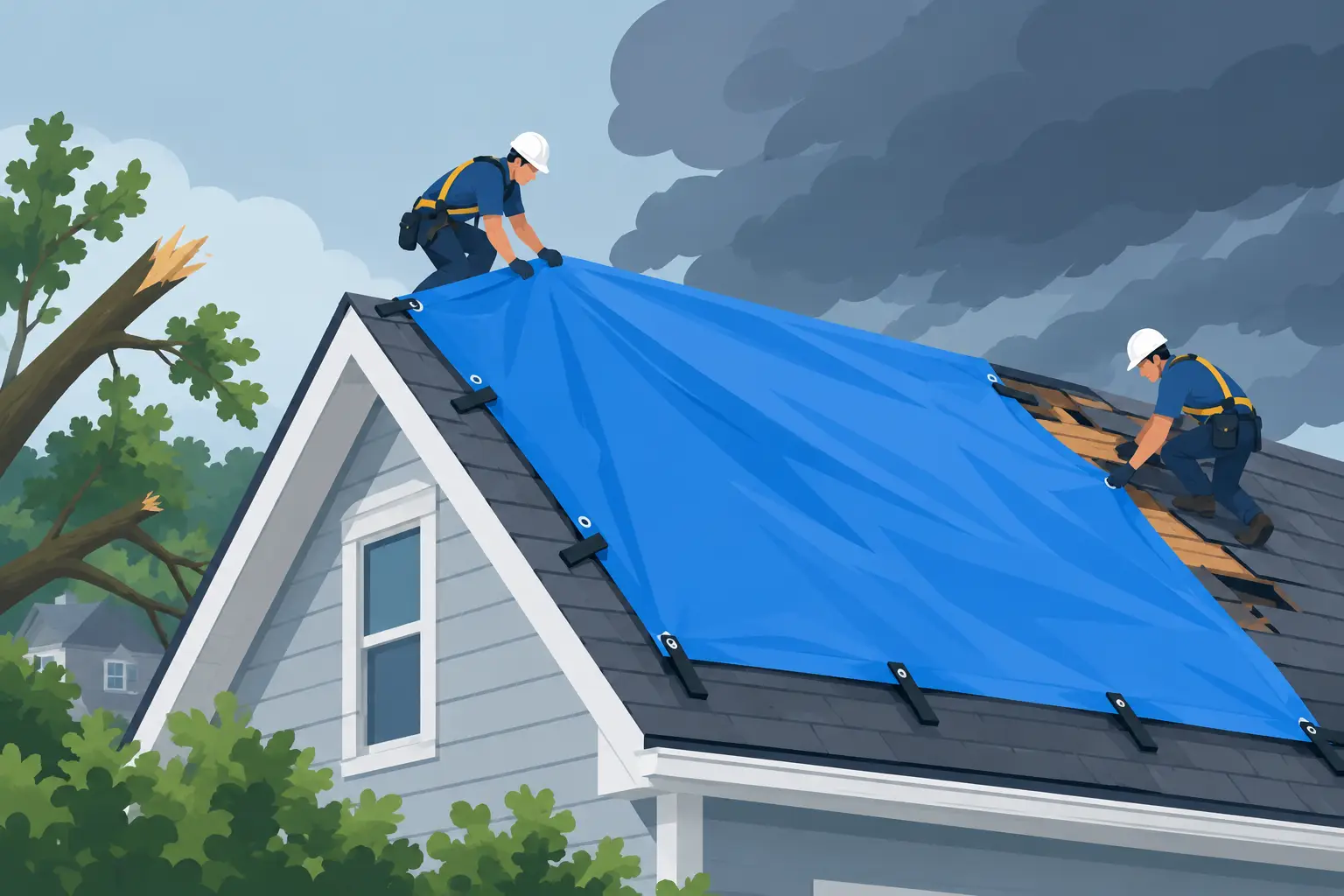
A few missing shingles can turn into a ceiling leak before the next rain band passes through. Emergency roof tarping after storm damage is a temporary measure, but it can be the step that keeps a manageable roof repair from becoming soaked insulation, damaged drywall, and mold concerns.
The goal is not to make a permanent repair in bad weather. It is to safely cover the exposed area, direct water away from the home, and arrange a qualified inspection as soon as conditions allow. For homeowners in Coastal Georgia and the South Carolina Lowcountry, where wind-driven rain can find even a small opening, speed matters. Safety matters more.
What Emergency Roof Tarping Is Meant to Do
A properly installed tarp creates a temporary water-shedding barrier over a damaged portion of the roof. It may be needed after wind lifts or removes shingles, a limb punctures the roof, flashing tears loose, or an opening develops near a vent, ridge, or valley.
A tarp is not a substitute for a repair. It cannot restore the roof system underneath, and it should not be treated as permission to wait weeks for an inspection. Sun, wind, standing water, and additional storms can weaken even a well-secured tarp. Still, when installed correctly, it can buy valuable time and reduce further interior damage.
The best approach depends on the damage. A small, accessible section of missing shingles may be protected differently than a tree impact or widespread wind damage. If the roof deck feels soft, the slope is steep, the opening is near a power line, or storm conditions remain active, do not attempt to cover it yourself.
First, Make the Property Safe
Before anyone thinks about the roof, look for hazards from the ground. Stay clear of downed lines, broken tree limbs, unstable fencing, and debris that could shift. If water is entering near electrical fixtures, turn off power to the affected area only if you can do so safely from a dry location. Otherwise, contact an electrician or emergency service provider.
Inside, move furniture, electronics, rugs, and valuables away from the leak. Place buckets beneath active drips and use towels to limit water spread. If the ceiling is bulging with trapped water, do not stand beneath it or puncture it without understanding where electrical wiring may be located. A saturated ceiling can fail suddenly.
Take photos and short videos from safe locations before moving debris or placing temporary coverings. Capture the roof damage from the ground, the affected rooms, water stains, and any damaged belongings. Note the date and time. Clear documentation helps you keep an accurate record of what happened and gives a roofing professional a better starting point during the inspection.
When You Should Call for Professional Tarping
Most emergency tarping is best left to trained roofers. Wet roofs are slippery, wind can catch a tarp like a sail, and storm damage often creates hidden weak spots in the decking. Walking over a compromised area can worsen the damage or lead to a serious fall.
Call for professional help when there is a visible hole, a tree limb on the roof, damaged decking, several missing shingle areas, torn metal panels, a leak around a chimney or skylight, or water entering more than one room. The same is true for commercial properties, where roof access, drainage, and membrane systems require a different approach.
A reputable emergency roofing team will first assess whether the roof can be accessed safely. They should identify the source and extent of the exposure, secure a temporary cover where appropriate, and explain what needs to happen next. Once conditions are safe, a detailed inspection can determine whether the roof needs a targeted repair or a broader restoration plan.
Real Good Roofing provides storm inspections with dated photos, measurements, and written estimates so property owners have clear information about the condition of their roof and the work recommended.
If You Must Use a Temporary Tarp
Sometimes professional assistance cannot arrive immediately, and a homeowner may need to take limited action from the ground or from a safe, accessible location. Never climb onto a roof during lightning, high winds, rain, or while the surface is wet. Do not climb if you are not comfortable using a ladder safely or if you cannot see the full extent of the damage.
If conditions are dry and calm, use a heavy-duty waterproof tarp large enough to extend well beyond the damaged area. The tarp needs to cover the opening and overlap undamaged roofing so water runs over it rather than underneath it. A tarp that barely covers a hole can funnel water into the roof instead of out to the gutter line.
Avoid driving nails or screws directly through the middle of the tarp wherever possible. Every unnecessary fastener creates another potential path for water. Professionals commonly use wood strips to secure tarp edges over sound portions of the roof, but correct placement is critical. Fasteners should be installed into solid material, not into visibly damaged decking or areas where they could create more leaks.
Do not rely on loose bricks, buckets, or other heavy objects to hold down a tarp. Wind can move them, damage the roof, or turn them into falling hazards. Duct tape is also not a dependable exterior solution in rain, humidity, and wind.
From the ground, check that the tarp lies flat, extends past the damaged section, and does not block a drainage path. If water begins pooling on it or wind lifts an edge, step back and call a professional rather than trying to adjust it in unsafe conditions.
Common Mistakes That Make Storm Damage Worse
The urge to fix a leak quickly is understandable, but a few common shortcuts can cause bigger problems. Walking repeatedly across a roof after a storm may break weakened shingles or crush softened decking. Pulling off loose materials without knowing what lies beneath can expose a larger area. Covering a wet roof cavity without an inspection may also trap moisture where it can affect insulation and wood framing.
Another mistake is assuming the visible leak marks the source. Water can travel along decking, rafters, plumbing vents, or insulation before it appears on a ceiling. The stain in the living room may be several feet away from the damaged roof area. That is why a thorough inspection matters, especially after wind-driven rain.
Do not delay because the leak has stopped. A break in the weather does not mean the roof is sealed. Small openings can allow moisture in slowly, and the next storm may reveal how much protection has been lost.
What Happens After the Tarp Is Installed
Once the immediate opening is covered, arrange a full roof inspection. The inspection should look beyond the tarp area for lifted shingles, exposed fasteners, cracked vents, damaged flashing, dented metal, loose ridge caps, and gutter or siding damage. In some cases, FAA-certified drone imaging can help document hard-to-see areas without unnecessary foot traffic on the roof.
Keep an eye on the interior while you wait for permanent work. Check attic spaces for damp insulation, active drips, daylight through the roof deck, or a musty odor. Continue photographing any changes. If water intrusion is ongoing, tell the roofing professional exactly where and when you see it.
The permanent solution may be a localized repair if the damage is limited and the surrounding roof is in good condition. If the storm exposed widespread wear or damaged multiple slopes, replacement may be the more dependable long-term option. A straightforward written estimate should explain the recommended scope, materials, and reasons behind that recommendation.
A Fast Response Protects More Than Shingles
After a storm, the most useful decision is often the simplest one: protect the opening, avoid taking risks, and get experienced eyes on the roof quickly. A tarp is a temporary shield, not a finish line. Acting carefully now gives your home a better chance of staying dry until the right repair can be completed.