
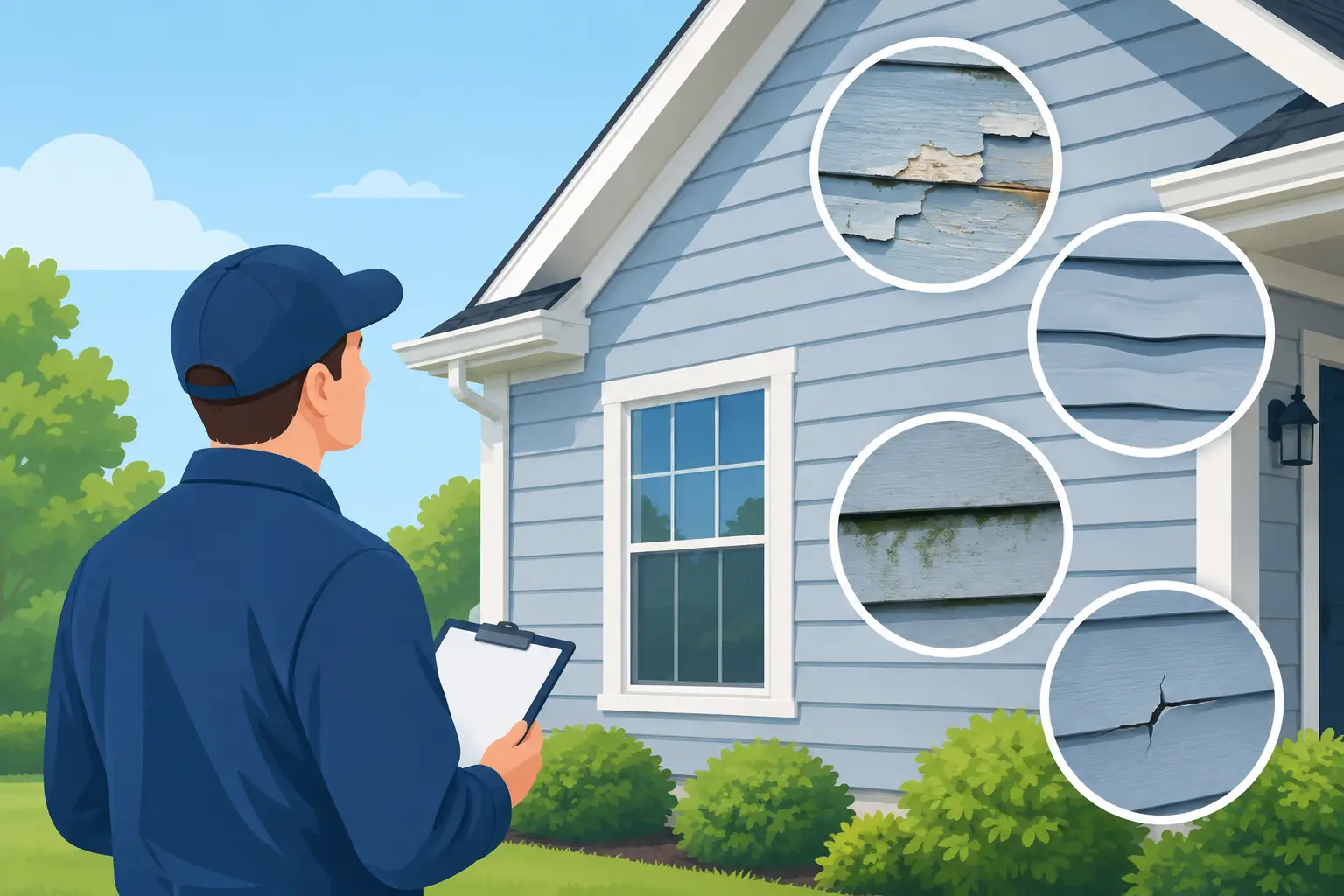
A loose panel after a Coastal Georgia storm is easy to notice. The more expensive siding problems are usually quieter: moisture working behind a wall, caulk pulling away at a window, or a small crack that lets rain reach the sheathing. Knowing the siding replacement signs homeowners should watch for can help protect the structure behind the exterior, not just the home’s curb appeal.
Siding is a weather barrier, not a permanent finish. It takes sun, wind-driven rain, humidity, pests, temperature changes, and impact from storm debris year after year. Some damage can be repaired successfully. Other problems tell you the material, the installation, or the wall system has reached the point where replacement is the more dependable choice.
When Siding Damage Moves Beyond a Simple Repair
A single damaged board or panel does not automatically mean the whole home needs new siding. If the surrounding material is sound, dry, and still available in a close color match, a targeted repair may be the sensible answer.
Replacement becomes more worth considering when damage is widespread, recurring, or connected to moisture. Replacing one area while leaving weakened material around it can turn into a cycle of patching. A professional inspection should look at the siding itself, the trim, window and door openings, roof-to-wall intersections, and gutters. These components work together to move water away from the house.
8 Siding Replacement Signs Homeowners Should Not Ignore
1. Cracks, holes, or broken sections keep appearing
Cracks and punctures give wind-driven rain and insects a direct path behind the siding. One small impact mark may be repairable, especially if it is isolated. But repeated cracks, brittle panels, or breaks across several elevations often mean the siding has lost flexibility and is nearing the end of its useful life.
Look closely around corners, near hose bibs, below roof edges, and in areas exposed to lawn equipment. Damage in these spots can be easy to miss until water staining or soft material appears inside the home.
2. Warping, buckling, or panels pulling away from the wall
Siding should lie flat and fit securely around the home. Buckling, waviness, and lifted edges can result from heat exposure, poor fastening, movement in the wall, or moisture behind the material. The cause matters as much as the visible symptom.
If a panel has simply come loose in an otherwise healthy wall, a repair may hold. If multiple sections are bowed or pulling apart, the underlying wall should be checked before anyone covers the problem with a quick fix. Fastening new siding over damaged sheathing or wet components does not solve the issue.
3. Soft spots, rot, or crumbling wood trim
Wood siding and trim can deteriorate when paint and caulk no longer keep water out. Press gently around trim boards, lower wall sections, and window corners. Material that feels soft, flakes apart, or gives under light pressure needs attention.
Rot often starts where water lingers: near the ground, beside roof lines, around chimneys, and under leaking gutters. Replacing only the surface board may not be enough if moisture has reached the wall sheathing. A thorough assessment helps determine how far the repair needs to go.
4. Bubbling paint, peeling finishes, or stains on interior walls
Peeling exterior paint can be a maintenance issue, but bubbles, persistent staining, or paint that fails soon after repainting may point to trapped moisture. Indoors, watch for discolored drywall, peeling paint near windows, or a musty smell along exterior walls.
Those symptoms do not always originate with siding. A roof leak, failing flashing, plumbing issue, or condensation problem can produce similar evidence. That is why a full exterior inspection is more useful than guessing based on one stain. Finding the source protects the home and prevents unnecessary work.
5. Mold, mildew, or algae that returns quickly
Coastal humidity can encourage surface growth, particularly on shaded sides of a house. Light mildew may be cleaned safely with the right method and does not by itself require replacement. The concern rises when staining returns quickly, appears around seams and openings, or comes with soft material, caulk failure, or interior moisture signs.
Surface cleaning can improve appearance, but it cannot correct water getting behind the siding. If moisture is trapped in the wall, replacement may include addressing flashing, housewrap, trim details, and drainage paths so the new exterior performs as intended.
6. Fading, chalking, and a finish that no longer protects
Sun exposure gradually fades most exterior materials. Fading alone is often a cosmetic decision, especially on one side of the house. Chalking – a powdery residue that rubs off the surface – can signal that an older finish is breaking down.
When fading comes with brittleness, cracks, exposed wood, or finishes that will not hold paint, replacement may offer better long-term value than repeated refinishing. Material selection matters here. A homeowner who wants a lower-maintenance exterior may make a different choice than one preserving the character of an older home.
7. Higher cooling costs or noticeable drafts near exterior walls
Siding is not insulation by itself, but deteriorated siding and failed exterior details can contribute to air and moisture movement. Drafts around windows, unusually hot rooms, or higher cooling costs may be related to gaps in caulk, trim, flashing, insulation, or the siding system.
Energy costs should not be used as the only reason to replace siding. HVAC performance, attic insulation, ductwork, and window condition all play a role. Still, if an exterior inspection finds openings or water-related damage, siding replacement can be part of a broader plan to tighten and protect the home.
8. Storm damage after high wind or flying debris
After a major storm, walk around the property from the ground and look for missing panels, loosened trim, impact marks, and pieces of siding in the yard. Do not climb ladders or pull on damaged areas. What looks like a small issue from the ground can be part of a larger problem at the roof edge, fascia, soffit, or wall flashing.
Prompt inspection matters because wind can loosen materials without fully removing them. Water may enter at those gaps during the next hard rain. Real Good Roofing can inspect exterior damage, document visible conditions with dated photos and measurements, and provide a clear written estimate for recommended work.
Pay Attention to the Details Around the Siding
Siding rarely fails in isolation. The transition areas around windows, doors, rooflines, gutters, and trim often determine whether water stays outside. Overflowing gutters can soak lower walls. Damaged roof flashing can send water behind siding at a chimney or step-wall connection. Missing kick-out flashing can repeatedly wet the same section of exterior wall.
That is why the best siding replacement project is not just about choosing a color or material. It is about correcting the details that protect the investment. Before work begins, homeowners should understand what will happen to damaged sheathing, trim, flashing, caulk, and gutters if those items need attention.
Choosing Repair or Replacement With Confidence
Start with the condition of the wall, not just the appearance of the siding. Ask whether damage is limited or widespread, whether moisture is present, and whether matching material is available. Also consider how often the same area has needed repair. Repeated fixes can cost more over time and still leave the home vulnerable between visits.
A straightforward contractor should explain what was found, show the affected areas, and separate immediate protection needs from cosmetic upgrades. If replacement is recommended, ask why repair is not expected to last and what related components need to be addressed. Clear answers make it easier to decide on the right scope of work.
Do not wait for a small exterior issue to become a wall repair. If your siding is cracked, soft, loose, stained, or repeatedly failing after storms, schedule an inspection while the damage is still visible and the solution is still manageable.