
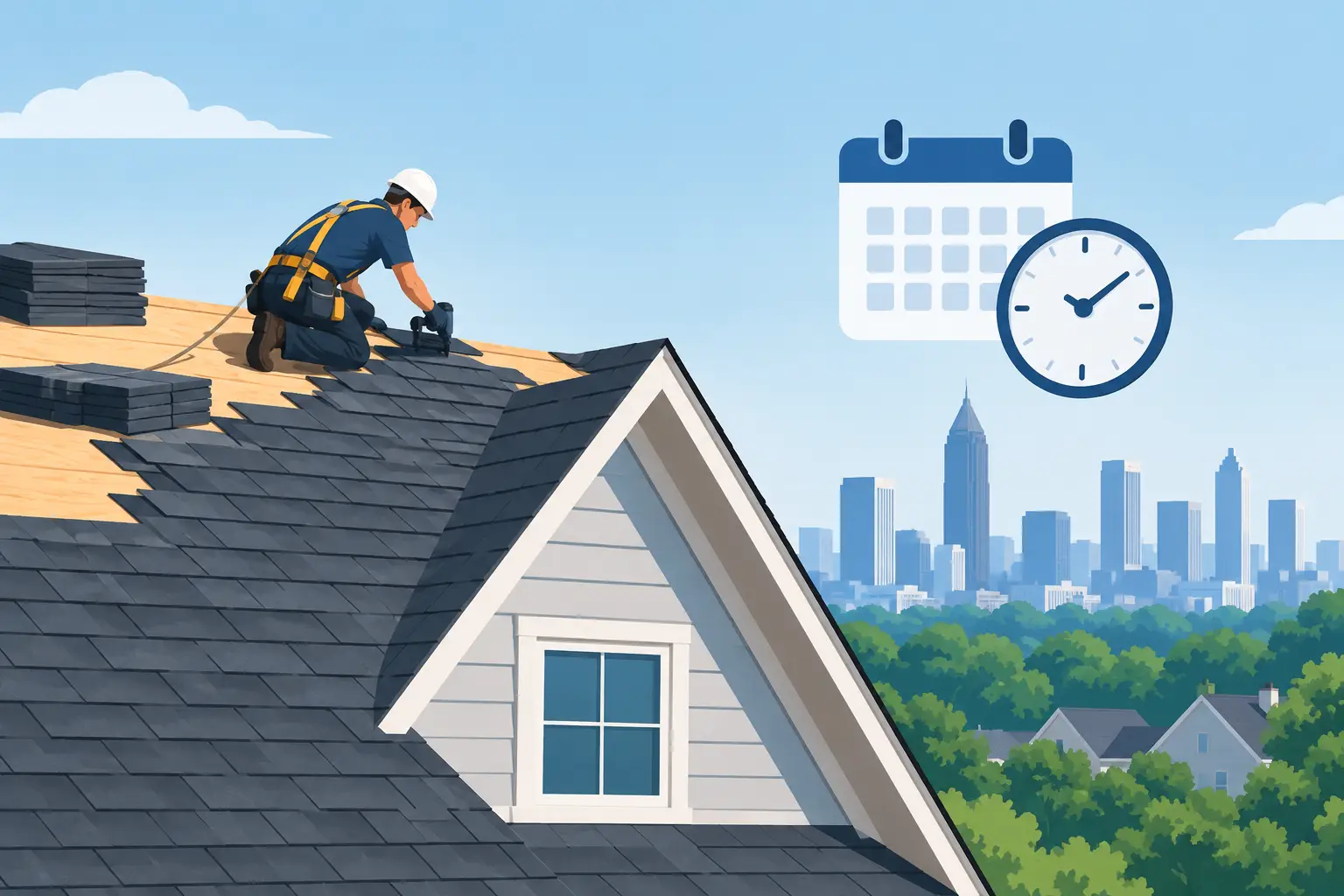
A roof replacement often looks like a one-day transformation from the street. By late afternoon, the old shingles are gone, the new roof is in place, and the cleanup crew is making another pass through the yard. But the work that makes that possible starts well before the first shingle comes off.
So, how long does roof replacement take? For many single-family homes, the installation itself takes one to three days. Larger homes, steep or complex rooflines, specialty materials, hidden damage, and Coastal Georgia weather can extend that schedule. A dependable contractor should give you a clear expected timeline before work begins, then communicate quickly if conditions change.
How Long Does Roof Replacement Take for Most Homes?
A straightforward asphalt shingle roof replacement on an average-sized home commonly takes one day. Homes with more square footage, multiple roof sections, dormers, skylights, chimneys, or a steep pitch may take two or three days. The roof may be fully installed within that window, while final walkthroughs, cleanup, or small finishing details happen shortly afterward.
Metal roofing usually requires more time than standard shingles because every panel, trim piece, flashing detail, and fastening point must be measured and installed precisely. A commercial roof or a large residential property may take several days or longer, depending on the system and the need to keep the building operating safely during work.
The installation timeline is only one part of the overall project. Before crews arrive, there is an inspection, material selection, estimate approval, scheduling, material delivery, and permit coordination when required. If you are replacing a roof after a storm, the initial inspection can also identify urgent repair needs that should be addressed before the full replacement date.
What Happens During a Typical Roof Replacement?
On installation day, the crew usually arrives early to protect landscaping, set up equipment, and position a dumpster or trailer for old roofing materials. Vehicles should be moved out of the driveway and garage access should be considered, since roofing work is loud and creates vibration throughout the day.
The crew removes the existing roofing material, then inspects the roof deck underneath. This is a critical stage. Shingles can hide soft plywood, water damage, or sections weakened by long-term leaks. If the decking is sound, the project moves forward quickly. If repairs are needed, the contractor should explain what was found and how it affects the schedule before covering it up.
Next comes the protective system beneath the visible roof surface. Depending on the roof and material selected, this can include underlayment, ice and water protection in vulnerable areas, flashing around walls and penetrations, and ventilation components. These details matter as much as the shingles themselves because they help direct water away from the home and allow the attic to breathe properly.
Once the new roofing material is installed, crews complete ridge caps, pipe boots, flashing, and other finishing details. The final stage is cleanup. A professional crew removes debris, sweeps the area, and uses magnets to collect loose nails around driveways, walkways, and landscaping. A final inspection helps confirm the roof is finished correctly and the property is left in good order.
Factors That Can Extend the Roof Replacement Timeline
No reputable roofer should promise that every replacement will take exactly the same amount of time. A roof is not fully understood until the old material is removed, and some conditions are outside anyone’s control.
Weather is the most common scheduling factor in Savannah, Pooler, and surrounding coastal communities. Rain can make a roof unsafe to work on and can expose the structure during tear-off. High winds can also prevent safe installation, particularly when crews are handling large shingle bundles or metal panels. A good roofing team watches the forecast closely and plans work around dry, safe conditions rather than rushing a job.
Roof design also makes a major difference. A simple gable roof is faster to replace than a roof with many valleys, hips, intersecting sections, skylights, or a very steep slope. Each transition requires careful cutting, flashing, and sealing. Those details take time because shortcuts around roof penetrations and water channels often lead to leaks later.
Material choice matters as well. Architectural shingles can be installed efficiently by an experienced crew, while standing seam metal, tile, slate, or specialty systems demand more detailed preparation and installation. Supply availability can influence the start date, especially after widespread storms when many property owners are arranging repairs at once.
Finally, hidden damage can affect the schedule. Rotten decking, damaged fascia, deteriorated trim, or ventilation problems may need correction before the new roof goes on. That can be frustrating to discover, but fixing the underlying issue is far better than installing a new roof over a compromised structure.
How to Prepare Your Home Before Roofing Starts
A little preparation helps the crew work safely and helps protect your home and belongings. Move cars away from the driveway and garage, clear patio furniture and grills from the work area, and make sure gates are unlocked if the crew needs backyard access. If you have fragile wall decorations or items stored on shelves, secure them before work begins. The hammering and movement on the roof can cause vibrations inside the home.
Pets often do better indoors in a quiet room or away from the property for the day. Roofing is noisy, and the unfamiliar activity can be stressful. Let the contractor know about any concerns involving pets, children, pool areas, gardens, or equipment that needs special care.
It is also wise to plan around the noise. If you work from home, schedule meetings elsewhere if possible. If an infant, an elderly family member, or someone sensitive to noise will be home, consider arranging a quieter place for them during the most active portion of the project.
Can You Stay Home During a Roof Replacement?
Most homeowners can stay home during a roof replacement, but it is not always the most comfortable choice. Expect substantial noise from removal, nail guns, material delivery, and crew movement. The work can begin early, and access around the home may be limited while debris is being removed and materials are staged.
If you stay home, keep communication open with the project lead. Ask where it is safe to enter and exit, whether you can use the garage, and when crews expect to finish for the day. You do not need to supervise the roof from the yard, but you should be reachable if the team finds an issue that needs your decision.
For commercial properties and rental buildings, planning is especially important. The roofing schedule may need to be phased around tenant access, customer traffic, deliveries, or business operations. The right approach balances efficiency with safety and minimal disruption.
Why a Faster Roof Job Is Not Always a Better One
A one-day roof replacement can be a sign of an experienced, well-organized crew. It should not mean that ventilation, flashing, decking inspection, or cleanup were skipped to meet an arbitrary deadline. Quality work moves with purpose, not panic.
Ask your contractor what the expected installation window includes and what could change it. You should understand who will be on site, how your property will be protected, how unexpected deck damage will be communicated, and what the cleanup process looks like. Straight answers before the job starts make the experience less stressful once the work is underway.
For homeowners across Coastal Georgia and the Lowcountry, timing a roof replacement around weather, family schedules, and property needs can feel like a lot to manage. Start with a thorough inspection and a clear conversation. When you know the condition of your roof and the steps ahead, you can make the decision with confidence instead of waiting for a small concern to become a major leak.