
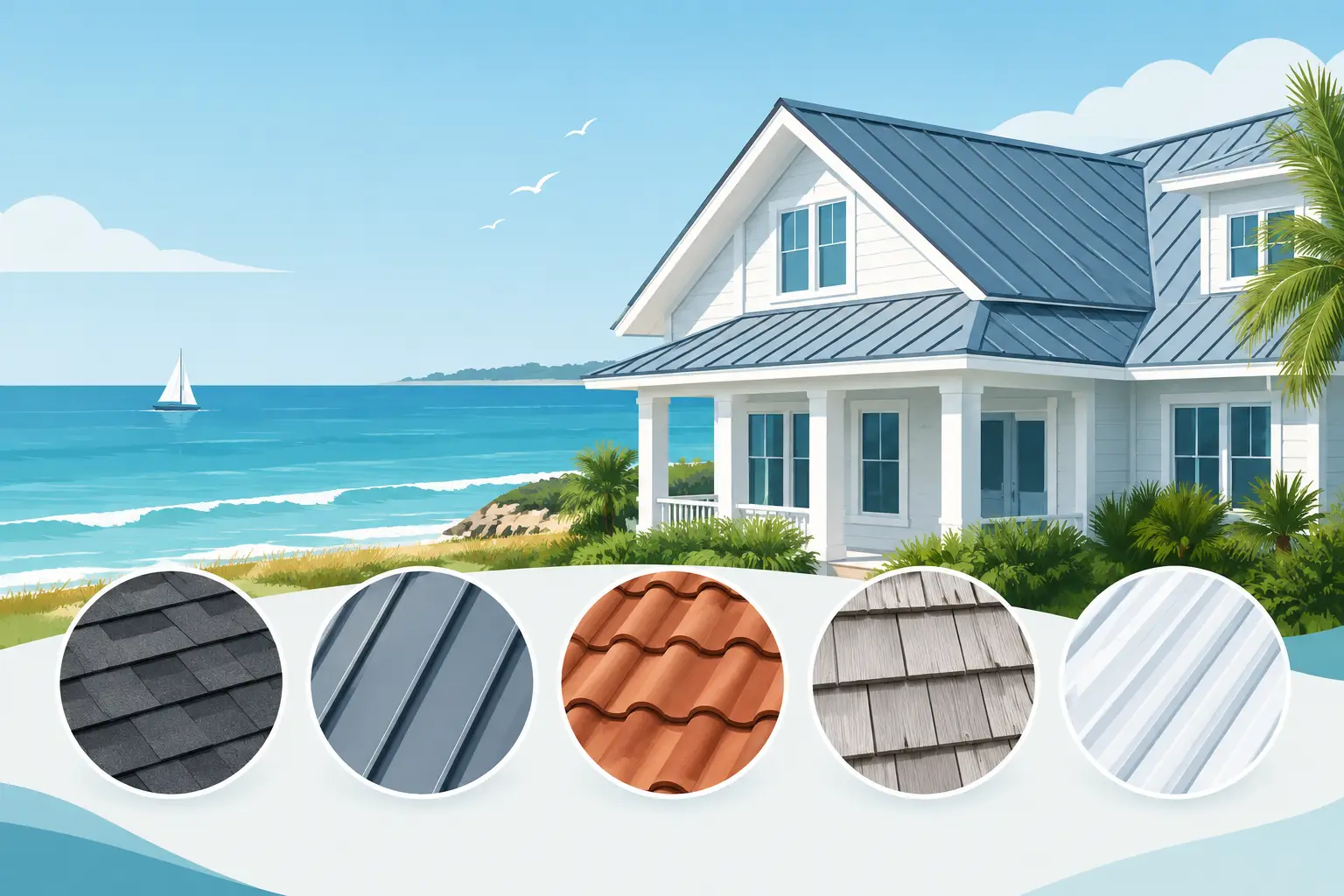
A roof can look perfectly fine from the driveway and still be losing ground to the coast. Salt carried inland on humid air settles on panels, fasteners, flashing, and gutters. Add strong sun, heavy rain, and wind-driven storms, and the wrong roof system can age faster than a homeowner expects. Choosing the right roof materials for salt air means looking beyond curb appeal and considering how every exposed component will hold up over time.
For homes in Coastal Georgia and the South Carolina Lowcountry, the best answer is rarely just one material. Distance from the shoreline, roof slope, tree cover, wind exposure, budget, and the condition of the roof deck all matter. A well-installed roof with corrosion-resistant details will usually outperform a premium material installed with shortcuts.
Why salt air is hard on a roof
Salt air does not need a direct oceanfront address to cause trouble. Sea spray is the most concentrated near the beach, but airborne salt can travel inland, especially during coastal storms. It collects on roofing surfaces and attracts moisture. That combination can speed up corrosion on metal components, wear down protective coatings, and expose small installation weaknesses.
The vulnerable areas are not always the large, visible roof field. Nails and screws, pipe boots, chimney flashing, valley metal, drip edge, ridge vents, skylight flashing, and gutter brackets often show the first signs of salt-related deterioration. If those parts fail, water can get beneath otherwise sound shingles or panels.
Heat and ultraviolet exposure add another layer of stress. Coastal roofs expand and contract through hot afternoons, summer downpours, and cooler nights. Materials need to resist corrosion while remaining stable through those repeated temperature changes.
The best roof materials for salt air
Aluminum standing seam metal
For highly exposed coastal properties, aluminum is one of the strongest metal roofing choices. Unlike steel, aluminum does not contain iron, so it does not rust in the conventional sense. It is lightweight, handles coastal humidity well, and works especially well in standing seam systems, where concealed fasteners reduce the number of exposed points that can corrode.
The trade-off is cost. Aluminum typically carries a higher upfront investment than many shingle systems and some steel options. It also needs an experienced installer who understands panel movement, clip spacing, flashing details, and wind requirements. Poorly installed metal can leak regardless of how well the material resists corrosion.
A quality painted finish matters, too. Coastal sun can be demanding on coatings, so homeowners should ask what finish system is being used and whether the trim, fasteners, and accessories are compatible with the panels.
Galvalume steel metal roofing
Galvalume-coated steel can be a practical option for homes farther from direct salt-spray exposure. Its aluminum-zinc coating provides better corrosion resistance than standard galvanized steel, and it is available in a wide range of profiles and colors.
Still, it is not identical to aluminum. Cut edges, scratches, exposed fasteners, and areas where water sits can become weak spots over time. In a salt-heavy environment, details matter more than the panel itself. Matching screws, proper sealants, correctly installed closures, and coated flashing are part of the roof system, not minor add-ons.
For many inland coastal homeowners, galvalume can offer a good balance of long-term performance and budget. For a home closer to open water or with little protection from prevailing winds, aluminum is often worth serious consideration.
Architectural asphalt shingles
Architectural asphalt shingles remain a common choice because they offer dependable protection, broad color selection, and a more accessible initial cost than metal or tile. Modern shingles can also be selected for wind resistance when installed as a complete manufacturer-approved system.
Salt air does not typically corrode the shingle itself the way it affects bare metal. The concern is the supporting hardware and the roof details around it. Corrosion-resistant nails, quality flashing, durable pipe boots, and properly installed drip edge are especially important. In humid coastal conditions, attic ventilation and drainage also help reduce heat and moisture stress.
Asphalt shingles may be the right fit for a homeowner planning a straightforward replacement, particularly on a home with a complex roofline that would make metal detailing more involved. They generally will not offer the same service life as a well-maintained metal roof, but material selection should always be weighed against the home, budget, and long-term plans for the property.
Concrete or clay tile
Concrete and clay tile can perform well near the coast because the tile itself is not prone to rust. These roofs can also provide a distinctive look that suits certain architectural styles. Clay, in particular, has a long history in hot, humid climates.
However, tile is heavy. Before installation, the roof structure must be evaluated to confirm it can carry the load. Tile roofs also depend on properly designed underlayment, flashings, fasteners, and battens beneath the visible surface. If those concealed components are not specified for coastal conditions, the roof can still develop expensive problems.
Tile can be an excellent long-term choice, but it is not automatically low-maintenance. Individual pieces may crack from impact, and walking on tile improperly can cause damage. Repairs require a contractor familiar with the specific system.
Synthetic roofing materials
Synthetic slate, shake, and tile products can offer the appearance of traditional materials at a lighter weight. Some products are engineered to resist moisture, fading, and impact, which can make them appealing for coastal homes.
Performance varies widely by product and installation method. Before choosing a synthetic material, review its wind rating, fire rating, warranty terms, required fasteners, and approved underlayment. A product that performs well in another climate may need different installation details near the coast.
The small components that make a major difference
A roof is not just shingles, tiles, or panels. In salt air, the components around the primary covering often determine whether the system stays watertight.
For coastal installations, corrosion resistance should be considered for nails, screws, flashings, drip edge, valleys, vents, pipe boots, gutter systems, and fastening hardware. Mixing incompatible metals can create galvanic corrosion, where one metal deteriorates faster after contact with another in the presence of moisture. This is one reason it helps to choose a contractor who plans the full system rather than treating each part as separate.
Underlayment deserves close attention as well. It is the water-shedding layer beneath the visible roof covering, and it becomes particularly valuable during wind-driven rain. In vulnerable areas such as eaves, valleys, roof penetrations, and transitions, the right underlayment and flashing details provide an extra line of defense.
Ventilation is another practical factor. A well-designed attic ventilation system can help manage heat and moisture, though it must be balanced with the roof’s design and local code requirements. It is not a substitute for repairs or a damaged roof deck, but it can support the roof’s overall performance.
How to choose for your property
Start with exposure, not just material preference. A home on Hilton Head Island facing open water has different demands than a home in Pooler surrounded by mature trees. Both experience coastal humidity, but the amount of direct salt exposure and wind pressure can be very different.
Next, consider the roof shape. Simple gable roofs are often more straightforward for standing seam metal. Roofs with many valleys, dormers, skylights, and transitions may still be good candidates for metal, but they require more custom flashing and careful labor. Architectural shingles can be a sensible choice when a complex roofline makes material waste or detail work more significant.
Finally, think in terms of lifecycle decisions. The least expensive replacement today is not always the least expensive roof to own over the years. At the same time, a premium material is only worthwhile when the structure, installation quality, maintenance plan, and homeowner’s goals support it.
Maintenance matters after installation
No coastal roof is maintenance-free. Salt residue, pine needles, leaves, and wind-blown debris can hold moisture against roof surfaces and clog gutters. Gentle periodic cleaning and regular visual checks can help catch issues before they turn into interior leaks.
After a major storm, look for missing shingles, lifted edges, loose metal trim, displaced flashing, granules near downspouts, or water stains on ceilings. Avoid climbing onto the roof yourself, especially on steep slopes, metal panels, or tile. A professional inspection can identify damage that is not visible from the ground and document the roof’s condition with photos and measurements.
For homeowners who want a clear recommendation instead of a sales pitch, Real Good Roofing can inspect the roof system, explain the material options that suit the property, and provide a written estimate. The right coastal roof should fit the home and its exposure, not simply follow the latest trend.
A salt-air roof earns its value one rainy, windy season at a time. Choose materials that fit your location, insist on corrosion-resistant details, and have the roof checked before a small weakness has the chance to become water damage inside your home.