
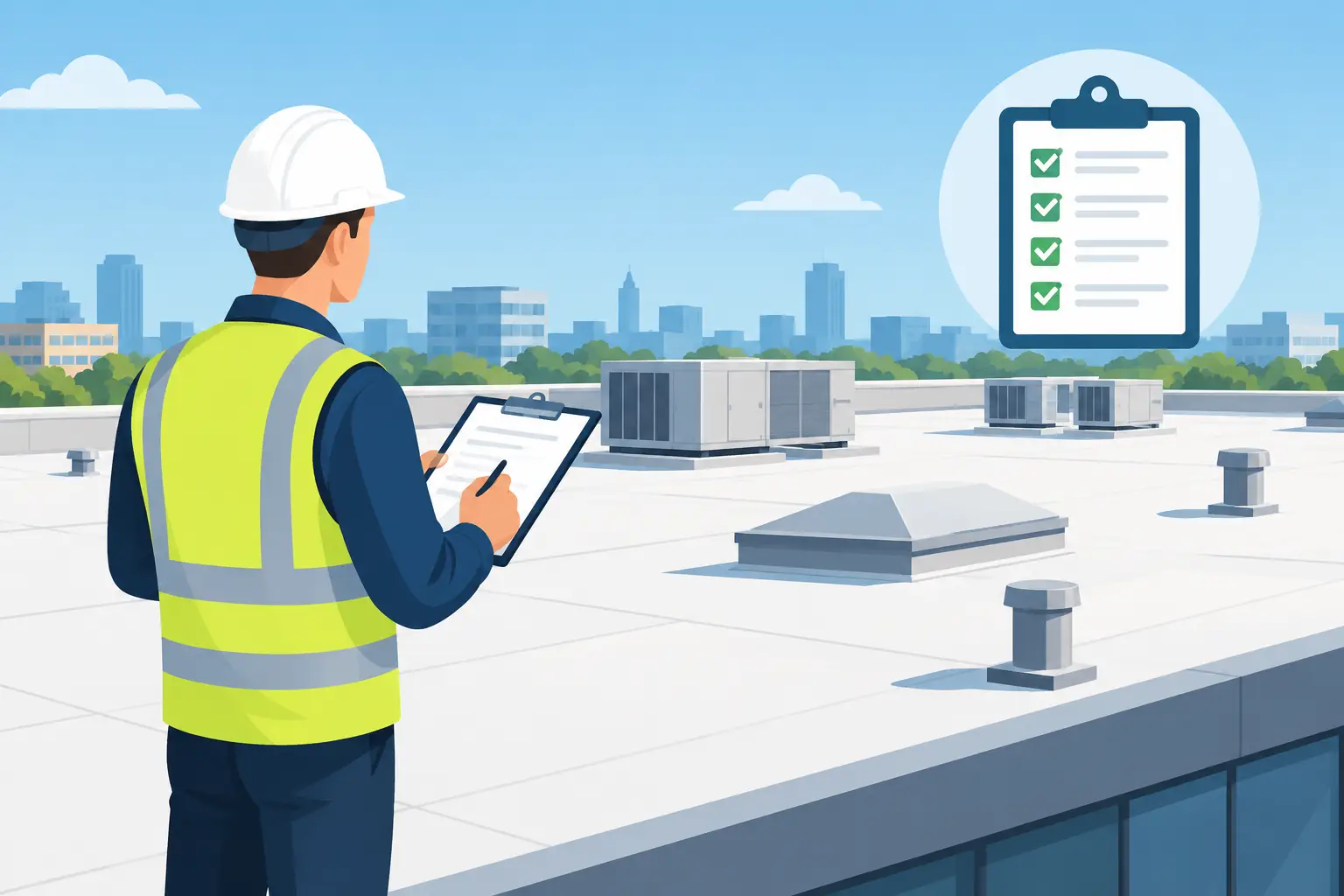
A commercial roof rarely fails all at once. More often, a blocked drain holds water after a hard rain, a loose flashing edge lets moisture in, or a small puncture goes unnoticed until a ceiling stain appears inside. This commercial roof maintenance checklist helps business owners and property managers catch those warning signs early, protect the building beneath the roof, and plan repairs before they interrupt operations.
For properties in Coastal Georgia and the South Carolina Lowcountry, heat, humidity, heavy rain, wind-driven storms, and nearby tree debris can all shorten a roof’s service life. A consistent maintenance routine will not prevent every problem, but it can reduce surprises and give you a clearer picture of your roof’s condition.
Start With a Safe Roof Record
Good maintenance begins on the ground. Keep a simple roof file with the installation date, roof type, warranty documents, repair history, inspection reports, photos, and contact information for the contractor who performed the work. Record when leaks occur, where they appear, and what the weather was doing at the time.
This history matters because recurring leaks can point to a drainage issue, aging sealant, a vulnerable rooftop penetration, or a repair that needs a closer look. It also helps a roofing professional compare current conditions with prior photos instead of starting from scratch at every visit.
If your building has multiple roof sections, label them clearly. A warehouse addition, office wing, covered entry, and mechanical-room roof may have different materials, ages, drainage paths, and maintenance needs.
Commercial Roof Maintenance Checklist: Monthly and After Storms
A monthly visual check does not need to become a risky walk across the roof. In many cases, a property manager can look for interior clues, inspect accessible drainage areas from a safe location, and note changes around the building exterior. After a major storm, make the same check promptly.
Look inside for new water stains, peeling paint, damp insulation, musty odors, bubbling wall finishes, or drips around ceiling fixtures. Water does not always enter directly above the spot where it shows up indoors, so document the location without assuming the source.
Outside, watch for overflowing gutters, downspouts that discharge too close to the foundation, loose metal edging, storm-blown debris, or branches rubbing the roofline. If a flat or low-slope roof is safely visible, standing water that remains more than 48 hours after rain deserves attention. Ponding water adds weight, encourages material breakdown, and often signals drainage trouble.
Do not send untrained staff onto the roof to investigate a leak. Foot traffic can damage certain roofing systems, and wet surfaces, weak decking, skylights, and concealed hazards create real safety risks. A qualified inspection is the better call when there is active leaking, visible damage, or an uncertain roof condition.
Keep Drains, Gutters, and Scuppers Clear
Drainage is one of the most practical ways to protect a commercial roof. Leaves, pine needles, trash, balls, and nesting material can collect at drains and scuppers faster than many owners expect. Once water is blocked from leaving the roof, it can work its way beneath seams, flashings, and edge details.
Have gutters, downspouts, roof drains, strainers, and scuppers cleaned on a schedule that matches the property. A building beneath mature trees may need attention more often than an open-site retail building. Schedule extra checks after tropical weather, heavy wind, or seasonal leaf drop.
Cleaning is not the same as solving a drainage problem. If water consistently gathers in the same area, a roofing professional may need to evaluate the drain location, roof slope, insulation layout, membrane condition, or the capacity of the drainage system. Repeated ponding should not be treated as normal simply because the roof has not leaked yet.
Inspect the Details That Fail First
Roof membranes, metal panels, shingles, and coatings matter, but many leaks begin at the transitions around them. Flashings, pipe boots, curbs, vents, parapet walls, skylights, expansion joints, and equipment supports need close attention during scheduled inspections.
On a low-slope roof, a professional will look for open seams, punctures, blisters, cracks, loose terminations, deteriorated sealant, and areas where the membrane is pulling away. On metal roofing, common concerns include loose or backed-out fasteners, failed washers, separated seams, corrosion, and damaged panel edges. The right repair depends on the roofing system and the source of the problem. Applying more sealant to every suspicious spot may temporarily hide an issue while trapping moisture or creating another maintenance problem.
Rooftop HVAC units deserve special care. Service technicians may need roof access, but dropped tools, unsecured panels, and repeated foot traffic can damage a roof. Ask HVAC vendors to use designated paths where possible, remove job debris, and report any roof damage immediately. If new equipment, conduit, or piping is added, make sure penetrations are properly flashed by a qualified roofing contractor.
Schedule Professional Inspections Twice a Year
Most commercial properties benefit from professional roof inspections at least twice per year, typically before the most demanding weather seasons. In this region, a spring inspection can identify issues left by winter weather and prepare the roof for summer rain. A fall inspection can address heat-related wear and clear drainage components before seasonal storms and falling debris.
Some roofs require more frequent checks. Consider a tighter schedule for older roofs, roofs with a history of leaks, buildings with heavy rooftop equipment, properties under large trees, or facilities where water intrusion would shut down operations. Restaurants, medical offices, manufacturing spaces, schools, and properties with sensitive inventory may have less room for risk than a lightly used storage building.
A thorough inspection should result in clear findings, photos, and practical recommendations. That may mean a small repair now, monitoring a condition at the next visit, or planning for replacement before repair needs become constant. A recommendation to replace is not automatic just because a roof is aging. The roof’s material, remaining service life, moisture condition, repair history, and long-term budget all matter.
Address Small Repairs Before They Spread
A small opening in a commercial roof can allow water to travel through insulation and along decking before it becomes visible indoors. By the time a tenant reports a stain, moisture may have affected a much larger area than expected.
Common repair needs include damaged flashing, punctures from debris or foot traffic, failed sealant around penetrations, loose coping, clogged drains, and storm-damaged edge metal. Prompt repairs can limit interior damage and help preserve the performance of the surrounding roof system.
Avoid putting off repairs solely because a leak stops after the weather clears. Intermittent leaks are still leaks. They often return during the next wind-driven rain, and each episode can add moisture to materials that should remain dry.
Plan Ahead for Roof Replacement
Maintenance is not a promise that a roof will last forever. Every commercial roofing system reaches a point where frequent repairs cost more than a planned replacement strategy. The advantage of regular inspections is that you can make that decision with information rather than under emergency pressure.
Watch for a pattern of widespread membrane deterioration, repeated leaks in different areas, persistent ponding, saturated insulation, extensive corrosion, or repairs that are becoming more frequent and less effective. A roofing professional can help separate isolated repair needs from signs that the system is nearing the end of its useful life.
For occupied buildings, replacement planning should also include access, noise, tenant communication, equipment protection, work hours, and weather contingencies. A well-planned project is usually less disruptive than waiting for a major failure.
When to Call for Immediate Help
Some conditions should move to the top of the list: active interior leaking, roof sections lifted by wind, fallen limbs, exposed decking, a large area of standing water, or damage near electrical equipment. Protect people and move inventory away from affected areas if it is safe to do so. Then document visible conditions with photos from the ground or interior and arrange a professional assessment.
Real Good Roofing provides commercial roof inspections, repairs, maintenance, and emergency response for property owners across Coastal Georgia and the Lowcountry. For storm-related damage, a detailed inspection can provide dated photos, measurements, and a written estimate so you have clear documentation of the roof’s condition.
A commercial roof is easier to manage when maintenance is scheduled before the next problem appears. Put inspections, drainage cleaning, and post-storm checks on the calendar now, then act on small concerns while they are still small.