
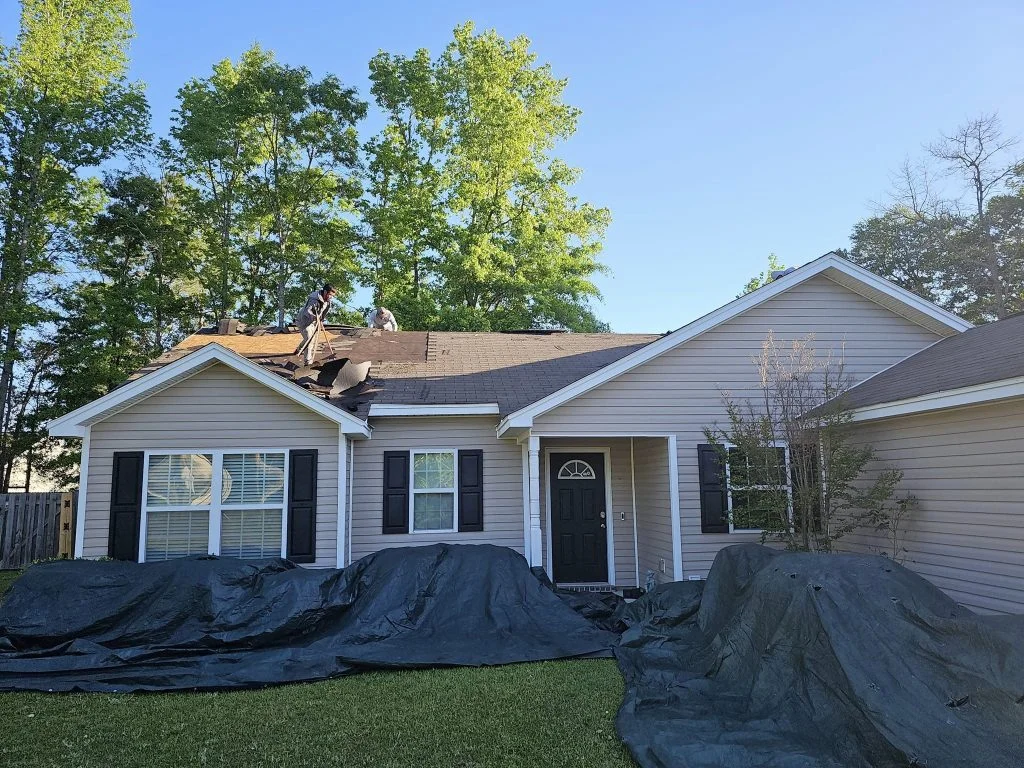
Q. Why does my insurance company say that my roof is too old and that I must replace it? It still looks okay…
Insurance carriers have detailed data on how long roofs are expected to last. Somewhere in every homeowner’s file, your carrier has the data on how many roof permits have been pulled (and when) on your property. Where current homeowners of older Tampa Bay area homes can run afoul of their insurer, is if sometime in the past, a previous owner of the property changed the roof but did not inform the county via a Notice of Commencement and a Permit. The couple hundred bucks they got away with, is now all hanging around your neck.
Insurance companies seek out four points of a roof wind mitigation report. When a roof meets these points, there are mandatory premium discounts that the home will receive, from that date forward. Every subsequent homeowner will benefit greatly, from having as many of these points met and documented.
1st. is the shape of the roof, which is important in relation to how much pressure blowing wind must exert before damage will occur. A hip roof is always preferable for standing up to wind and for insurance rates, but gable roofs still protect you and your family. Flat roofs tend to be harder to insure since Florida has a severe rainy season, but when properly installed, they provide years of protection.
2nd. will be the re-nailing of the wood decking while all of the old roofing material is off. Using an 8d common ring shanked nail, driven into every truss – rafter at 6” intervals, helps to prevent wind pressure from damaging a roof. During the re-roofing process, many counties’ will come by to perform a ‘mid-point’ inspection and check to see if this part of the code has been fulfilled. Depending on the type of wood used to create the wooden roof substrate, your roofer may tell you that your home does not need this step. Because every inspector can interpret the FL code differently, it is our installation policy that every wood roof gets re-nailed to meet FBC 611.7.1, regardless as to if we think it might be passed with-out adding this application.
3rd. has to do with the roof’s pitch. Pitch is measured from the eave to the roof’s ridge. Many Tampa roofs are considered to be 4:12 meaning the roof rises on an angled plane, 4” for every 12” of length. Roof pitches below 4:12 require extra material per FL 1507.2.2. Homeowners can choose to use self-sealing underlayment across the wood roof before any shingles are installed. These self-sealing membranes are hardy, waterproof and seal around all penetrations, thus helping to prevent wind driven rain from finding its way under the roof and into a home. It is our roof installation policy that all roofs between 2:12 and 4:12 be protected by having this critical roof component installed.
4th. has to do with the shingle that is being installed. Shingles can be valued in a Good, Better, Best scenario. Good shingles can also be referred to as Code Minimum, meaning they meet the bare minimum tolerances that the Florida code allows. Characteristics include having three tabs, only offering a 25 year warranty and barely being able to withstand winds of no more than 65 MPH. Better shingles, also called architectural, can last for 30 years and survive winds of 110 MPH. The best shingles feature special bonding agents, superior design changes, 130 MPH wind resistance, and anti-algae coverage.
Q. Why does my insurance company say that my roof is too old and that I must replace it? It still looks okay…
- Standard shingles are expected to last about 15 years in Florida conditions according to the data your insurance company operates by.
- Architectural shingles are expected to last 20 years or more, when installed properly by the roofer.
This does not mean that they cannot last for a longer or a shorter time. What it does mean is that many insurance companies require that Good shingle roofs be less than 15 years in age and that Better and Best architectural shingle roofs, be less than 20 years in age, in order for a new policy or for continued coverage, to be issued.
Some insurers will even send out letters 12 months before the respective 15 and 20 year annual roof age dates, requiring a roof replacement as a condition of coverage.
This may sound unfair at first, but imagine if you were responsible for 250,000 roofs or more, across a large area. Your data proves that normal wear and tear generally causes the need for a full replacement by a certain age. It then makes sense to require maintenance based on that data to prevent predictable large damages.
This also helps to keep all policyholders rates lower when the carrier is not writing off hundreds of roofs each year.
Homeowners who receive a mandatory re-roof notice do have options.
Hiring a licensed roof or home inspector might be the answer. Inspectors with the proper roofing credentials, can be called out to prepare a report citing their observations about what they discover. They try to assess a roof’s age via permitting data and also by pliability, brittleness, and granule loss, among other key indicators.
We offer a 25 point inspection that includes digital video taken from the roof a well as digital pictures.
This report has a value of $125.00, but that charge can often be waived depending on the circumstances.