
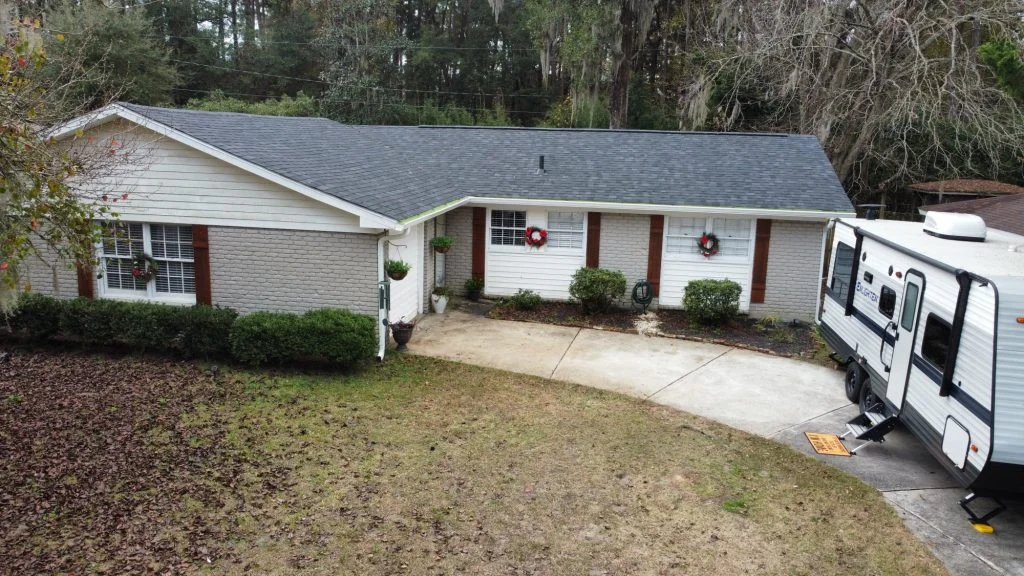
WHAT ARE THESE BLACK STREAKS ON MY ROOF?
We have heard people explain black roof streaks as
being caused by everything from
- chimney smoke settling
- acorns cracking on the surface
- tree sap
- aging shingles due to granule loss
However, the stains and streaks are a form of algae. Staining has been showing up on area roofs since 1995. Cutting back on tree canopy, or forgoing the use of a fireplace will not correct the problem.
The spores are air-borne, and are driven through-out the neighborhood by the wind, settling when and where they will. To grow into a visible colony, they require the correct amount of three key elements.
- Humidity (welcome to our summers!)
- Limestone (a key shingle ingredient)
- Sunlight ( Welcome to Georgia)
- So if this is true, why do neighbors have nothing and my roof looks like swamp thing walked all over it?
- Sunlight is probably the culprit
Q. So if this is true, why do neighbors have nothing and my roof looks like swamp thing walked all over it?
A. Sunlight is probably the culprit
- to much sun and the colony burns up
- to little and it never gets started
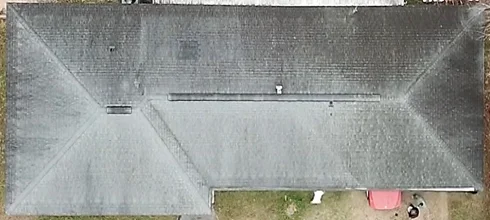
Which is why even on the same home, only certain roof faces are affected, while others are clean.
Metal oxidation also helps as a colony preventative. Look directly under the chimney, soil pipe flanges, and other metal roof protrusions, and you will likely find that the roof is free of discoloration.
To properly element roof staining, you should always consider ZINC or COPPER stripping be applied after the roof is cleaned, to help prevent a new infestation.
When replacing a roof, use shingles that are marked as AR (algae resistant) .
Beware!
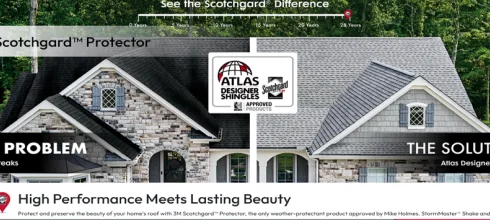
Some shingle makers use an AR label to mean ALGAE RELIEF (meaning if the shingles get stained, the maker will clean the roof). ATLAS shingles are ALGAE RESISTANT and ATLAS will pay for them if they ever stain!
We like ATLAS shingles with Scotchgard protection because their warranty is superior!
Roof moss is different from roof algae and is more dangerous because it will grow underneath the roof shingle and act like a sponge, soaking up water after it rains.
Eventually the moss will cause roof leaks if not treated.
Roof moss accumulates on the North side of the home or where shade is most prevalent.
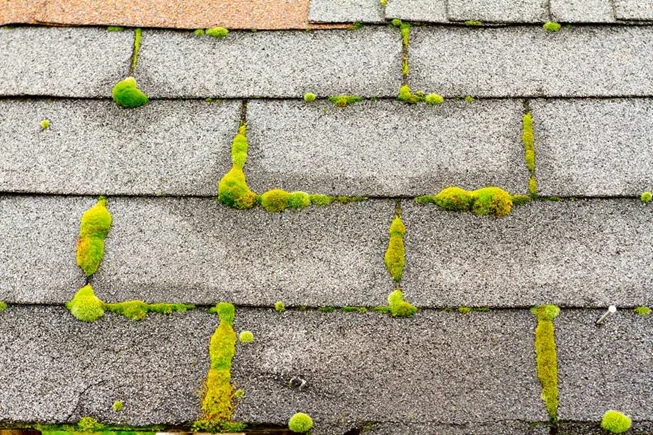
Only a professional roofer should attempt to remove roof moss, as it almost always requires some shingles to also be replaced.
Roof moss, once attached to a shingle roof, feeds on the dead organic matter used in the manufacturing process of the shingle. As the fungus breaks down the asphalt shingle, the ceramic granules protecting the surface of the shingle are loosened and begin to fall off. This causes the roof to deteriorate prematurely and diminishes the roof’s abilities to reflect heat rays.
If left untreated, roof moss may;
- reduce the life of your roof
- diminish your home’s curb appeal
- increase your homes cooling expenses
The initial removal of roof moss is always more difficult then its prevention;
A standard practice should be to clean your roof and then apply a preventative product such as zinc bars, Z-stop, or copper strips, to keep the stains from returning.
With the introduction of AR SHINGLES, designed to fight discoloration, and companies accepting work to clean shingles, roof cleaning and prevention has never been easier. But a word of caution; there is a right and a wrong way to fight the problem.
NEVER:
- Force water up and under the shingle
- Seal and/or Scrub the roof with a hard bristle brush
- Dump pure bleach over the shingles
Many people spend time and money cleaning their homes every year
only to ignore one of the most visible and important aspects of the home; the roof.
Adding a roof algae/moss prevention program to your annual spring cleaning chores will result in a beautiful home that looks fresh and clean!