
A roof replacement is not the time to choose shingles based on a small sample at the hardware store. The difference between architectural versus three-tab shingles affects how your roof looks from the street, how it stands up to wind and rain, and how soon you may be planning for another replacement.
For homeowners in Coastal Georgia and the Lowcountry, that decision carries extra weight. Humidity, intense sun, wind-driven rain, tropical weather, and airborne debris can expose weak points in any roof. Both shingle types can be appropriate in the right situation, but they are not interchangeable products. Understanding the trade-offs helps you invest in the protection your home actually needs.
Architectural Versus Three-Tab Shingles: The Basic Difference
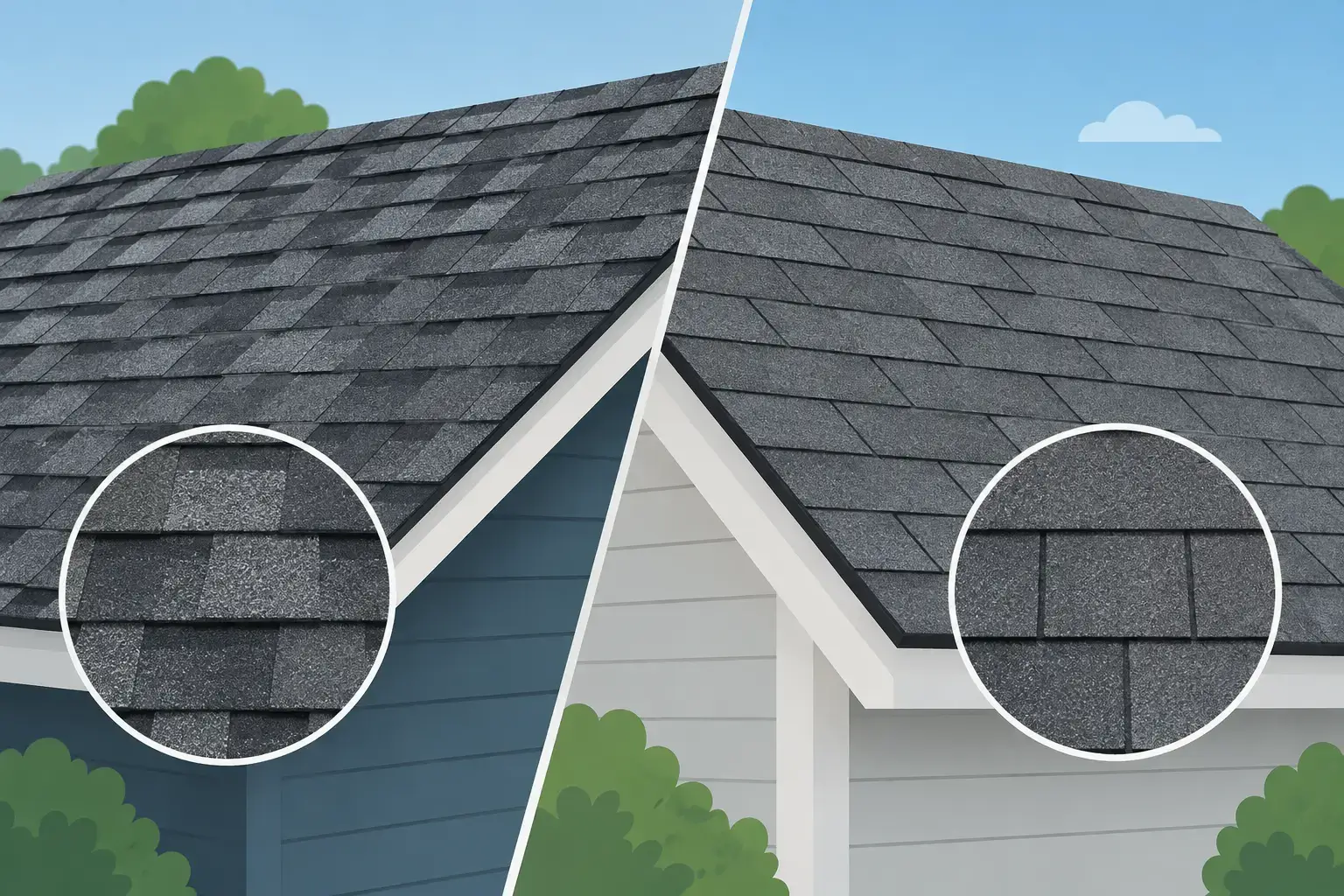
Three-tab shingles are the traditional, flat-looking asphalt shingle many homeowners recognize. Each shingle has cutouts that create three uniform tabs, producing a clean, repeating pattern across the roof. They are generally lighter, thinner, and simpler in appearance.
Architectural shingles, sometimes called dimensional or laminate shingles, are built with multiple layers of asphalt material bonded together. Those layers create a thicker shingle with varied lines and shadowing. From the ground, an architectural roof has more texture and can resemble higher-end materials such as wood shake or slate, depending on the selected color and profile.
The visible difference is easy to spot. A three-tab roof looks flat and uniform. An architectural roof looks deeper and more substantial. What matters most, though, is what that added construction can mean for weather performance and long-term value.
Durability Matters When Weather Turns Rough
A roof is a system, not just a field of shingles. Deck condition, underlayment, flashing, ventilation, starter shingles, ridge components, and installation quality all affect performance. Still, architectural shingles generally offer a stronger starting point because of their thicker, layered design.
That added thickness can help architectural shingles resist everyday wear from heat, rain, and minor impacts better than standard three-tab products. Many architectural shingle lines also offer higher wind ratings than three-tab options when installed as part of the manufacturer-approved roofing system. The exact rating depends on the specific product and installation requirements, so it should never be assumed based on shingle style alone.
Three-tab shingles can perform reliably when properly installed and maintained. However, their lighter construction may make them more vulnerable to lifting, creasing, or losing tabs during severe wind events. Once a shingle loses its seal or is damaged at the edge, wind-driven rain can reach the materials beneath it.
This does not mean every home needs the most heavy-duty shingle available. It does mean homeowners should think carefully about exposure. A home in an open area, near the coast, or beneath large trees may benefit from a more durable architectural option. A small detached structure with limited exposure may have different needs.
Appearance and Curb Appeal
Roof color and shingle profile have a major effect on a home’s exterior. Because roofing covers such a large area, a new roof can make a home feel updated even when no other changes are made.
Three-tab shingles offer a straightforward, uniform appearance. That can work well on modest homes, rental properties, garages, and structures where a simple traditional roofline is the goal. Their limited texture is also a benefit for homeowners who prefer a clean, understated look.
Architectural shingles offer more visual depth and usually a broader range of color blends. They can complement brick, siding, stone, coastal-style exteriors, and homes with prominent rooflines. On a larger house or a roof with multiple slopes, dormers, or gables, dimensional shingles often help the roof look more intentional rather than flat.
Curb appeal is not only about resale. It is about feeling good when you pull into your driveway and knowing the roof suits the home you have worked hard to maintain. If appearance matters to you, architectural shingles usually provide more room to personalize the finished look.
Upfront Cost Versus Long-Term Value
Three-tab shingles typically have a lower material cost, which can make them appealing when the budget is tight. Their simpler design may also be suitable when matching an existing three-tab roof for a targeted repair, assuming the surrounding roof is still in serviceable condition.
Architectural shingles generally require a higher initial investment. In return, they often provide longer expected service life, stronger wind performance options, and a more dimensional appearance. For many homeowners planning to stay in the home for years, those advantages can make architectural shingles the better value over time.
The right choice depends on the condition of the current roof, your plans for the property, and the level of protection you want. Choosing the lowest-cost shingle can be reasonable in a limited situation. But selecting a roof based only on initial cost may lead to regret if the product does not match the home’s weather exposure or your long-term plans.
A trustworthy roofing contractor should explain the differences clearly, provide written options, and avoid pressuring you toward a product that does not fit the project. You deserve to know what you are buying and why it is recommended.
Repairs Can Be Different for Each Shingle Type
A matching repair can be more difficult than homeowners expect. Shingles fade over time from sun exposure and weather, so even the same color name may not blend perfectly with an older roof. This issue can affect both shingle styles.
With three-tab shingles, the consistent pattern can make a color mismatch especially noticeable. Architectural shingles have more varied color blends and texture, which can sometimes make a repair blend more naturally from the ground. That said, a close match is never guaranteed, particularly on an older roof or after a manufacturer changes a product line.
After a storm, a professional inspection can identify missing shingles, lifted edges, creases, punctures, exposed fasteners, damaged flashing, and other conditions that are easy to miss from the ground. For homeowners who need documentation, Real Good Roofing can provide dated photos, measurements, and a written estimate for the property owner’s records.
Which Shingle Is Right for Your Home?
Architectural shingles are often the stronger choice for a primary residence in Savannah, Pooler, and surrounding coastal communities. Their layered construction, improved visual appeal, and commonly available wind-resistant options make them well suited to homeowners seeking a dependable long-term roof replacement.
Three-tab shingles may still make sense for a budget-sensitive project, a shed, a detached garage, or a property where maintaining a consistent existing roof appearance is the priority. They can also be appropriate where the roof design, local requirements, and product availability support their use.
Before deciding, consider the age and condition of your current roof, how long you expect to own the property, tree coverage around the home, wind exposure, and the condition of the roof deck and ventilation. A shingle choice should fit the whole roof system, not just the color board.
Installation Is the Part You Cannot See Later
Even a quality architectural shingle cannot make up for poor installation. Correct nailing placement, proper flashing around chimneys and walls, sealed penetrations, adequate ventilation, and careful attention to valleys and eaves are what help a roof shed water when conditions are at their worst.
That is why an inspection before replacement matters. It gives the contractor a chance to identify soft decking, ventilation concerns, worn flashing, drainage issues, and storm-related damage before new shingles cover those areas. Addressing problems at the right stage is far easier than uncovering them after a leak develops.
The best roof is the one that fits your home, your budget, and the weather it must handle – installed with care by people who will answer the phone after the job is done. Whether you choose three-tab or architectural shingles, start with a clear inspection and an honest conversation about what your roof needs.