
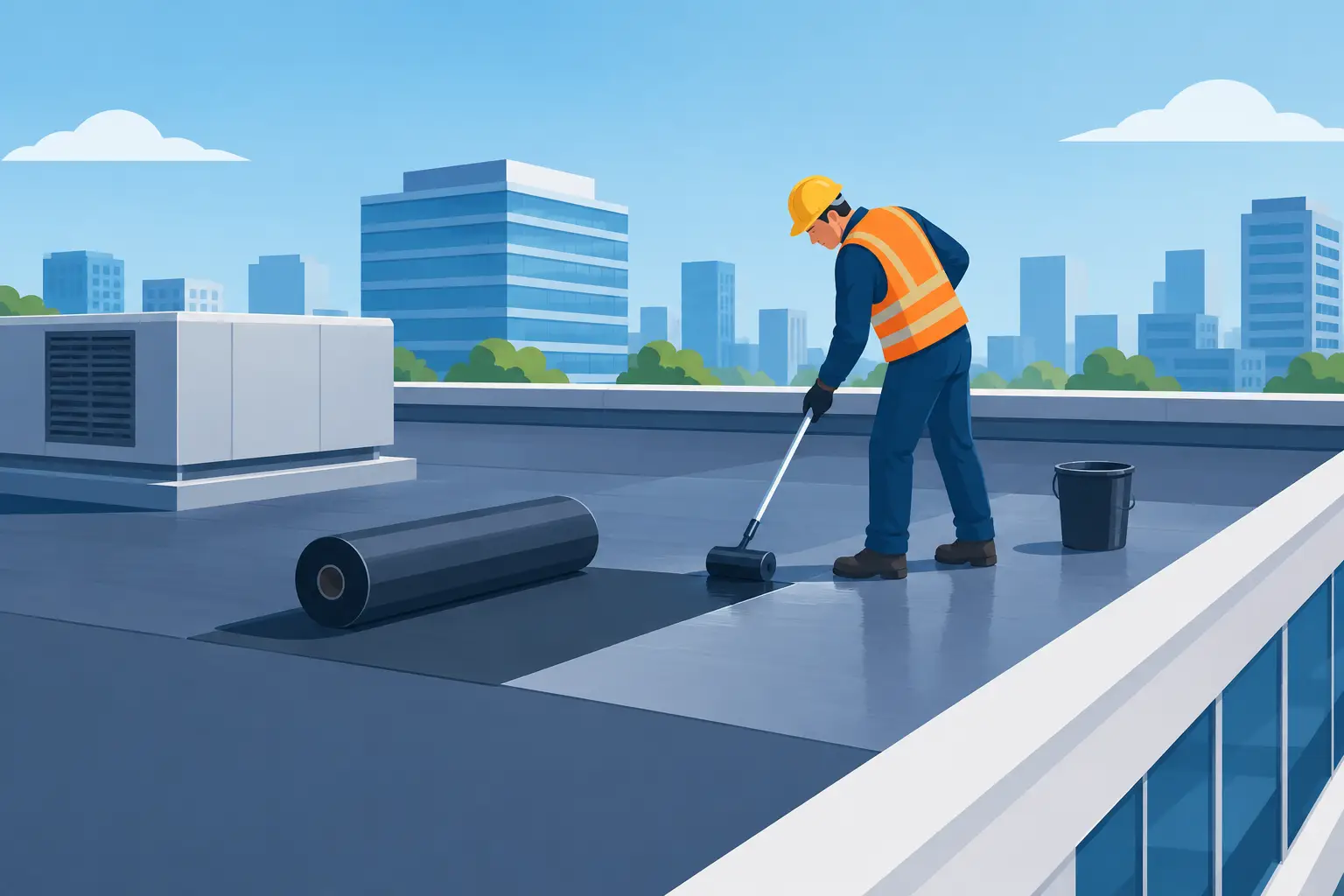
A drip above a retail display, a stained ceiling tile in an office, or water collecting near rooftop equipment can turn into a costly interruption fast. Flat roof repair commercial buildings need is not just about stopping visible water. It is about finding the path water took, protecting the structure below, and making a repair that holds up through the next hard rain.
For business owners and property managers, the right response balances urgency with good judgment. A small leak may need a targeted repair. Widespread seam failure, recurring ponding water, or wet insulation may point to a larger restoration or replacement decision. A thorough inspection gives you the information to choose wisely.
Why Commercial Flat Roof Leaks Need Prompt Attention
Flat commercial roofs are designed with low slopes, drains, scuppers, and carefully sealed details that move water off the building. When one part of that system fails, water can travel beneath the roofing membrane before it appears inside. The ceiling stain is often far from the actual opening.
That is why waiting for a leak to get worse is rarely a cost-saving move. Water can saturate insulation, weaken roof decking, damage interior finishes, affect electrical areas, and create conditions for mold growth. In a restaurant, medical office, warehouse, or apartment building, it can also disrupt operations and inconvenience tenants or customers.
Coastal Georgia weather adds another layer of pressure. Heavy rain, wind-driven storms, high humidity, intense sun, and debris can all wear on a commercial roof over time. After a storm, loose flashing, punctures, lifted edges, and clogged drainage points deserve a prompt inspection, even when there is no obvious leak indoors.
Common Flat Roof Problems on Commercial Buildings
A commercial flat roof can be built with several systems, including TPO, PVC, EPDM, modified bitumen, and coated assemblies. Each has different strengths, but most leaks develop at transitions and details rather than in the open field of the roof.
Failed Seams and Flashing
Seams connect sections of membrane, while flashing seals roof edges, wall transitions, vents, curbs, drains, and penetrations. Heat, movement, age, poor installation, and storm damage can cause these areas to pull apart or lose their seal. A repair may involve cleaning and preparing the surface, then installing compatible material and properly sealing the detail.
Ponding Water and Drainage Trouble
A flat roof should not hold standing water for extended periods after rain. Ponding water puts extra stress on seams and coatings, accelerates deterioration, and can reveal a drainage issue. The cause may be blocked drains, debris-filled scuppers, sagging areas, or inadequate slope.
Clearing a drain can solve a simple problem, but repeated ponding calls for a closer look. A repair that ignores the underlying drainage condition may only buy time.
Punctures and Surface Damage
Service traffic is a regular part of commercial property ownership. HVAC maintenance, satellite equipment, plumbing work, and other rooftop access can create punctures or damage protective surfacing. Tree limbs, windblown debris, and dropped tools can do the same.
Small punctures are often repairable when addressed quickly. They become more serious when water enters the roofing layers and spreads beneath the membrane.
Blisters, Cracks, and Aging Materials
Temperature swings cause roofing materials to expand and contract. Over years of exposure, an older system may develop cracks, blisters, split seams, or brittle flashing. Not every aged roof requires immediate replacement, but a pattern of recurring failures is a sign to evaluate the roof as a whole instead of repairing one spot at a time.
What a Proper Commercial Flat Roof Inspection Should Cover
The goal of an inspection is to identify both the active leak and the roof conditions that could cause the next one. A reliable roofer should examine membrane seams, penetrations, perimeter edges, flashing, drains, scuppers, rooftop equipment areas, and visible signs of trapped moisture or surface deterioration.
Interior observations matter too. Water stains, soft ceiling areas, damp insulation, musty odors, and leak timing can help trace the problem. If water appears only during wind-driven rain, for example, wall flashing or edge details may be more likely than an opening in the roof field.
For large or hard-to-access roofs, drone imagery can provide a broader view of the surface and help document visible conditions safely. It does not replace close-up hands-on inspection of suspect areas, but it can be useful for understanding the roof layout and spotting drainage patterns or storm-related concerns.
A good inspection should end with clear findings and practical options. You should understand what is leaking, what work is recommended now, what conditions should be monitored, and whether a repair is likely to offer dependable service life.
Repair, Restoration, or Replacement: How to Decide
There is no one answer for every commercial roof. The best choice depends on the age of the system, the extent of moisture damage, how often leaks have occurred, the condition of insulation and decking, and your plans for the property.
A targeted repair is often the sensible choice when damage is isolated and the remaining roof is in good condition. Repairing a split seam, damaged boot, loose flashing section, or localized puncture can protect the building without taking on unnecessary work.
A restoration approach may make sense when the roof is still structurally sound but showing broad surface wear. Depending on the existing roof system and its condition, a compatible coating or restoration system can extend service life. Surface preparation and moisture evaluation are critical here. Coating over active leaks, loose material, or wet insulation does not solve the problem.
Replacement becomes the more responsible option when the roof has widespread deterioration, recurring leaks in multiple areas, extensive saturated materials, or an assembly near the end of its useful life. It is a bigger project, but it can reduce the ongoing disruption and uncertainty of repeated repairs. A transparent contractor should explain why replacement is being recommended rather than treating it as the default answer.
How to Limit Disruption While Repairs Are Underway
Commercial roof work needs planning, especially when tenants, employees, inventory, customers, or sensitive equipment are below. Before work begins, identify access points, delivery routes, rooftop equipment that must remain available, and interior areas that need protection.
For an active leak, temporary measures may be needed while conditions allow for a permanent repair. The permanent work should then be scheduled around weather, material requirements, and business operations. Some repairs are brief and localized; larger restorations or replacements require a more detailed schedule.
Communication is part of the work. Property managers should know what areas crews will access, whether there may be noise or odors, how long the work is expected to take, and what conditions could change the schedule. A clear plan helps avoid surprises for tenants and staff.
Preventive Maintenance Protects the Roof You Already Have
Many commercial roof problems begin as manageable maintenance issues. Seasonal inspections can catch debris buildup, cracked sealant, open seams, damaged flashing, and drainage trouble before water reaches the interior.
A practical maintenance routine includes keeping drains and scuppers clear, limiting unnecessary foot traffic, requiring care around rooftop equipment, and documenting repairs and inspections. After severe weather, a timely check is especially worthwhile. Small storm damage is easier to address before the next round of rain exposes it.
If your property has several buildings or a large roof footprint, a written maintenance schedule can help prioritize work and budget for future needs. It also gives owners and managers a clearer record of how the roof has performed over time.
Choose a Contractor Who Explains the Work Clearly
Commercial flat roofing is detail-driven work. The quality of seam preparation, flashing installation, drainage corrections, and material compatibility matters as much as the visible patch. Look for a contractor willing to inspect carefully, explain the findings in plain language, and provide a written scope that matches the condition of the roof.
Real Good Roofing brings a local, family-rooted approach to commercial roof repairs throughout Coastal Georgia and the Lowcountry. Our team focuses on responsive inspections, straightforward recommendations, and workmanship designed to protect the property beneath the roof.
When water appears inside, do not assume the visible stain tells the whole story. A prompt, professional inspection can turn an urgent leak into a clear plan for protecting your building, your operations, and the people who rely on both.