
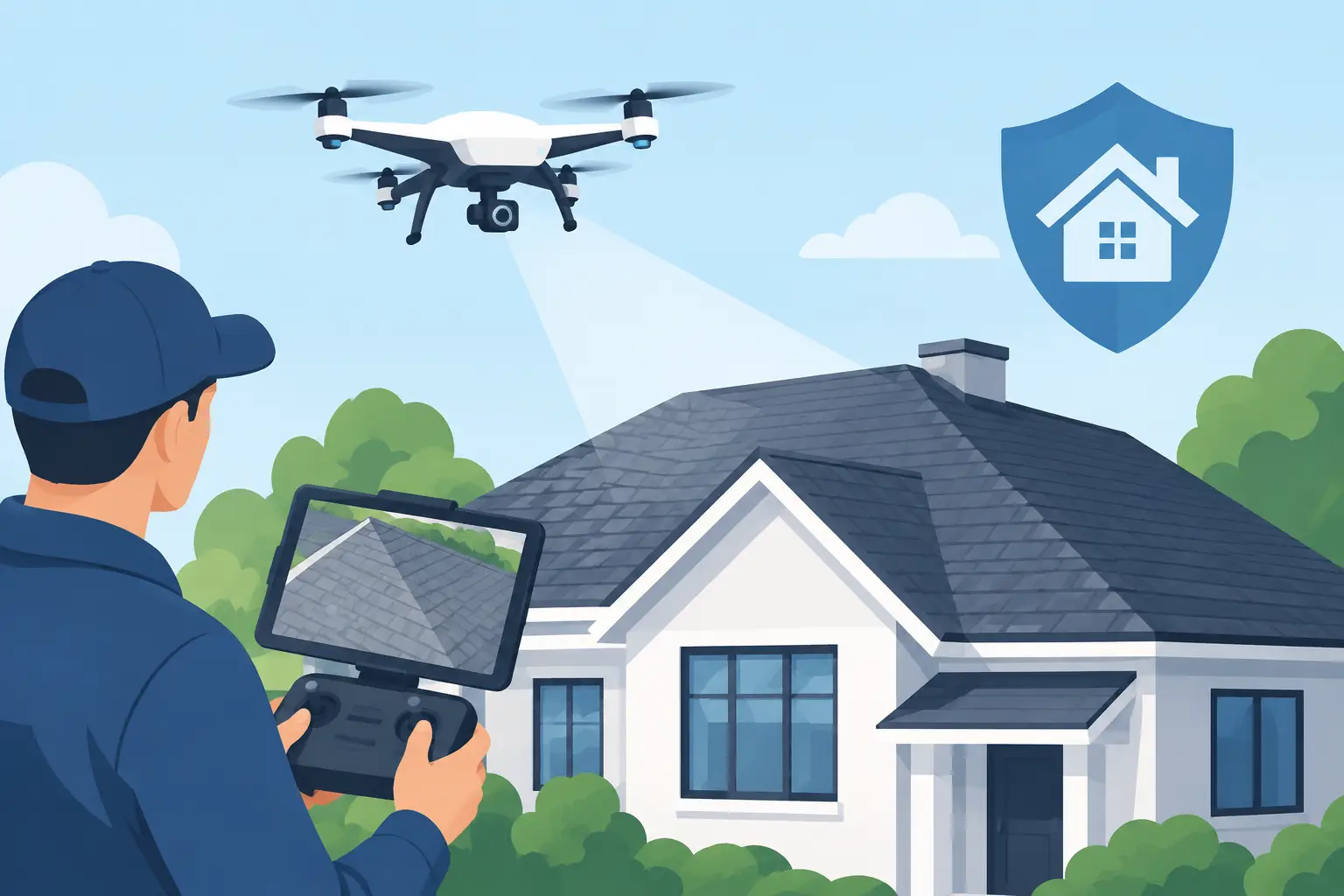
A windstorm can leave a roof looking perfectly normal from the driveway while lifting shingles, cracking ridge caps, or scattering granules across the roof surface. That is why a drone roof inspection for insurance can be so useful after severe weather. It gives property owners a safer, clearer view of the areas that are difficult to inspect from the ground – along with dated images and measurements that help document the condition of the roof.
For homeowners in Coastal Georgia and the South Carolina Lowcountry, storms are not rare events. Wind, heavy rain, falling limbs, hail, and wind-driven debris can all create damage that deserves a close look. A drone does not replace an experienced roofing professional, but it gives that professional a valuable way to inspect steep, high, or hard-to-reach areas without putting unnecessary weight or foot traffic on a potentially compromised roof.
What a Drone Roof Inspection for Insurance Can Show
A drone inspection captures high-resolution aerial images of the roof from multiple angles. This often makes it easier to identify visible storm-related concerns, including missing or lifted shingles, creased shingle tabs, exposed underlayment, damaged flashing, dented metal components, broken ridge caps, and debris impact areas.
The value is not simply getting a bird’s-eye view. It is being able to document what is actually present on the roof at a particular point in time. Clear, dated photos can show the location and extent of visible damage far better than a verbal description from the ground.
Measurements also matter. Roof size, slope, and the affected area can help a homeowner understand the scope of recommended repair or replacement work. When a contractor provides a written estimate alongside photos and measurements, the property owner has organized information to review and, if needed, submit to their own insurance company.
That said, images have limits. A drone can reveal surface conditions, but it cannot always show what is happening beneath the shingles, around a leak inside the attic, or in concealed roof decking. A thorough inspection may also include an on-roof assessment, attic review, interior moisture check, and examination of gutters, vents, flashing, and other roof penetrations.
Why Drones Make Storm Inspections Safer and Faster
After a storm, homeowners often feel pressure to climb a ladder and check the roof themselves. That can be dangerous, especially when shingles are wet, loose, or covered by branches. Even a small roof issue is not worth a serious fall.
Drone technology allows a trained operator to inspect many areas without immediately walking the roof. This is especially helpful for steep roofs, multi-story homes, metal roofs, and properties where access is limited by landscaping, fencing, or wet ground. It can also reduce the chance of disturbing fragile materials before their condition is documented.
Speed is another advantage. When a storm moves through a neighborhood, visible roof damage can be difficult to spot from the street. Aerial imagery helps a roofing professional make an informed initial assessment quickly, then recommend whether the next step should be a minor repair, additional hands-on inspection, emergency protection, or planning for a replacement.
At Real Good Roofing, FAA-certified drone inspections are part of a practical approach to roof evaluations. The goal is straightforward: give homeowners a clear look at their roof and explain what the findings mean in plain language.
What the Inspection Process Usually Looks Like
A professional drone inspection should feel organized, not rushed. The roofing professional begins by asking what happened: when the storm occurred, whether the home has leaked, where water has appeared, and whether debris struck the property. Those details help focus the inspection on likely trouble areas.
Next comes a ground-level review. Loose shingles, metal fragments, granules near downspouts, fallen limbs, damaged gutters, and dented vents may all provide useful clues. The drone flight then captures the full roof plane, ridge lines, valleys, flashing, chimney areas, skylights, vents, and other details that deserve a closer look.
After the flight, the most useful photos are reviewed with the homeowner. A good contractor should not rely on vague statements like “you need a whole new roof” without showing why. Instead, they should point out visible conditions, explain the recommended work, and be honest when more investigation is needed.
If repairs or replacement are recommended, request a written estimate that clearly describes the proposed scope of work. Keep the inspection images, notes, measurements, maintenance records, and estimate together. If you choose to contact your insurance company, you can use those documents when communicating directly with them.
When a Drone Inspection Is Most Helpful
A drone inspection is valuable after obvious storm damage, but it is also useful when the signs are less clear. Call for an inspection if you notice a new ceiling stain, a leak during wind-driven rain, shingles in the yard, unusual granules in gutters, or a branch that contacted the roof.
It can also be a smart step before buying or selling a property, after a nearby storm that damaged neighbors’ roofs, or when a roof is nearing the end of its expected service life. For commercial buildings and multifamily properties, drone imagery can help property managers review large roof areas while minimizing disruption to tenants and operations.
Still, timing matters. If water is actively entering the home, do not wait for a routine inspection. Move belongings away from the leak, collect water safely if possible, and contact a roofing professional for emergency help. The immediate priority is limiting further water intrusion and protecting the structure.
What Drone Photos Do Not Tell You on Their Own
Clear images are useful evidence, but they should never be treated as a final diagnosis without professional interpretation. A dark area on a shingle may be normal shading, algae staining, or damage. A missing tab may be storm-related, but the age and overall condition of the roofing system can affect the repair recommendation.
There is also a difference between visible wear and a sudden weather event. Older shingles naturally lose granules and become more brittle over time. A dependable roofing contractor will explain what can be seen, what cannot be confirmed from aerial images alone, and what work is appropriate for the roof’s actual condition.
Homeowners should be cautious of anyone who inspects from a drone for a few minutes and makes sweeping promises. No contractor can guarantee what an insurance company will decide. What a contractor can provide is an honest assessment, documentation of visible conditions, and a clear estimate for the work they recommend.
Questions to Ask Before Scheduling an Inspection
Before hiring a roofing company, ask whether the drone operator is properly certified, whether the inspection includes close-up photos, and whether you will receive documentation you can keep for your records. It is also worth asking how the company determines whether a roof needs repair versus replacement.
Look for an answer that is specific to your roof, not a sales script. The best inspection is one that leaves you with a better understanding of your property, whether the answer is a small repair, continued monitoring, or a larger roofing project.
A roof rarely gives much warning before a small opening becomes a wet ceiling, damaged insulation, or mold concern. If your home has been through a hard Coastal storm, a careful aerial inspection can replace guesswork with a clear view of what needs attention.