
The roof can look perfectly fine from the driveway and still be carrying hidden storm damage, aging materials, or active moisture problems. A roof inspection before buying a house gives you a clearer picture of one of the property’s biggest protection systems before you move forward with a purchase. For buyers in Coastal Georgia and the South Carolina Lowcountry, where heat, humidity, wind, and heavy rain put roofs under regular stress, that information can change how you evaluate the home.
A general home inspection is still essential, but it may not provide the close, roof-specific assessment needed to identify subtle concerns. A dedicated roofing inspection helps you understand whether the roof needs a minor repair, preventive maintenance, or more significant planning after closing.
Why a Roof Inspection Before Buying a House Matters
A roof problem rarely stays limited to the roof. Water can move beneath shingles, through decking, into attic insulation, and down walls before a stain appears on a ceiling. By the time interior symptoms are visible, the repair may involve more than replacing a few shingles.
That is why buyers should not rely on appearance alone or assume a roof is sound because it did not leak during a showing. A roof may be near the end of its service life without an active leak. It may also have wind-lifted shingles, compromised flashing, damaged pipe boots, soft decking, or drainage issues that only become obvious during a trained inspection.
The goal is not to expect a roof to be brand-new. Older homes can have roofs with normal wear that remain serviceable. The goal is to know what condition the roof is in, what risks are present, and what you should reasonably plan for as the next owner.
What a Professional Roof Inspection Can Reveal
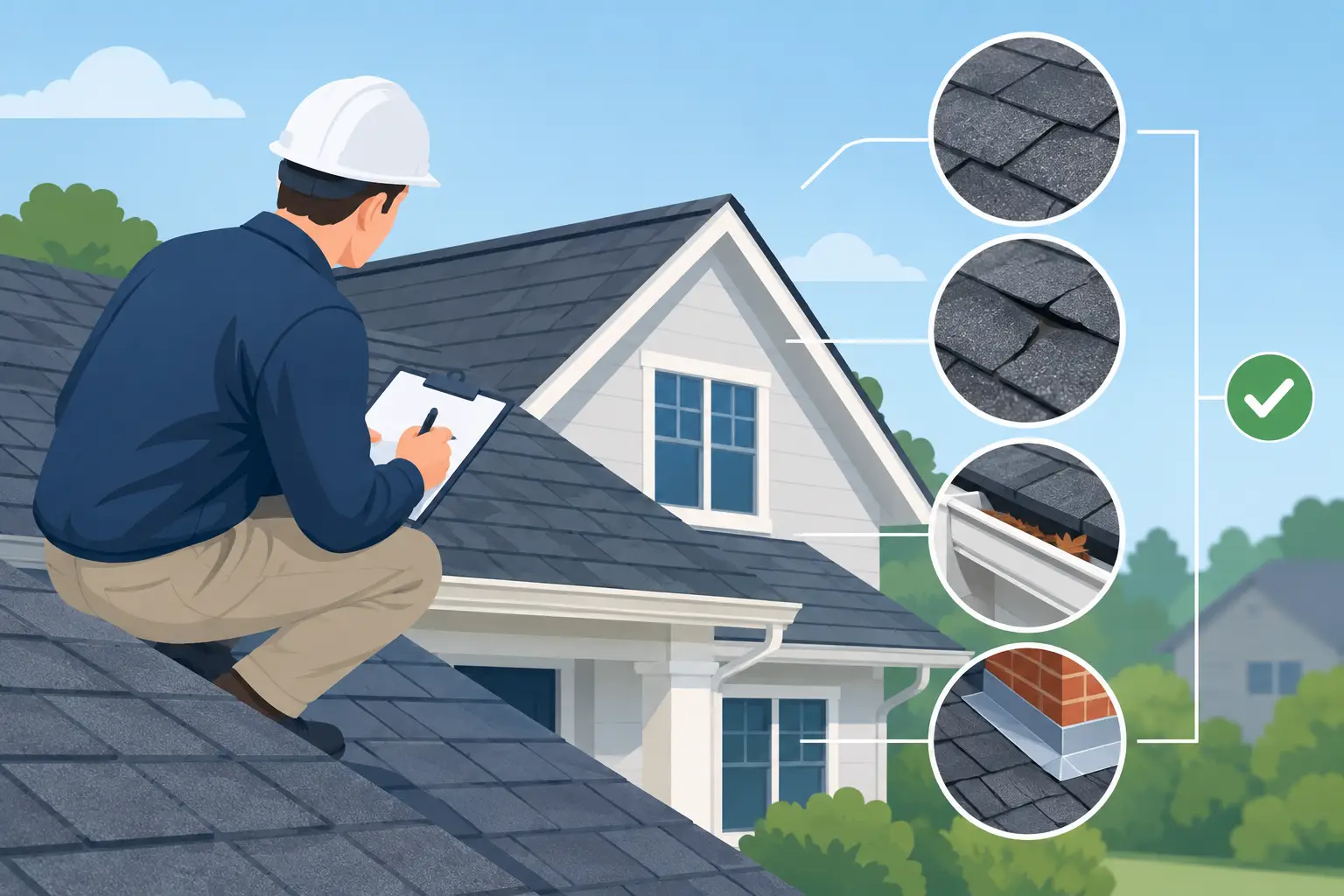
A qualified roofer evaluates the roof as a complete system, not simply as a field of shingles. That includes the visible roofing material, the areas where water is most likely to enter, drainage components, ventilation, and accessible attic conditions.
Remaining service life and material condition
Roofing materials wear gradually. Granule loss, brittle shingles, curling edges, exposed fasteners, rust, cracked sealant, and worn flashing can indicate a roof that is aging out. An inspection cannot always put an exact number of years on a roof, because installation quality, storm exposure, tree coverage, ventilation, and maintenance all affect longevity. It can, however, provide a realistic assessment of whether the roof appears to have useful life remaining or should be budgeted for soon.
This matters when comparing homes. A house with an older but well-maintained roof may still be a reasonable purchase. A house with extensive wear, multiple prior repairs, and signs of moisture intrusion deserves a more cautious look.
Storm and wind damage
Coastal weather can leave damage that is easy to miss from the ground. Wind may crease or lift shingles without removing them completely. Hail can bruise roofing materials. Falling limbs can crack shingles, puncture metal, or damage gutters and flashing.
A roofing professional can look for patterns that distinguish normal aging from damage. Photos and written findings give buyers useful documentation to review with their real estate professional, seller, and other advisors as they decide how to proceed.
Leaks and moisture pathways
The highest-risk areas are often not in the middle of the roof. Leaks commonly develop around penetrations and transitions, including vent pipes, chimneys, skylights, valleys, sidewalls, and roof-to-wall connections. Flashing at these locations must direct water away from the home, and even a small failure can create a persistent issue.
When attic access is available, an inspection may also identify water staining, damp insulation, mold-like growth, daylight through the decking, or sagging wood. These signs do not automatically mean the entire roof must be replaced, but they do call for a closer assessment of the cause and extent of the damage.
Decking, ventilation, and drainage concerns
A roof needs more than good shingles. The decking beneath the roof covering must remain solid, attic ventilation must help manage heat and moisture, and gutters must move water away from the structure.
Poor ventilation can contribute to excessive attic heat and premature material wear. Clogged or poorly pitched gutters can cause water to back up near the roof edge. Soft or uneven decking can suggest previous moisture exposure. These are details a buyer may not see during a quick property visit, yet they affect the long-term performance of the roof.
When to Schedule the Inspection
Schedule the roofing inspection during your due-diligence period, as early as possible after the property is under contract. Waiting until the final days can create unnecessary pressure if a concern is discovered and you need time to gather more information.
It is especially wise to arrange a roof inspection when the home has an older roof, visible staining, nearby overhanging trees, recent storm exposure, patchwork repairs, or a seller disclosure that leaves questions unanswered. It can also be worthwhile when the general inspector notes roof wear but cannot determine the source or severity of a concern.
If access is limited or the roof is steep, drone inspection can provide a detailed view of areas that are not safe to walk. FAA-certified drone inspections can capture clear images of the roof surface while reducing the need to disturb fragile materials. A drone view is useful, but it works best as part of a full professional assessment that includes accessible exterior and attic areas.
Questions to Ask After the Inspection
The most useful inspection report is one that explains findings in plain language. Ask whether any issue is active, whether it needs immediate attention, and what could happen if it is delayed. You should also ask whether a repair is likely to address the concern or whether the roof is approaching replacement territory.
Request clear photos, especially for damage that is not visible from the ground. Dated photos, measurements, and a written estimate can help you keep records organized as you evaluate the property. A good contractor should be direct about uncertainty too. For example, some concealed damage cannot be confirmed until materials are removed, and a responsible inspection should say so rather than make promises the roof cannot support.
It also helps to ask about prior repairs. A few properly completed repairs are not necessarily a red flag. Repeated patches in several areas, however, can signal a roof that has been managed in small increments and may need a more complete solution soon.
How Inspection Findings Can Affect Your Purchase Decision
Inspection results do not always mean you should walk away from a house. They give you the facts needed to make a decision with fewer surprises. A buyer may choose to proceed because the needed repair is manageable. Another may decide that the roof’s age and condition should factor into the offer, the repair request, or the budget for improvements after closing.
Consider the full picture. A roof with several years of life left may still need small maintenance work. A newer roof may have installation defects that deserve attention. A replacement recommendation may be reasonable if materials are widely worn, but the scope should be supported by visible evidence and a clear explanation.
For homes in this region, timing also matters. Buying just before hurricane season or a period of frequent heavy rain can make unresolved roofing issues more urgent. Knowing the roof’s condition before you own the home lets you prioritize repairs and avoid discovering a problem during the first major storm.
Choose a Roofing Professional Who Explains the Evidence
The inspection is only as useful as the communication that follows it. Look for a local roofing professional who can explain the findings without pressure, document concerns clearly, and distinguish between immediate needs and future planning. Certifications, field experience, and a strong local reputation matter because coastal roofing conditions are not theoretical here – they are part of everyday property ownership.
Real Good Roofing provides detailed roof inspections for homeowners across Pooler, Savannah, Coastal Georgia, and the South Carolina Lowcountry, including photo documentation and straightforward repair or replacement recommendations when work is needed.
Before you commit to a home, make sure the roof has had the same careful attention you would give the foundation, electrical system, or plumbing. A clear inspection can turn a question mark over the property into a plan you can act on.