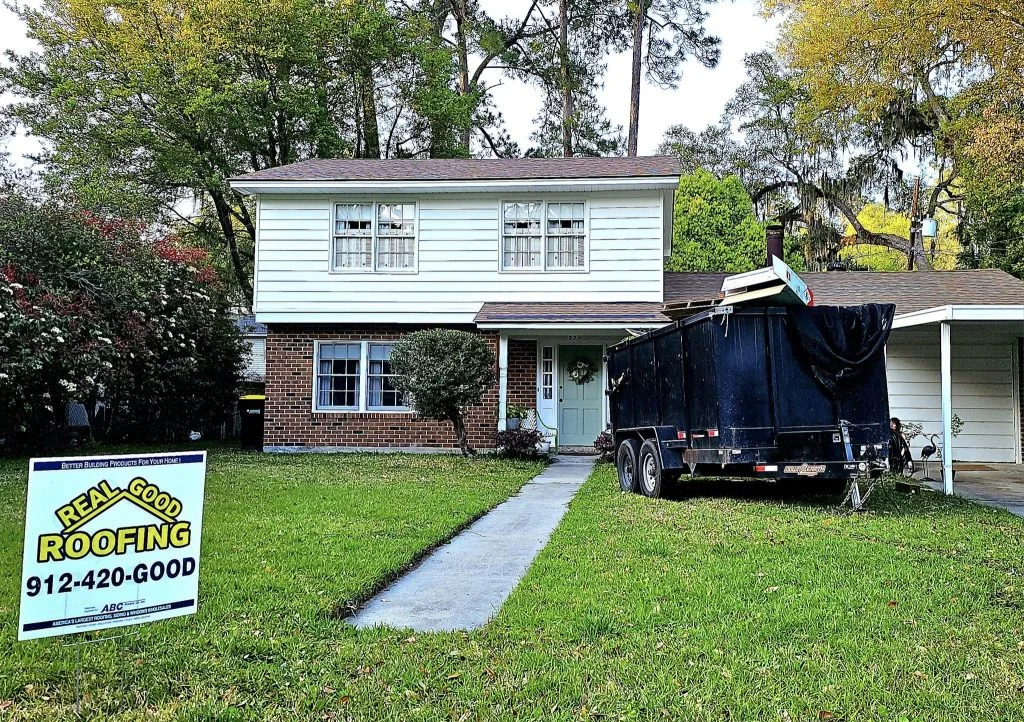
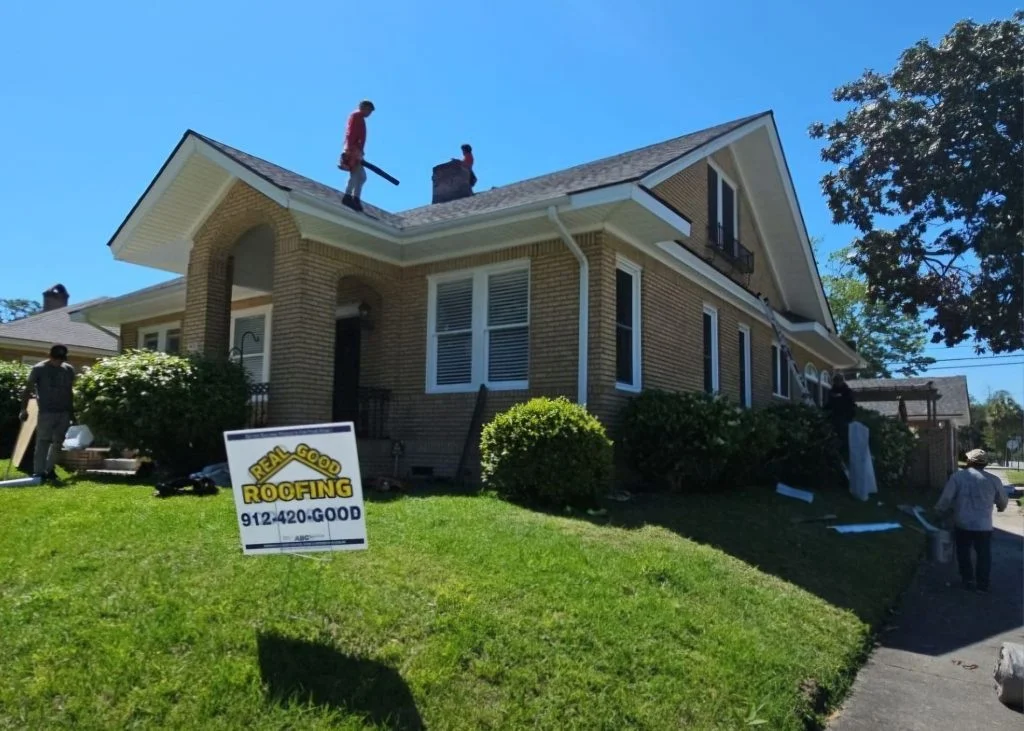
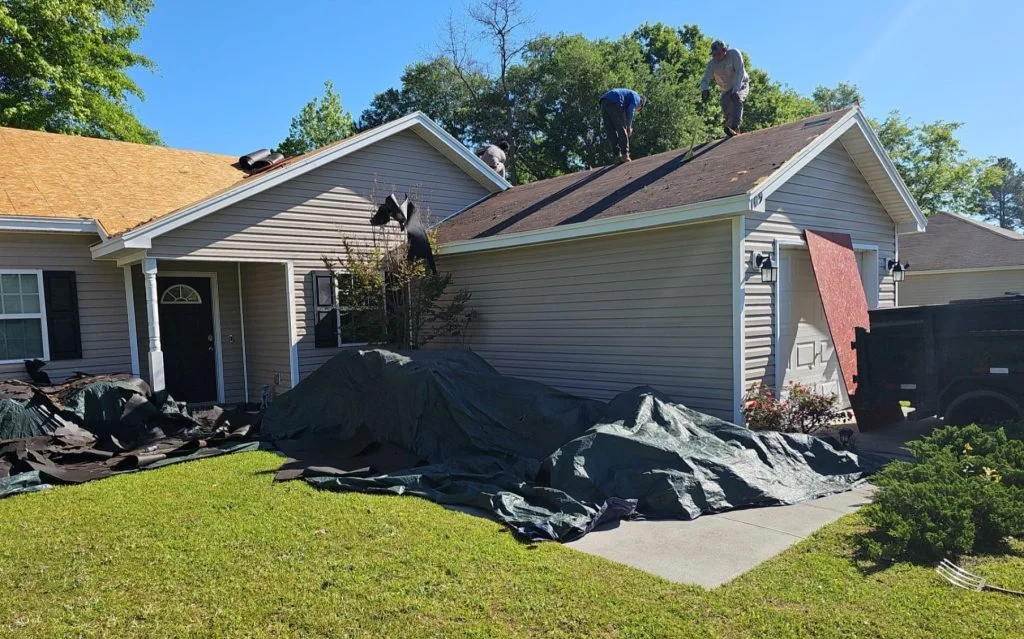
Author: Justin

  • ROOF Story INTERVIEW

    ROOF Story INTERVIEW

    “You’re not inviting contractors to give an estimate, you’re inviting them to distinguish themselves by excelling at an interview,” so says Justin Shoemaker from Real Good Roofing.

    When you’re shopping for a new shingle roof, you’re more than just a potential customer, you’re acting in the capacity of “Domestic Human Resources Manager.” You’re hiring, and knowing how to conduct an interview, helps you to save your money.

    In a typical search, too much time is spent discussing the job and too little time is spent discussing the people who’s going to do the job. A trustworthy maxim in the roofing industry is, “Choose your roofer first, choose your roofing last.”

    Essentially, Shoemaker advises against getting overwhelmed by colors and styles to the extent that you overlook the character of the roofing contractor. Draw parallels to your everyday interactions where you assess people, applying that experience to evaluating potential contractors.

    • Does he look you in the eye?
    • Does he listen?
    • Does he take notes when you speak?

    A no could mean you need to dig a bit deeper.

    Two no’s could mean he’s more concerned about selling something (anything!) than he is about doing a great roofing job for you.

    Three no’s probably means you should send him packing without your autograph in his briefcase.

    If a contractor mentions more than once how honest he is, it’s a safe bet that he isn’t. I’m not sure why this rule works, but it does. Trust me, I’m honest, and No! I am not going to repeat myself!

    The best questions to ask are open-ended. Ask questions that can’t be answered by a “yes” or “no.” For example, since most roofing contractors would like for you to believe that every job they’ve ever done has gone perfectly, you might ask, “What are some mistakes you’ve made on past jobs, and what did you do to correct them?” Open-ended questions often flush out interesting stories.

    If nothing useful is forthcoming, keep another inviolable rule in mind: The last roofer you should consider is the one who’s never had a leak.

    Your roofing contractor may want to control the interview by using manufacturer supplied literature to lead you through a long dog and pony show. According to the BBB, a majority of complaints have to do with workmanship – not material. So keep them focused on their ability. Note how you are treated before any money for services is exchanged. Are they respectful of your time, arriving when promised and are they easy to communicate with. Many complaints by homeowners start off the same way, “I could never reach my roofer” If a contractor seems sketchy without having any of your hard earned savings, why would that improve after you pay for the a new roof?

    Shoemaker suggests asking for a “resume’ to see if they are qualified for the job!

    • Education, (there are schools, classes and certifications),
    • Experience, (Angie’s List and the BBB have his record),
    • Employees, (who does the actual roofing).

    What if your contractor seems to resent your interrogation? Better to expose a thin skin now rather than discover, after you paid a deposit, that you are not comfortable with them around your family.

    Always remember that you’re not inviting contractors to come out and give you an estimate. You’re inviting them not your home and offering them the opportunity to distinguish themselves from the competition, and so earn your job!

    To interview Real Good Roofing – contact BRODY anytime. They answer the phones, even at nights, on the weekends, or over a holiday. They know Mother Nature does not keep banker hours!

    Real Good Roofing can be reached at 912-420-GOOD (4663) or at www.realgoodroofing.com.

  • B vents

    B vents

    -

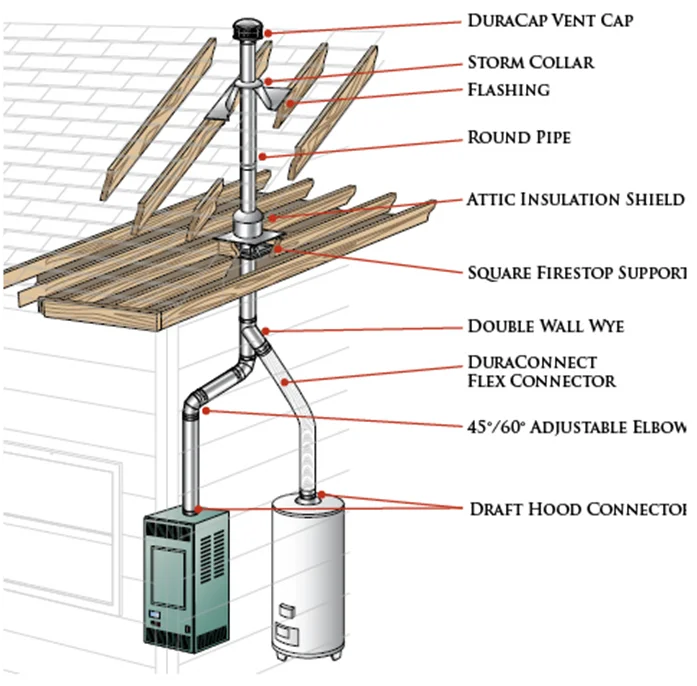
    What is a Type B Gas vent?

    It’s name comes from the use of  class B parts          (masonry chimneys are class A).

    The B-Vent is an air insulated venting system that is used for gas burning appliances

    1. hot water heaters
    2. furnace flues.

    B-vents require special gas-only chimney that terminates above the roof.

    1. Can a B-vent be insulated?

    No. The vent requires a minimum of one-inch clearance to all combustible material.

    1. What causes noisy B-vents?

    Vibrations caused by the movement of parts in the system. When installed properly, the B-vent is designed to quietlyhandle expansion and contraction.

    1. Should my B-vent be replaced when re-doing my roof?

    We will inspect the 3 critical parts of the B-vent;

    • CAP
    • STORM COLLAR
    • BASE FLASHING

    Depending on age and condition, a B-vent may only need re-sealed or possibly only need certain parts.

    1. Can you paint my B-vent?

    Yes. Because heated air is vented through a B-vent, high heat paint should be applied. One spray can is sufficient to cover the average vent with one coat. Spray paint designed for grills and car engines offer ideal protection.

  • Soil Pipe Sleeve

    Soil Pipe Sleeve

    -

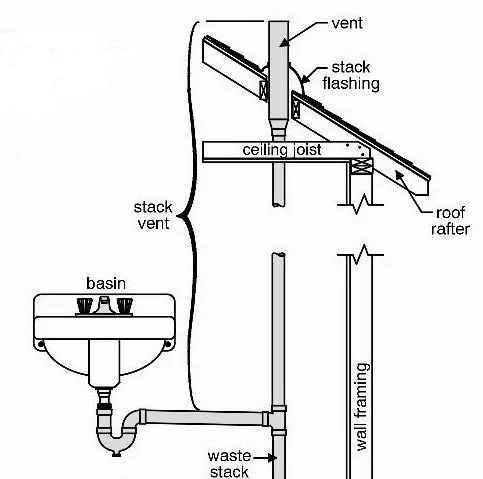
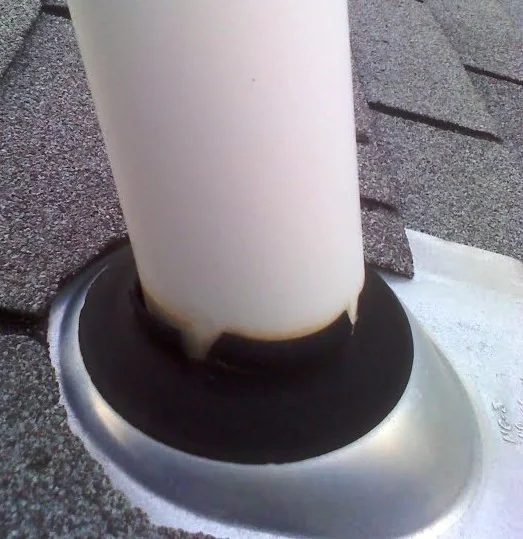
    Soil stack, plumbing vent, vent boot, pipe boot jack, PVF.

    At Real Good Roofing, we refer to them as ‘soil pipes’. The soil pipe is one of the least understood sections of the plumbing / roofing systems.

    A soil stack allows water to drain freely out of a house waste system. The soil stack performs three functions.

    • It allows air in front of the water rushing through the waste pipe to be pushed out of the way.
    • It allows air to be reintroduced to the waste piping after the water has gone by.
    • It allows sewer gases to escape outside through a vent stack, reducing odorsVent pipes may be cast iron, copper, galvanized steel or plastic (pvc).

    If the soil stack terminates in the attic, odors can find their way into the house. Also, in cold weather, this can add very moist warm air into the attic, leading to condensation and frost damage to the underside of the roof.

    Inadequate venting makes a siphoning or gurgling noise when water drains. A sewer odor at a fixture usually indicates a venting problem.

    Soil stacks should terminate at least 3 feet above and 10 feet in any other direction from all doors and windows. Vents should extend at least 6 inches above the roof and be at least 12 inches away from a wall. The vent should extend no more than 12 inches above the roof line. Vents which are very long may be subject to frost in the winter. The warm moist air passes up through the vent, and the air is cooled as it contacts the cold walls of the outdoor section of the vent pipe. The moisture in the air condenses and freezes on the walls of the vent pipe. In a prolonged spell of cold weather, this frost can build up to a point where it closes off the top of the vent.

    Soil pipes should be at least 3 inches in diameter where they penetrate the roof system in order to avoid frost closure in extremely cold regions.

    -
  • Balanced Ventilation

    Balanced Ventilation

    Attic ventilation is a key component of all shingle roofing systems. Proper attic ventilation extends the life of a roof and reduces problems, because it minimizes the temperature difference between the attic and the air outside.

    PROPER ROOF VENTILATION SAVES MONEY BY REDUCING MONTHLY UTILITY BILLS AND BY EXTENDING THE AC UNIT’S LIFE

    Proper ventilation will remove moisture as well as heat from the attic. Trapped moisture can raise energy costs and damage roof system components prematurely.

    Condensation inside the attic can be caused by the use of washing machines, dish washers, bath tubs, showers, and tumble driers unless these items are properly ventilated through the roof. In some cases the condensation can be bad enough to be mistaken for a roof leak.

    Problems commonly associated with an improperly ventilated attic space include:

    • Sumps between rafters (deck deflection) can happen because a plywood roof deck can warp or become spongy and dangerous. This occurs because one side of the plywood decking needs be able to “breathe” by being exposed to circulating air. The adhesives used in the plywood can deteriorate because of condensation.
    • Insulation can trap moisture in an attic, which will reduce the insulation’s R-value and create an environment for the propagation of molds, spores, and fungi, which will cause problems.
    • AC units will need to be serviced or replaced prematurely because of excessive use.

    To properly ventilate an attic, two types of vents are needed.

    Intake vents, which are located at the down-slope edge of the roof (eaves) and allow fresh air into the attic

    Exhaust vents, which are located near or on the ridge line of the roof and allow air to leave the attic.

    The use of an exhaust vent in conjunction with an intake vent uses the natural forces of wind pressure and thermal effect, collectively known as the Stack Effect or Bernoulli Principle to ventilate the attic space.

    Many homes only have exhaust vents working near the ridge-line, and no intake vents at the eaves.

  • TPO TIPS

    TPO TIPS

    If you’ve seen a bright white roof, then you may be familiar with TPO roofing. As one of the most common roof types of big commercial facilities, TPO has some of the best energy savings for single-ply membrane roofing!

    What Is Single-Ply Membrane Roofing?

    Single-Ply Membranes are sheets of rubber and other synthetics that can be ballasted, mechanically fastened or chemically adhered to insulation creating a layer of protection on your commercial facility.

    While Single-Ply Membrane Roofing is one of the most well-known types of commercial roofing material, there are several types to fit your budget and facility needs.

    There are two main types of single-ply membrane commercial roofing:

    1. Thermoplastic Polyolefin (TPO)
    2. Ethylene Propylene Diene Terpolymer (EPDM)

    They differ in their chemical makeup, how they are installed and their energy efficiencies. EPDM is not a good choice for Florida.

    TPO ROOFING

    Thermoplastic Polyolefin is a single-ply roofing membrane that is one of the fastest growing commercial roofing systems on the market. TPO roofing systems are made up of a single layer of synthetics and reinforcing scrim that can be used to cover flat roofs.

    TPO membranes are manufactured in sheets that are 10, 12 or 20 feet wide.

    These sheets are then rolled up and taken to the commercial facility.

    TPO has gained industry acceptance with the natural reflective surface to reflect UV rays.

    As reported by the National Roofing Contractors Association (NRCA) TPO makes up 40% of the commercial roofing market share.

    TPO Roofing Installation

    • After the existing substrate is prepared, either by cleaning or removing the existing roof, the insulation is installed. There are a few types of insulation
    • Polyisocyanurate (Polyiso) – The most used insulation type for roofing applications, Polyiso is more expensive but pays off with a higher R-value rating.
    • Expanded Polystyrene (EPS) – With the highest R-value per dollar, EPS is used for roof, wall and floor insulation. EPS can be used for ground contact and does not retain water over time.
    • Extruded Polystyrene (XPS) – Usually defined by the blue, green or pink color, XPS falls in-between Polyiso and EPS in the range of price and performance. XPS is semipermeable with a perm rating of 1.
    • The TPO membrane can be attached to the cover board with a bonding adhesive or mechanically fastened. When the membrane is rolled out, the contractor then returns and uses a hot-air gun to hot air weld the seams together.

    TPO Roofing Costs

    For an average 20,000 sq. foot commercial roof, it will usually cost between $3.50 and $7.50 per square foot in materials and labor to install a typical single-ply membrane commercial roofing system.

    Advantages of TPO Roofing

    If properly installed and maintained, a commercial single-ply membrane roof can last 30 years.

    Customer Choice of Insulation – Since single-ply membrane roofing does not include the insulation factor

    Class A Fire-Rated – TPO membranes can achieve Underwriters Laboratories (UL) Class A fire resistance listings by adding fire retardant chemicals during the manufacturing process.

    Reflective or Retentive – TPO is generally white and highly reflective.

    How TPO Roofing Saves Money

    The most common TPO material is bright white with highly reflective properties. This bright white roof installation can reflect UV rays and heat from the building, saving money during the summer months from decreased energy usage to cool the building interior.

    A TPO Roof Can Be Repaired

    • A TPO will last approximately 15-30 years. During this time, seams can rip apart, flashings can fail, the membrane can become punctured, etc. which will cause a roof leak.
    • The first sign of a TPO roof needing repair is when water has begun to enter the building. This usually happens because the seams have been ripped open, allowing water to enter the roofing insulation.
    • Once the insulation accrues so much water, it enters your roofing deck, and eventually starts leaking on the inside of your building.

    During the Roof inspection, a roofing contractor will be able to tell:

    • Where water is entering your insulation
    • How old the TPO roof is
    • How many layers the roof has
    • What condition the seams are in
  • Waffle House Index

    Waffle House Index

    The index is based on Waffle House’s reputation for having good disaster preparedness and staying open during extreme weather or reopening quickly afterwards.

    If you get there and the Waffle House is closed? That’s really bad…— Craig Fugate, Former Head of the FEMA

    The index has three levels,

    GREEN: full menu – Restaurant has power and damage is limited or no damage at all.

    YELLOW: limited menu – No power or only power from a generator, or food supplies may be low.

    RED: the restaurant is closed – Indicates severe damage or severe flooding.

    The term was coined by FEMA Administrator Craig Fugate in May 2011, following the 2011 Joplin tornado, during which the two Waffle House restaurants in Joplin remained open.

    The measure is based on the reputation of the restaurant chain Waffle House for staying open during extreme weather and for reopening quickly.

    The chain’s disaster preparedness measures include assembling and training “Waffle House jump teams” to facilitate fast reopening after disasters.

    Waffle House, along with other chains (such as Home Depot, Walmart, and Lowe’s) which do a significant proportion of their business in the southern US where there is a frequent risk of hurricanes, have good risk management and disaster preparedness. Because of this, and the fact that a cut-down menu is prepared for times when there is no power or limited supplies, the Waffle House Index rarely reaches the red level.

    The “Waffle House Index” and the “Saffir–Simpson Hurricane Scale” are used to indicate the intensity and long term effects of a storm.

  • When and Why Resheet

    When and Why Resheet

    One 4′ x 8′ sheet of 7/16″ O.S.B. (ORIENTED STRAND BOARD), weighs 47 lbs.

    One 4′ x 8′ sheet is equal to 32 sq feet. Three sheets are equal to 96 sq feet, you will need 3 ¼ sheets to do a roofing (10′ x 10′) square….adding 153 pounds of weight to the roof’s square.

    (A 4′ x 8′ sheet of ¾” plywood will weigh 75 lbs or 245 pounds per roofing square.)

    A roofing square of dimensional shingles has an average weight of 300 pounds per square. A house can easily handle the combined weight (430 pounds per square) of a new roof deck and 30 year shingles. Building code calls for structural weights of 1,000 pounds and more.

    Plywood is better suited for humidity, and has better nail pull resistance, but adds $2.00 per sheet more than O.S.B., or 8.00 additional per square, which is why we contract for O.S.B. whenever we can, to save our customer’s money.

    When a piece of wood needs to be totally removed and replaced, we will use the O.S.B. and charge 50.00 per sheet, for our labor, the material, and the time involved getting it back to the job site. IF your home has linear plank decking, we charge 6.00 per foot replacement cost. Wood charges are added to the final bill due.

    When all the deck is weakened structurally, or the plywood is DELAMINATING from moisture (humidity, leakage), we can SHEET OVER the existing roof deck. When we do this, the cost of ALUMINUM  Gutter and Rake FLASHING must be added into the cost of the re-sheet, as well as an additional 50.00 (per 25sq) box of EIGHT PENNY deck nails. Because we are raising the new deck UP higher than the GUTTER and RAKE fascia boards, we must wrap the visible wood edge, or water will attack and cause it to swell up in only a few years time.

  • 7 Secrets of Roofers

    7 Secrets of Roofers

    A new roof for your home can cost as much as a fun family vacation, a sporty second-hand roadster or an expensive gem from the local jeweler. So why do over five million people replace their roof each year? Because they must.

    A homeowner’s single most important investment is in his home. Drafty windows, faded exterior paint and old siding are nuisances, that while inconvenient, can still be put-off for another day. Not so the leaking roof!

    Danger of Ignoring a Roof Leak

    A leaky roof that is ignored can cause more damage to a home’s attic, insulation, ceilings and wood framing, than the initial cost of replacement.

    There are many examples of people actually having to abandon their home and all their belongings, because a roof leak allowed toxic mold to invade their house to the point where it became uninhabitable, (Google Superstar Michael Jordan- mold).

    When homeowners suspect a roof problem because of age, missing shingles, or brown interior stains, immediate action is advised. According to roofing authority, Dale ‘SHOE’ Shoemaker, companies do not charge to come out, walk your roof, and prepare a written bid.

    SHOE has worked in the roofing industry since 1995 and has received more shingle manufacturer certifications than any other local roofer. “Oh, yeah,” he laughs. “The movie The Good, the Bad, and the Ugly, pretty much sums up what I’ve come across inspecting leaky roofs. It’s like the Wild West, where robbers lurk and the law is of little help if you get robbed.”

    Since 1995, his company, has repaired hundreds of defective installations for frustrated homeowners who could not or would not, allow their original roofer back on their house.

    So what should homeowner’s do when it is time to replace a roof?

    Here are the seven tips SHOE recommends considering when you’re about to hire a roofing contractor.

    1. Ask everyone you know who they used. The old adage about telling one or two people when you’re happy and telling twenty when you aren’t, can work in your favor to weed out potential problems.
    2. Checking with the Better Business Bureau is good. Checking Facebook is better. Bad roofers settle their complaints at the BBB and so appear to have zero bad grades. Online reviews tend to be a mix of positive and negative comments, left by homeowners. Ask in your neighborhood’s Group page for recommendations. People are eager to suggest names to use and to avoid!
    3. References are good. Job sites are better. A roofer can say he did any house on the block and may or may not be telling the truth. Driving over to a current job site and watching, is revealing. What you see happening on the neighbors’ property will happen on yours. Messy job sites, broken down equipment and scary workers are real, be prepared.
    4. Use a phone book to verify a roofer’s business, but be cautious about those big ads. For roofers to be listed with 411 or in the print directory, they must have a business account, not just a cell or home phone. A business account suggests stability. A word to the wise about big print ads. They are expensive and somebody [you] has to pay for them. Also, phone books do not verify the information contained in the ads. A roofer can print just about anything with few repercussions. Be careful.
    5. Recognize the difference between price and cost. According to SHOE the only thing worse than buying a roof is paying for it twice! He cautions that you get what you pay for, and that the lowest bid can end up costing you thousands in subsequent repairs.
    6. Call five, meet three, hire one. Some roofers won’t show up or will leave without ever giving you a quote, so you’ll typically need to call 5 to get 3 bids. Good roofers are hard to find, so trust your instincts. When you meet ‘the-one’, hire him! Topnotch roofing contractors maintain a busy schedule year round and may not even accept more work at certain times. Also, there is no need to go overboard by calling 7, 8, or 9 roofers to bid your job. Roofers have costs associated with providing a “free” quote, homeowners who abuse the system may cause their roofers to overbid the job out of aggravation. Remember, your goal is to get a great new roof, not interview every guy with a truck and a ladder.
    7. No dumpsters allowed. Fixed dumpsters fill up driveways, are expensive, and may get left behind over a holiday or weekend on your property. Also, the weight of a full dumpster can scratch, break or crack your driveway, especially if made with pavers or bricks. For many years, roofers could not justify the added expenses (gas, insurance, CDL drivers) associated with owning a dump truck, so dumpsters were common. Today, good roofing contractors own and operate mobile dump trailers. Roofers who still use dumpsters maybe either bad businessmen or have bad credit. Either way, avoid trusting your home to them.

    There you have it, seven secrets roofers know that homeowner’s need to be aware of.

    If you suspect a roof issue and would like a free inspection, SHOE is happy to help. His free written bid includes an attic inspection, drone fly-over, and rooftop video. You will be able to see and understand what your roof is like and what may needed to be done in the future. Call him to schedule a time that fits your routine at 727-267-0619 or find him on Facebook

  • 2nd Law of Thermodynamics

    2nd Law of Thermodynamics

    The 2ndlaw of thermodynamics

    is a simple rule, that defines how heat, air, and moisture move.

    What it means in terms of building and roofing science is this:

    • Hot moves to cold
    • Moist moves to dry
    • High pressure moves to low pressure

    Heat, moisture, and pressure always equalize when possible.

    For roof systems, the 2nd law of thermodynamics helps explain why—during the cold winter months—warm, moist interior air infiltrates up into a roof system that doesn’t have a vapor retarder/air barrier in the system.

    The warm, moist air equalizes to the exterior where the air is cooler and drier.

    In the summer, especially here in Tampa, the hot humid air outside is fighting to enter your home via the doors, windows and down from an attic.

    At Solution Source Roofing, our estimators will balance your homes ventilation system using the best in today’s technology, such as Kennedy Solar power attic fans in our free roof bids.

  • 1-13 Improve Don_t Move

    1-13 Improve Don_t Move

    JANUARY 2013 STORY

    IMPROVE, DON’T MOVE

    When it’s time to replace a roof or add insulation to your home, the project can be a stressful, time consuming chore, but if you do your homework it can be rewarding upon completion.

    Your home is a big investment and in the new “improve don’t move” economy, choosing the right contractor is more important than ever.

    One local contractor that has been helping raise property values through the addition of attic insulation and beautiful energy efficient dimensional shingle roofs is A New Roof Time.

    Rooftime began in 1995, when Ricky Feltner started a small family business that operated out of his home. By 1999, his company of four office staff (which included a daughter, a son and son-in-law) had earned a ranking in the Top 100 Contractors in America, with sales in excess of $2 million. Ricky passed away at the end of 1999, and the company struggled to carry on without his dynamic leadership.

    Today Ricky’s legacy has been preserved by no less than four roofing contractors that were once part of his vision, all successfully operating their own companies using the same principles and ideals he established over 15 years ago.

    At Rooftime, Missy is still answering the calls (even at nights and weekends) and Ricky’s grandson, Justin, works as a project estimator. Greg Lykins oversees their certified roof crews. Rooftime is a true family-owned and operated business with deep community roots; over 15 year’s business experience, with three generations now serving Cincinnati and Northern Kentucky.

    Rooftime is a wise choice for informed homeowners looking for an honest and skilled contractor. They have earned the prestigious Angie’s List Service Award again in 2012 as they have every year since 2007 and their A plus rating as members of the Better Business Bureau means homeowners can trust them to do everything they promise.

    Rooftime is also one of the onlyroofers in the Tristate that are Owens Corning certified as Top of the House insulation experts. But the real story is in their referrals. “It is our No. 1 priority to always do the right thing by our customers,” said JD Shoemaker of Rooftime.

    The entire crew is required to always be up to-date on the newest products, technology and codes. The company uses qualified estimators that do not work on commission. This ensures that the customer always receives an honest estimate.

    Rooftime provides free written estimates for customers and will explain what they can do to fix their home’s issues.

    Rooftime’s services include new roofs and roof repairs on all types of roofs – metal, asbestos, rubber and mobile homes. Their attic insulation is the best in the city. They can also replace, clean or repair gutters and box gutters. They provide insurance estimates and FHA roof inspections, as well.

    Rooftime is a leader in their industry, utilizing the latest in technology. Their estimators can use satellite measurement software to offer “to the inch measurements” for “to the penny pricing.”

    They own thermal imaging cameras to pinpoint hidden leaks and decay and iPhones to solve problems on the job in real time. Rooftime employees are fully insured and attend annual training seminars and conferences. They still remember and practice today what founder Ricky preached so long ago: “Most homeowners won’t know good roofing; but they know good work and clean-up when they see it.” Rooftime staff will always respect your property, landscaping and possessions, leaving no trace of a mess behind.

    When you are in the market to hire a good contractor, Rooftime will pass all of your tests with flying colors. They are hard-working, dedicated people that are in their business for the long haul. To see pictures of their crews in action, you can friend them on Facebook, and follow them on Twitter, key words: A New Roof Time.

    Estimates are free and include an attic inspection and color digital pictures of what the estimators find. Visit the website at www.time2roof.com or call Missy 513-753-8463 to get a free inspection of your roof, attic insulation or gutter system.